Key Points
- Kensington and Chelsea Council detected legionella bacteria in Kensington Town Hall showers, located in West London, between February and June 2024.
- The council described the risk as “very low” and did not disclose the presence of legionella to staff, only stating showers were out of use for “essential maintenance.”
- Internal emails reveal senior staff deliberately chose not to share details, fearing alarm, despite multiple positive legionella tests over recent years.
- Two council staff members accused the authority of poor water maintenance and delayed repairs, exposing staff to health risks.
- Blocked-off showers and toilets were reportedly accessed and used by employees unaware of the contamination.
- A chlorine flush was delayed by almost a day due to an awards event at Kensington Town Hall, despite legionella presence.
- Staff health and safety procedures, including reviews, were delayed after the previous manager left, raising concerns over ongoing oversight.
- No Legionnaire’s disease cases were reported, with the council stating drinking water was unaffected.
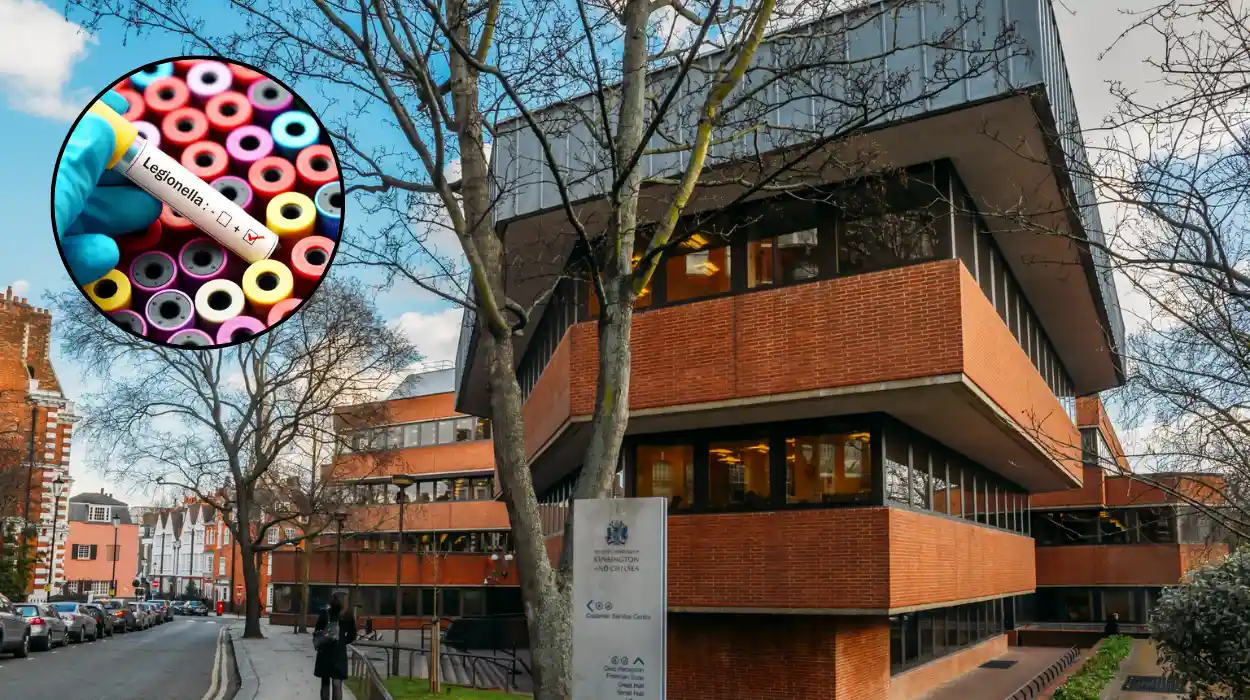
- Kensington Town Hall is situated on Hornton Street, Kensington, West London (postcode W8 7NX), near High Street Kensington Underground Station.
- The building is a municipal facility built in Brutalist style and serves as the headquarters of Kensington and Chelsea London Borough Council.
- The Local Democracy Reporting Service (LDRS) investigations uncovered internal emails and statements from council sources and staff.
What Did Kensington and Chelsea Council Say About Legionella in Kensington Town Hall?
As reported by Adrian Zorzut of the Local Democracy Reporting Service (LDRS), Kensington and Chelsea Council acknowledged the presence of legionella bacteria in the showers of Kensington Town Hall, situated on Hornton Street, Kensington, West London, from February to June 2024. The council described the risk posed to staff as “very low” and confirmed no staff tested positive for Legionnaire’s disease.
- Key Points
- What Did Kensington and Chelsea Council Say About Legionella in Kensington Town Hall?
- Why Did Council Staff Not Receive Full Information About Legionella Risks?
- How Did the Council Handle the Legionella Contamination Internally?
- Was There a Delay in Remediating Legionella Contamination?
- What Are the Health Risks of Legionella and How Does It Spread?
- How Did the Council’s Maintenance System Affect Staff Safety?
- What Is the Location and Significance of Kensington Town Hall?
- What Have Staff Said About the Council’s Communication?
- What Are the Wider Implications of This Investigation?
Council officials stated that the contaminated areas—including showers, toilets, sinks, and kitchen areas—were promptly closed off once elevated legionella levels were detected. Staff were informed only that these facilities were out of service for “essential maintenance,” without mentioning legionella specifically.
Why Did Council Staff Not Receive Full Information About Legionella Risks?
Two insiders close to the matter told the LDRS that the council deliberately withheld information on legionella presence from staff. They criticised Kensington Town Hall’s water maintenance as “sub-par” with aging pipes causing ongoing issues, leading to prolonged exposure to contaminated water.
One source stated,
“I’ve been in buildings that have tested positive but when it’s known, it’s a serious matter and is rectified immediately, and the residents are told. In that building Kensington Town Hall, it’s been going on for years.”
Employees revealed that despite “Out of order” signs, some staff broke into locked shower areas unaware of the risks from legionella bacteria. Another source added,
“People were potentially exposing themselves to something harmful.”
How Did the Council Handle the Legionella Contamination Internally?
The LDRS obtained internal council emails showing that Dan Hawthorn, Executive Director of Housing and Social Investment at Kensington and Chelsea, advised staff bulletins omit the term legionella, instead referring vaguely to “work on the water system.”
Concerns were expressed among senior officials about frequent positive legionella tests, with calls for a water safety review delayed after the departure of the health and safety manager.
Was There a Delay in Remediating Legionella Contamination?
According to emails shared with the LDRS, a scheduled chlorination flush meant to remove legionella bacteria was postponed nearly 24 hours due to an awards ceremony at Kensington Town Hall hosting 700 guests.
The council initially denied any delay but later admitted the flush was postponed on advice that it was safe to wait until after the event.
What Are the Health Risks of Legionella and How Does It Spread?
Legionella bacteria pose a health risk only when inhaled in aerosolised water droplets, such as from showers or air conditioning systems, causing Legionnaire’s disease. Symptoms include shortness of breath, coughing, and flu-like illness.
Kensington and Chelsea Council confirmed that drinking water systems in the building, using Zip taps for hot drinks, were not affected by legionella contamination.
How Did the Council’s Maintenance System Affect Staff Safety?
Sources told the LDRS that Kensington Town Hall’s aging piping and insufficient maintenance have resulted in frequent legionella contamination over multiple years.
Delays in repair and slow response to positive legionella tests increased potential health risks for staff and visitors at the municipal building.
What Is the Location and Significance of Kensington Town Hall?
Kensington Town Hall, located at Hornton Street, Kensington, London W8 7NX, is a municipal building in West London serving as the headquarters of Kensington and Chelsea London Borough Council. The building, opened in 1977, features a Brutalist architectural style and is near High Street Kensington Underground Station, served by the Circle and District lines, as well as several bus routes (9, 10, 27, 28, 49, 52, 70).
It hosts council meetings, public events, and acts as a major venue with conference and events facilities.
What Have Staff Said About the Council’s Communication?
Several council staff expressed frustration at being kept uninformed about the legionella presence, describing the council’s approach to communication as inadequate and potentially hazardous.
Anonymous sources reported frequent breakdowns and slow repairs to water systems, with the situation worsened by lack of transparency on health risks.
What Are the Wider Implications of This Investigation?
The LDRS report highlights serious gaps in health and safety governance and communication transparency within Kensington and Chelsea Council.
It raises questions about public sector accountability in managing environmental health hazards in buildings accessible to the public and stresses the importance of safeguarding both staff and visitors.
The Kensington and Chelsea Council’s handling of legionella contamination at Kensington Town Hall in West London demonstrates challenges in communication, swift remediation, and maintaining health standards in public buildings. The council now faces pressure to improve its water safety systems and ensure full transparency in future incidents.