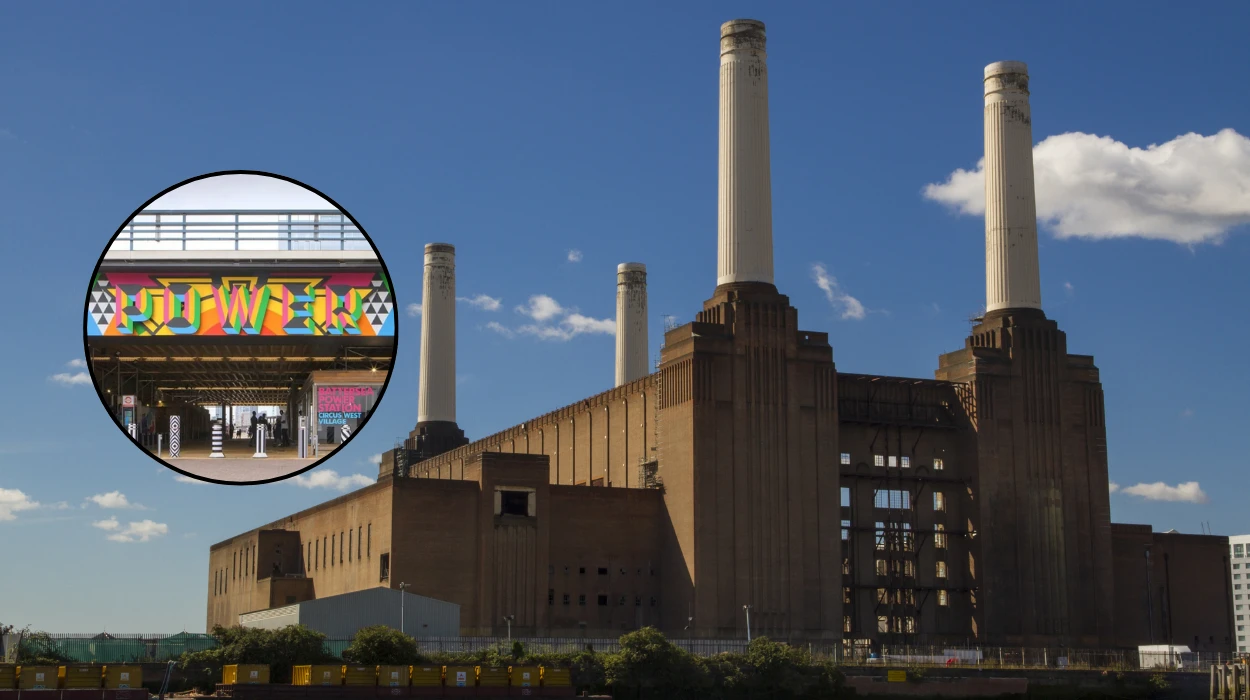
Battersea Power Station is a landmark of historical, architectural, and cultural significance in West London that has fascinated Londoners and visitors for nearly a century. Located in the Nine Elms district on the south bank of the River Thames, it is one of the world’s largest brick buildings and boasts a distinctive Art Deco style that has made it an iconic part of the London skyline. Its history, transformation, and current redevelopment make it a compelling evergreen topic for anyone interested in West London’s heritage and future.
History and Architectural Significance
Battersea Power Station was built in two phases between 1929 and the 1950s, comprising two near-identical power stations known as Battersea A (completed in 1935) and Battersea B (completed later). Its design was a collaboration between architect Sir Giles Gilbert Scott, best known for iconic British design, and engineer Sir Leonard Pearce. The building’s four towering chimneys and monumental brick structure make it instantly recognizable, while inside, lavish Art Deco interiors featured marble paneling, faience walls, and terrazzo flooring in the turbine hall, underscoring the era’s commitment to combining utility with beauty.
Originally a coal-fired power station, Battersea was essential to London’s rapid growth in the 20th century. It transported massive amounts of coal by barge on the Thames, burning it to produce steam that generated electricity for the city. By its peak operation, it produced about a fifth of London’s electricity, a testament to its scale and importance. The station was known at the time as the “Temple of Power” due to its monumental grandeur and efficiency, reportedly being the most efficient coal-fired power station worldwide during its prime.
Decline and Preservation
Electricity generation at Battersea Power Station ceased between 1975 and 1983 as newer, cleaner technologies emerged, and the coal-heavy operation became increasingly outdated. The building then fell into a state of disuse and deterioration for over 30 years. It was designated a Grade II* listed building in 1980 to protect its historic and architectural value, recognizing it as more than an industrial relic but a cultural treasure worthy of preservation.
English Heritage described its condition in 2008 as “very bad,” and it was added to the Heritage at Risk Register. Additionally, the World Monuments Fund listed it in 2004 on its Watch to highlight the urgent need for restoration. The site’s grandeur and derelict state have made it a poignant symbol of industrial decline and the ongoing challenges of preserving industrial heritage.
Redevelopment and Revival
After decades of inactivity, Battersea Power Station underwent major redevelopment beginning in the 2010s. Early redevelopment plans occasionally faltered due to financial challenges, debt burdens, and logistical complexities such as contributions needed for public transport extensions and environmental cleanup. However, purchasers eventually secured the vision of transforming the site into a vibrant mixed-use neighborhood.
Today, the former power station has been repurposed as a major destination that includes retail, restaurants, office spaces, cultural venues, and residential buildings. It now serves as a new urban hub in West London, blending its historic industrial character with modern amenities. The redevelopment preserves and highlights key architectural features, maintaining Battersea’s iconic chimneys and façade as a visible reminder of London’s industrial past amidst a contemporary cityscape.
Battersea Power Station on Circus Road and Its Surroundings
Circus Road is a notable street within the Battersea Power Station development area, running alongside the power station and serving as a key access point for visitors and residents. This road and its surroundings have been integrated into the broader regeneration of the Nine Elms area, which is becoming one of the most dynamic and rapidly evolving neighborhoods in West London. The area now offers green spaces, pedestrian-friendly zones, and a combination of historic and modern buildings, making it a significant example of urban renewal that respects heritage while embracing the future.
Why Battersea Power Station Remains Evergreen
The story of Battersea Power Station is evergreen because it touches on enduring themes: architectural marvel, industrial heritage, urban regeneration, and cultural symbolism. Its journey from a powerhouse of London’s electricity to a symbol of dereliction, then to a vibrant new community hub, appeals to history enthusiasts, architecture lovers, locals, and visitors alike. The site is also integral to West London’s identity, bridging past and present.
For residents and visitors of West London, Battersea Power Station represents the resilience and transformation of the city itself, making it a perennial topic for blogs, education, tourism, and cultural engagement.