West London boasts an extraordinary collection of buildings that blend history, innovation, and cultural significance, making it a prime destination for architecture lovers. From elegant Georgian mansions to bold brutalist towers, these structures tell the story of London’s evolution while offering stunning visuals and heritage value for residents and visitors alike.
- Historical Roots of West London Architecture
- Georgian and Victorian Masterpieces
- Art Deco and Mid-Century Icons
- Brutalist and Modern Landmarks
- Kensington and Chelsea Architectural Gems
- Hammersmith and Fulham Heritage Sites
- Architectural Diversity in Neighborhoods
- Preservation Challenges and Future Outlook
- Why West London Buildings Captivate
Historical Roots of West London Architecture
West London’s architectural heritage traces back to the 17th century, with buildings that reflect the area’s rise as a hub for royalty, aristocracy, and commerce. Many structures survived the Great Fire of London and subsequent developments, showcasing resilient designs by masters like Sir Christopher Wren. Churches, palaces, and estates from this era set the foundation for the region’s grand aesthetic, influencing everything from residential terraces to public institutions.
The 18th and 19th centuries brought Georgian and Victorian expansions, characterized by symmetrical facades, ornate detailing, and red-brick elegance. Neighborhoods like Kensington and fulham/hammersmith/">Hammersmith feature Grade I listed gems that highlight craftsmanship amid industrial growth. These buildings not only preserved wealth but also adapted to urban demands, ensuring their timeless appeal in West London’s skyline.
Preservation efforts by bodies like Historic England have safeguarded over 100 Grade I and II* listed buildings in boroughs such as Hammersmith and Fulham, emphasizing their national importance. This commitment maintains architectural integrity while allowing modern uses, from museums to luxury homes.

Georgian and Victorian Masterpieces
Georgian architecture dominates West London with its classical proportions and palladian influences, seen in landmarks like hounslow/chiswick/">Chiswick House. Designed by Lord Burlington in 1729, this villa draws from Italian Renaissance models, featuring a central dome and Ionic columns that epitomize 18th-century grandeur. Its interiors house art collections, blending architecture with cultural heritage.
Victorian terraces in areas like West Kensington exemplify the era’s prosperity, with bay windows, stucco fronts, and intricate ironwork. Barons Court showcases mansion blocks built for the expanding middle class, their rhythmic facades creating cohesive streetscapes. These buildings highlight engineering advances like iron frames, which enabled taller, more decorative structures.
Notable examples include the Leighton House Museum in Holland Park, John Lubbock’s 1860s creation transformed into an artistic palace with Arab Hall’s shimmering tiles. It stands as a testament to Aesthetic Movement ideals, drawing visitors year-round.
Art Deco and Mid-Century Icons
The interwar period introduced Art Deco flair to West London’s buildings, with the Hoover Building on Western Avenue as a standout. Opened in 1933 by Wallis, Gilbert & Partners, its cream faience tiles, green spires, and speedboat motifs capture streamline moderne optimism. Grade II* listed since 1987, it transitioned from factory to apartments, preserving its automotive-era charm.
Post-war reconstruction brought mid-century modern designs, like the Commonwealth Institute in Kensington, designed by Robert Matthew in 1962. Its hyperbolic paraboloid roof and colorful glazing symbolized global unity, though now reimagined as the Design Museum. Such adaptations keep these buildings relevant.
In North Kensington, Ernő Goldfinger’s 1967 Balfron Tower pioneered high-rise living with concrete brutalist forms and sculptural staircases. Its Grade II listing underscores social housing innovation amid urban density challenges.
Brutalist and Modern Landmarks
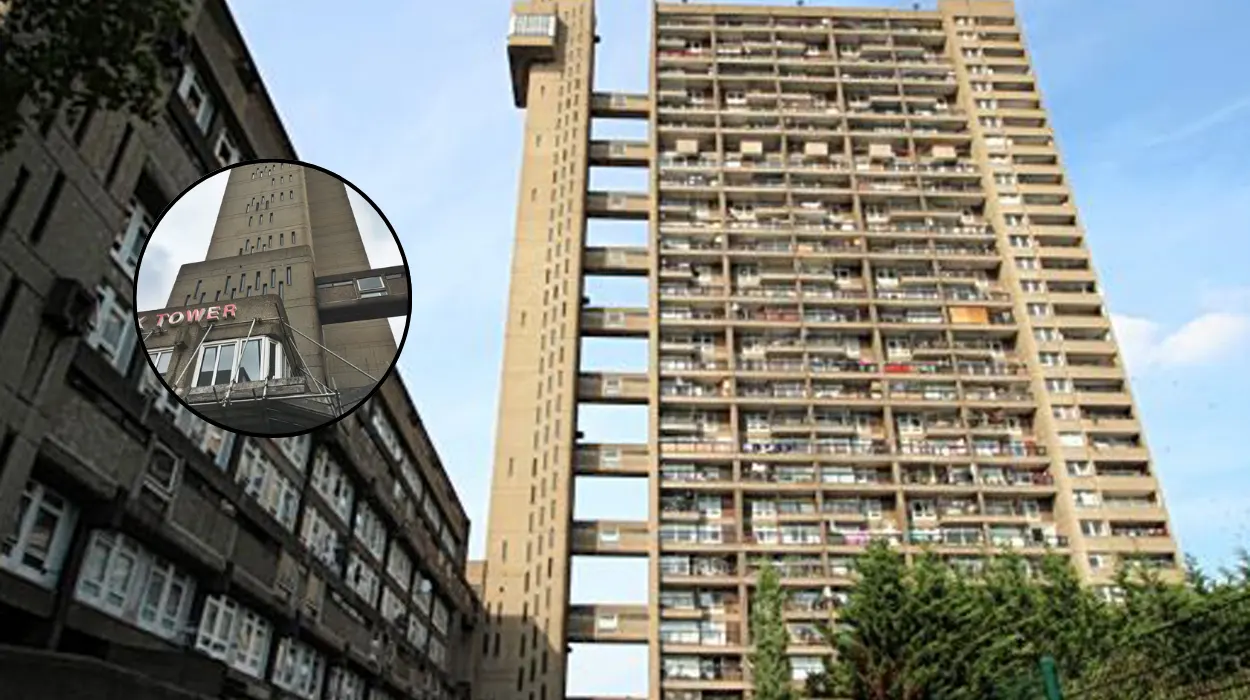
Brutalism peaked in West London during the 1960s-70s, prioritizing raw concrete and functionality. Trellick Tower, Goldfinger’s 1972 North Kensington icon, rises 31 stories with a separate lift shaft linked by sky bridges, earning Grade II* status for its dramatic silhouette. Despite initial controversy, it now symbolizes resilient community architecture.
The Artesian Road Estate in Hammersmith features layered concrete slabs by Kate Macintosh, blending habitation with green spaces. These structures addressed post-war housing shortages while sparking debates on urban form.
Contemporary additions like the Imperial Wharf development in Fulham integrate glass towers with riverside luxury, designed by Foster + Partners. Sustainability features like energy-efficient glazing reflect modern priorities, contrasting historic neighbors.
Kensington and Chelsea Architectural Gems
Kensington Palace, a William and Mary-era royal residence expanded by Wren, anchors the borough with baroque state rooms and sunken gardens. Home to Princess Diana and now royals, its public tours reveal red-velvet opulence and historical artifacts.
The Natural History Museum’s Romanesque revival towers by Alfred Waterhouse dominate Cromwell Road since 1881, housing dinosaur skeletons in cathedral-like halls. Its terracotta detailing and evolving exhibits make it a family evergreen.
Holland House ruins, bombed in WWII, coexist with Jacobean remnants amid parkland, offering a poignant blend of destruction and restoration.
Hammersmith and Fulham Heritage Sites
Hammersmith’s Grade I listed St Paul’s Church, by Thomas Hardwick in 1827, features neoclassical pediments and memorials to local figures. Its role in literary history ties to nearby William Morris influences.
Fulham Palace, bishops’ residence since 704 AD, spans Tudor to Victorian phases with walled gardens and baroque chapel. Archaeological finds reveal medieval origins, enriching its narrative.
The London Wetland Centre’s modern eco-buildings contrast historic warehouses, promoting biodiversity in repurposed reservoirs.
Architectural Diversity in Neighborhoods
West London’s neighborhoods showcase stylistic variety: Shepherd’s Bush mixes Edwardian pubs with BBC MediaCity’s glassy studios. Notting Hill’s colorful stucco houses, popularized by films, hide grand interiors.
Ealing’s Art Deco cinemas like the Granada, with its Indian-inspired auditorium, rival Hollywood palaces. Chiswick’s Georgian squares complement riverside mills.
White City’s regeneration features Zaha Hadid-inspired curves at Television Centre, merging media heritage with residential innovation.

Preservation Challenges and Future Outlook
Heritage groups navigate tensions between conservation and development, as seen in debates over Trellick Tower retrofits. Government policies via the London Boroughs enforce strict guidelines for listed West London buildings.
Sustainable retrofits, like solar panels on Victorian roofs, balance tradition with net-zero goals. Community campaigns ensure public input, sustaining architectural legacy.
Tourism thrives with apps guiding self-led walks, boosting local economies around these timeless structures.
Why West London Buildings Captivate
These buildings offer more than aesthetics; they embody social histories from aristocratic estates to public housing revolutions. Exploring them reveals layers of innovation, resilience, and beauty that define West London. Whether strolling Kensington gardens or admiring tower silhouettes, they invite endless discovery for all ages.