Key Points
- Hayes, west London, shows resilience despite national retail challenges.
- Local pharmacist Mohamed Abdi provides food and financial help to vulnerable customers.
- Shoplifting costs the pharmacy around £100 daily; some thefts go unreported.
- A past violent incident at the pharmacy involved a knife-wielding man demanding goods.
- The pharmacist sees reduced street crime recently but notes ongoing issues with parking and a rising population.
- Hayes has a highly multicultural population, with large Asian, Muslim, and Sikh communities.
- Clothes shop owner Munish Thapar also faces serious shoplifting and local crime challenges.
- Mr Thapar suspects a small gang involved in theft linked to drug addiction.
- Both shopkeepers express commitment to continuing their businesses despite difficulties and praise the local community.
What makes Hayes’ High Street stand out amid retail struggles?
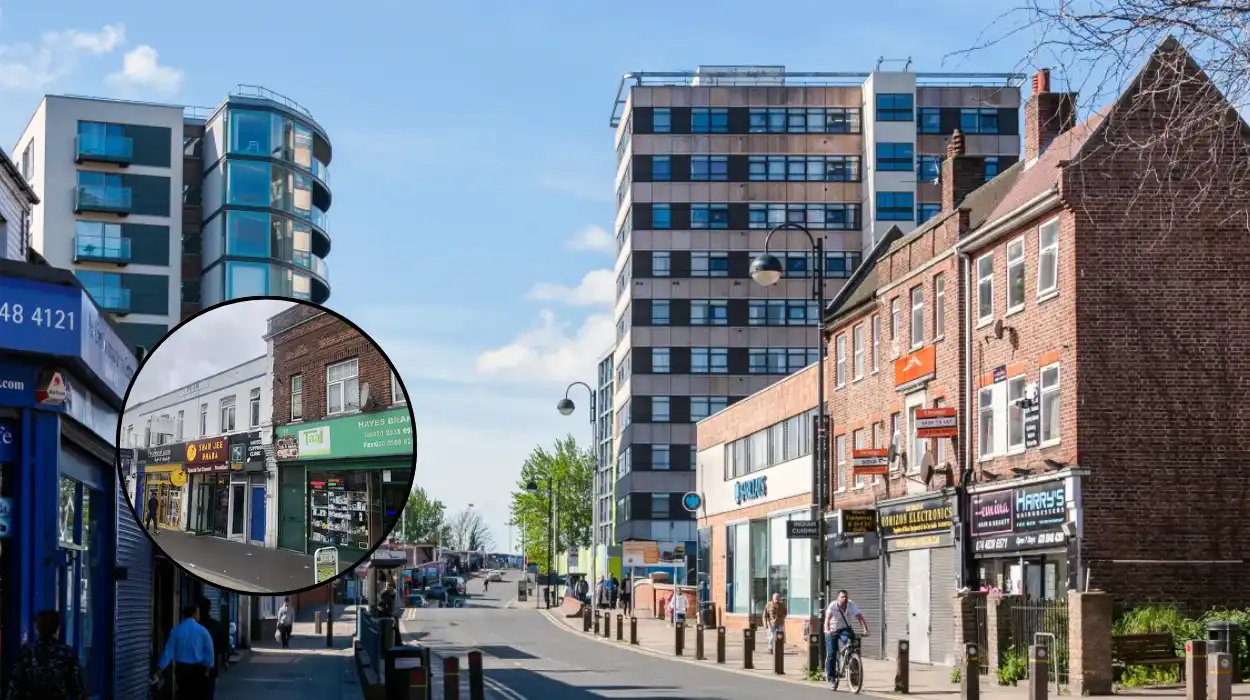
As reported by The Guardian in an article by Oliver Gill, Hayes in west London represents a rare beacon of resilience for the Great British High Street. While many high streets across the UK struggle with consumer shifts to online shopping and pandemic repercussions, local retailers here are adapting and persevering.
- Key Points
- What makes Hayes’ High Street stand out amid retail struggles?
- How does shoplifting impact Hayes’ local businesses?
- Has crime increased or decreased on Hayes High Street?
- How do shopkeepers manage security risks in Hayes?
- What are other challenges facing Hayes High Street retailers?
- What is the community demographic like in Hayes?
- Why do Hayes shopkeepers remain optimistic?
Pharmacist Mohamed Abdi, who has operated his shop in Hayes for 13 years, illustrates this spirit. He says,
“Every day, I give people food. Every day. Because they ask me for it. What can I do?”
His volunteer acts go beyond mere customer service — feeding vulnerable individuals who rely on his generosity.
How does shoplifting impact Hayes’ local businesses?
Abdi openly describes shoplifting losses as an accepted part of running his business. “I don’t bother calling the police,” he told Oliver Gill of The Guardian. Theft here typically adds about £100 to his daily expenses.
He recounted various incidents: a man once picked up two packets of Pampers without paying, frankly admitting he couldn’t afford them; on another occasion, a woman pocketed an item while waiting for a prescription. Abdi speculates whether poverty or lack of support services drives such thefts.
Munish Thapar, owner of a family-run clothing shop in Hayes and quoted in the Evening Standard by journalist Kareem Shaheen, concurs that shoplifting is a growing blight post-pandemic.
“People just picking things up and running away. It’s very, very disheartening,” he said.
Has crime increased or decreased on Hayes High Street?
Though Abdi faced a frightening knife threat several years ago, during which a bloodied man demanded goods under threat of stabbing, he feels the overall street crime has been declining lately. Violence, drug dealing, and drunken disorder, once more prevalent, are less common now.
Conversely, Munish Thapar detects ongoing trouble, especially with suspected drug-related activity in an alley behind his shop. Surveillance cameras have captured suspicious behaviour, and Thapar suspects a small gang is responsible for repeated thefts linked to addiction.
How do shopkeepers manage security risks in Hayes?
Both shopkeepers take pragmatic measures. Thapar stores valuable garments behind locked cabinets after losing hundreds of pounds in a single theft of £60 T-shirts. He and his family routinely confront known shoplifters to discourage repeat offences, although police advice warns against risking violence.
Abdi, meanwhile, absorbs theft costs as part of his business losses and chooses not to involve law enforcement for most incidents, focusing instead on his community role.
What are other challenges facing Hayes High Street retailers?
Car parking scarcity is a shared concern. Abdi highlights that drivers find parking increasingly difficult, reducing potential trade. He links the problem partly to population growth and rising visitor numbers, including tourists and residents of nearby asylum hotels.
Both agree that despite such issues, their businesses continue with local support. Thapar noted:
“They customers don’t want us to go. They tell us to keep going until we’re old!”
What is the community demographic like in Hayes?
According to local demographic data referenced in The Guardian report and area insights, Hayes Town electoral ward boasts a richly diverse population. Approximately 50% are Asian, with substantial Muslim (25%) and Sikh (15%) communities. This multicultural fabric is reflected in the shops and their owners.
Abdi appreciates the multicultural environment: “It’s the people. It’s multicultural!” Meanwhile, a Hindu altar beneath CCTV cameras in Thapar’s shop visually symbolizes this blend.
Why do Hayes shopkeepers remain optimistic?
Despite facing economic and social pressures, both shopkeepers cite community loyalty and mixed population as reasons for perseverance. Abdi emphasises the growing local population and visitors bringing business, and Thapar describes the town as “a very mixed community place, brilliant to live in.”