Key Points
- An 18-storey housing development on Greenock Road in Acton, West London, will provide no affordable housing, reversing an initial plan for 43 affordable units.
- The developer cited cost pressures and viability issues, arguing the project could not proceed with the affordable homes provision.
- Ealing Council approved the change, accepting a £1 million payment from the developer for off-site affordable housing instead.
- This equates to roughly £23,000 per lost affordable unit, as calculated by Councillor Chris Summers.
- The original plan met the council’s 35% affordable housing target, but the new plans miss it entirely.
- Councillor Chris Summers criticised the deal as “a very bad deal,” questioning the value compared to market sales of the 43 units.
- A council officer responded that viability assessments focus on the entire development, describing it as a “deficit scheme” with the £1m as a commercial offer despite no profit.
- The approval adds to a prior Section 106 agreement funding local healthcare, education, leisure, open spaces, and children’s play spaces.
- The block includes a ground-floor cafe and resident amenity spaces on two floors; approved by all but one councillor on January 21, 2026.
- Earlier 2024 plans for the site included 124 homes with 36% affordable (about 45 units), plus commercial space and shoulder blocks of 15 and 12 storeys.
- The development exceeds the South Acton masterplan height by three storeys but was justified by Greenock Road upgrades.
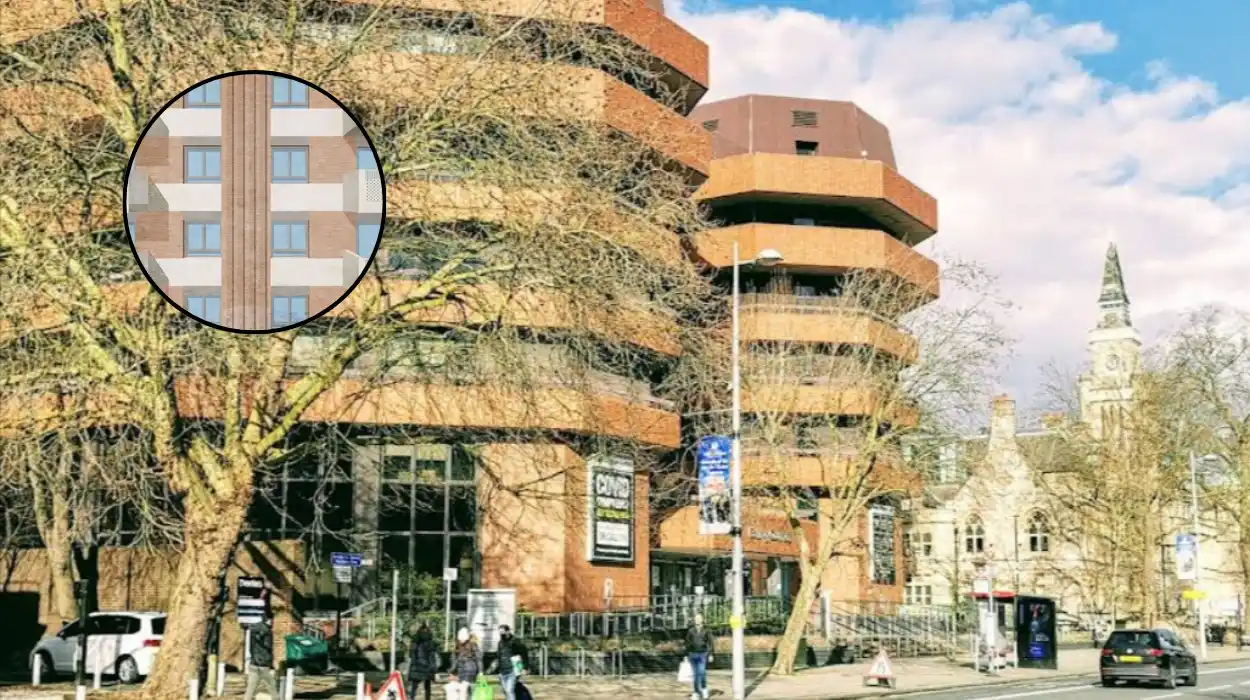
Acton (West London News) January 26, 2026 – Ealing Council has approved a developer’s request to eliminate all affordable housing from an 18-storey block on Greenock Road in Acton, opting instead for a £1 million off-site contribution amid viability concerns.
- Key Points
- What Changes Were Made to the Affordable Housing Plans?
- Why Did the Developer Claim the Project Was Unviable?
- What Additional Funding Is Involved?
- How Did Councillors Vote on the Revised Plans?
- What Features Will the 18-Storey Block Include?
- Why Was the Height Controversy Significant?
- What Is the Broader Context of Housing Policy in Ealing?
- How Does This Fit into Local Developments?
What Changes Were Made to the Affordable Housing Plans?
The development at 8-10 Greenock Road was originally set to deliver 43 affordable units within the tower, aligning with Ealing Council’s policy requiring 35% affordable homes in new builds. As reported in Harrow Online, the developer sought to withdraw this commitment entirely, proposing market-rate homes only due to escalating costs that rendered the scheme unviable.
In exchange, the council secured a £1 million payment earmarked for affordable housing elsewhere. This figure represents approximately £23,000 for each of the 43 foregone units, a point highlighted by Councillor Chris Summers during the January 21 committee meeting.
Councillor Summers stated:
“I just think we’ve been sold a very bad deal, I mean, 43 units in that block of flats, they’re now going to be able to sell for market value. That’s got to be an awful lot more than £1 million.“I know the scheme was unviable, but I don’t understand how we’ve gone from 43 units to £1 million – which is not going to be able to build us many affordable units at all elsewhere… how have we got to £1 million?”
Why Did the Developer Claim the Project Was Unviable?
A council officer addressed Councillor Summers’ concerns, explaining the assessment process. The officer said: “We don’t assess the equivalence value of the affordable housing that was initially proposed, rather we look at the viability of the entire development…
“It is a deficit scheme, so it’s still not making money in plain terms, so the applicant has proposed a commercial offer… to perhaps consider future economic conditions and take a risk on their part. They have said they will contribute £1 million even though the viability of this scheme is not resulting in a profit.”
This viability review follows earlier approvals for the site. Coverage from ActonW3.com in March 2024 detailed initial plans for 124 flats across an 18-storey main block with 15- and 12-storey shoulders, including over 2,100 square metres of commercial space and 36% affordable housing (roughly 45 units, split 60% London Affordable Rent and 40% shared ownership).
Ealing Nub News reported in 2024 that the scheme involved demolishing existing buildings and was presented as a “one-off development” due to commitments to upgrade Greenock Road.
What Additional Funding Is Involved?
Beyond the new £1 million, a previous Section 106 agreement remains in place. This secures nearly £1 million more, allocated as follows: £260,000 for local healthcare provision, £230,000 for education, £70,000 for leisure facilities, £35,000 for open spaces, and £55,000 for children’s play spaces, among other uses.
As noted by Ealing Nub News, these contributions underscore the public benefits cited in prior approvals.
How Did Councillors Vote on the Revised Plans?
The committee approved the changes on Wednesday, January 21, 2026, with all but one councillor in favour. Councillor Chris Summers was the dissenting voice, voicing strong reservations over the financial trade-off.
This mirrors mixed reactions in 2024 planning discussions. ActonW3.com reported a 9-2 approval for the outline plans, with opposition from Councillors Jon Ball and Gregory Stafford on height concerns, while Councillors Gareth Shaw and Yoel Gordon supported it for design quality and road improvements.
What Features Will the 18-Storey Block Include?
The approved tower will feature a ground-floor cafe and amenity spaces for residents across two floors. Earlier reports confirm a mixed-use design with significant commercial floorspace.
The site’s location in South Acton places it near railway lines, adjacent to low-rise Victorian homes on Temple and Weston Roads.
Why Was the Height Controversy Significant?
The development exceeds Ealing’s South Acton masterplan by three storeys, sparking resident backlash. Simon Harris of Temple Road told the planning committee, as covered by ActonW3.com:
“It enormously affects the area that we live in,”
warning of impacts on light, privacy, and property values.
He added:
“Temple Road and [Weston Road] are not ‘wealthy streets’ and… most of the people there have put all their money into their houses.”
Harris noted neighbours of 30 years considering relocation, though he welcomed development limited to 11-12 storeys.
A council officer justified the height, stating:
“There is a significant public benefit to the proposal that justifies a marginal increase of three storeys above the identified height in the masterplan.”
Councillor Jon Ball echoed residents, arguing Greenock Road upgrades would not benefit those across the tracks. Councillor Gregory Stafford suggested 12 storeys as more appropriate.
What Is the Broader Context of Housing Policy in Ealing?
Ealing Council typically mandates at least 35% affordable housing, a threshold the original plans met but the revision bypasses. This decision comes amid London’s housing crisis, with viability assessments balancing developer finances against policy goals.
ActonW3.com’s recent coverage frames it as a post-viability review adjustment to an already-approved tower. ChiswickW4.com similarly notes the council was “persuaded to allow changes.”
The Ealing Council agenda from 2024 references planning application 231285FUL for the site, emphasising affordable housing in initial considerations.
How Does This Fit into Local Developments?
Ealing is advancing multiple schemes, including thousands of new homes and a leisure centre in 2026, per Harrow Online. The Greenock Road project contributes to South Acton’s regeneration, despite local tensions.
Residents’ threats to relocate highlight ongoing debates over density in West London