Key Points
- Tunnelling has officially commenced on the 4.5-mile HS2 link connecting Old Oak Common and Euston stations in west London.
- The project is projected to generate 19,000 jobs and deliver a £10bn economic boost to the west London economy.
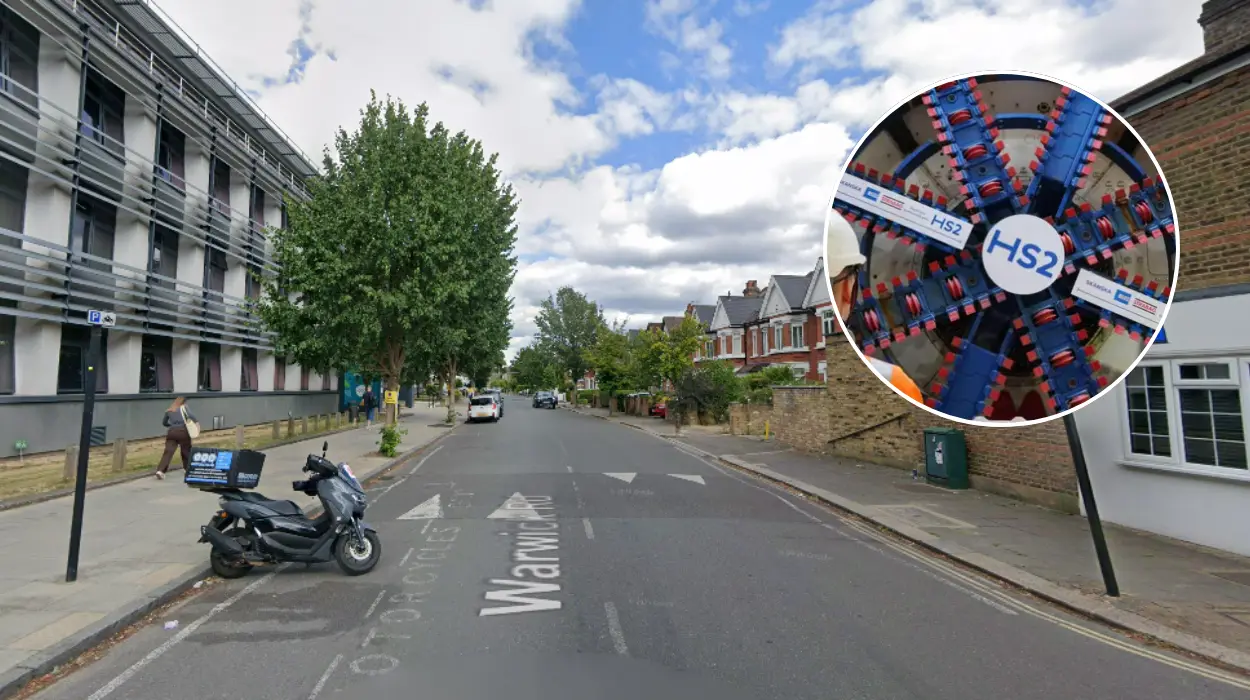
- A 1,624-tonne tunnel boring machine, named Madeleine, is excavating the route, simultaneously constructing the tunnel by installing concrete segments.
- This final leg follows the completion of 23 miles of tunnel, 19 bridges, and two viaducts along the HS2 route to Birmingham.
- Previously, the HS2 line was planned to terminate at Old Oak Common, but it will now extend fully to Euston.
- Already, 8.4 miles of twin-bore tunnels have been completed from West Ruislip to Old Oak Common.
- The tunnelling machines, including Madeleine and a second machine, will remove over 1.5 million tonnes of earth by rail, avoiding approximately 70,000 lorry journeys on local roads.
- Madeleine is named after Madeleine Nobbs, former president of the Women’s Engineering Society.
- Cllr Stephen Cowan, Leader of Hammersmith & Fulham, welcomed the development, highlighting its role in transforming Old Oak Common into a major transport hub.
- Darren Jones, Chief Secretary to the Prime Minister, and Rail Minister Lord Hendy attended the launch at Old Oak Common station on Tuesday, 27 January 2026, to activate the first boring machine.
- Lord Hendy described the machine as an “engineering marvel” bringing HS2 closer to reality.
- Darren Jones remarked that “there’s nothing boring about tunnel boring,” calling the launch a pivotal moment for UK railways.
West London (West london News) January 31, 2026 – Tunnelling has begun on the critical 4.5-mile final stretch of the HS2 high-speed rail line between Old Oak Common and Euston, marking a significant milestone in one of Britain’s largest infrastructure projects. This development, celebrated by government officials and local leaders, promises 19,000 new jobs and a £10bn injection into the west London economy, while a massive 1,624-tonne boring machine named Madeleine has started its subterranean journey.
- Key Points
- What Triggered the Start of Tunnelling on HS2’s Final Leg?
- Who is Madeleine, and How Does the Tunnelling Machine Operate?
- Which High-Profile Figures Attended the Launch Event?
- How Will HS2 Impact Jobs and the West London Economy?
- What Does Cllr Stephen Cowan Say About the Project’s Significance?
- Why is Old Oak Common Being Transformed into a Transport Hub?
- What Precedes This Final Tunnelling Phase?
- How Does This Fit into HS2’s Broader Timeline and Goals?
- What Challenges Lie Ahead for the Project?
- Why Does This Matter for the UK’s Rail Network?
What Triggered the Start of Tunnelling on HS2’s Final Leg?
The activation of the tunnelling machine at Old Oak Common station on Tuesday, 27 January 2026, signalled the official commencement of work on the 4.5-mile link to Euston. As reported in coverage from the Hounslow Herald, the project builds on substantial prior achievements, including 23 miles of tunnel, 19 bridges, and two viaducts already completed along the HS2 route extending to Birmingham.
Previously, plans had envisioned the line terminating at Old Oak Common, but revisions ensured its continuation to Euston, enhancing connectivity across the capital and beyond.
The machine, weighing 1,624 tonnes, operates by excavating earth while simultaneously lining the tunnel with concrete segments to create a secure passage for future HS2 trains. Complementing this effort, 8.4 miles of twin-bore tunnels from West Ruislip to Old Oak Common have already been successfully dug, demonstrating the project’s advancing progress.
Who is Madeleine, and How Does the Tunnelling Machine Operate?
Madeleine, the tunnel boring machine at the forefront of this phase, bears the name of Madeleine Nobbs, the former president of the Women’s Engineering Society, honouring her contributions to engineering. According to details from the Hounslow Herald report, Madeleine not only excavates but also constructs the tunnel lining as it progresses, slotting pre-cast concrete segments into place for structural integrity.
A second boring machine will join the effort, and together they are set to extract more than 1.5 million tonnes of spoil material. Critically, this earth will be transported out by rail, obviating the need for around 70,000 lorry movements on roads surrounding Old Oak Common, thereby minimising disruption to local traffic and communities.
Which High-Profile Figures Attended the Launch Event?
Darren Jones, Chief Secretary to the Prime Minister, and Rail Minister Lord Hendy were present at Old Oak Common station on 27 January 2026 to inaugurate the first machine. As quoted in the Hounslow Herald, Lord Hendy stated: “It was brilliant to switch on the tunnel boring machine at Old Oak Common today, not just because it’s an engineering marvel but because it brings HS2’s journey another step closer to reality.”
Mr Jones echoed the enthusiasm, adding: “There’s nothing boring about tunnel boring. Today’s launch was a brilliant moment for the UK’s railways.” Their attendance underscores the government’s commitment to the project amid ongoing national infrastructure priorities.
How Will HS2 Impact Jobs and the West London Economy?
Projections indicate the Old Oak Common to Euston leg will create 19,000 jobs, spanning construction, engineering, and ancillary sectors, while unlocking a £10bn economic uplift for west London. This infusion is expected to catalyse growth in housing, commercial development, and transport interchanges, positioning the area as a key node in the UK’s rail network.
The scale of investment surpasses that in the rest of west London combined, fostering opportunities in high-growth industries. Local leaders anticipate this will amplify the region’s status as an economic powerhouse.
What Does Cllr Stephen Cowan Say About the Project’s Significance?
Cllr Stephen Cowan, Leader of fulham/hammersmith/">Hammersmith & Fulham Council, issued a strong endorsement of the tunnelling start. As reported by the Hounslow Herald, he said: “This crucial leg of HS2 underlines how Old Oak Common is being transformed into one of London’s most important transport hubs.”
He continued: “The government’s determined commitment to HS2 strengthens our connections to other parts of the UK, making it much easier for us to share the huge opportunities being generated by our Upstream London inclusive growth strategy that has transformed H&F into a global economic hotspot in future shaping industries and given us London’s fastest economic growth.” Cllr Cowan further noted: “With more investment than all the rest of west London combined, we know that as our start-up STEM³ (science, technology, engineering, maths, medicine, media) businesses thrive and grow, they need new space to expand. HS2 literally offers that route to expansion making the government’s ambitions to share the opportunities of growth across our country a reality.”
Why is Old Oak Common Being Transformed into a Transport Hub?
Old Oak Common’s evolution into a premier transport interchange is central to the HS2 narrative. The station will integrate HS2 services with Crossrail, the Elizabeth line, and National Rail, facilitating seamless travel for millions. This connectivity is poised to attract investment, supporting the Upstream London strategy that has driven Hammersmith & Fulham’s rapid economic expansion.
By linking west London directly to Euston and Birmingham, HS2 addresses longstanding capacity constraints on the West Coast Main Line, promising faster journeys and reduced congestion. The project’s rail-based spoil removal exemplifies sustainable practices, aligning with broader environmental goals.
What Precedes This Final Tunnelling Phase?
The 4.5-mile tunnel represents the culmination of extensive groundwork. The Hounslow Herald details how 23 miles of tunnelling, 19 bridges, and two viaducts have already been realised en route to Birmingham, showcasing the engineering feats underpinning HS2 Phase One. The West Ruislip to Old Oak Common tunnels, totalling 8.4 miles of twin bores, were completed prior, setting the stage for this urban incision.
This progression reflects years of planning, procurement, and construction, navigated through political and budgetary challenges. The decision to extend beyond Old Oak Common reaffirms HS2’s role in levelling up regional economies.
How Does This Fit into HS2’s Broader Timeline and Goals?
HS2 aims to revolutionise intercity travel, with trains capable of 360km/h slashing Birmingham-London journey times to under 50 minutes upon completion. The Euston extension ensures London terminus access, vital for business and leisure travellers. While timelines have shifted, this tunnelling marks tangible advancement toward operational services in the late 2020s.
Economic modelling forecasts widespread benefits, from construction employment to long-term productivity gains. Critics have questioned costs, but proponents, including government ministers, emphasise enduring value.
What Challenges Lie Ahead for the Project?
Though not detailed in primary reports, the scale invites logistical hurdles: managing urban tunnelling beneath dense west London, ensuring worker safety, and adhering to timelines amid potential disruptions. Rail spoil removal mitigates road impacts, but coordination with utilities and stakeholders remains paramount.
Environmental safeguards, noise controls, and community engagement will be crucial, as will fiscal oversight. Lord Hendy’s optimism signals ministerial resolve to deliver.
Why Does This Matter for the UK’s Rail Network?
This milestone reinforces HS2’s status as a cornerstone of UK infrastructure, enhancing capacity on overcrowded lines and fostering national cohesion. By prioritising rail over roads, it advances net-zero ambitions, with electric high-speed trains reducing emissions.
For west London residents and businesses, the £10bn boost and 19,000 jobs translate to tangible prosperity. Cllr Cowan’s vision of STEM³ expansion illustrates how HS2 catalyses innovation, ensuring Britain competes globally.