Key Points
- Labour won the 2026 Hammersmith and Fulham council election and retained control of the council.
- Labour secured 38 seats, down from 40 in 2022, while the Conservatives won 12 seats, up by two.
- The Greens, Liberal Democrats and Reform did not win any seats in the borough.
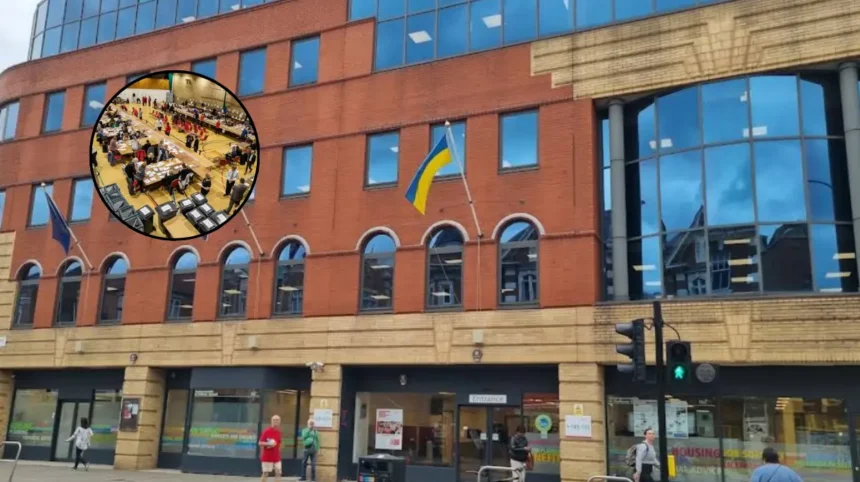
- Final results were announced just after 5am on Friday 8 May 2026, following polling on Thursday 7 May 2026.
- Hammersmith and Fulham was one of all 32 London boroughs contested in the 2026 local elections.
- More than six million Londoners were eligible to vote across the capital’s council elections.
- Labour leader Stephen Cowan retained his seat in Grove ward and said it was an honour to keep control of the council.
- The Conservatives gained two seats in Sands End after a recount.
- Reporting from the borough said turnout for the local election was 39.4%, higher than in 2022.
fulham/hammersmith/">Hammersmith (West London News) July 27 2026 – Labour won the 2026 Hammersmith and Fulham council election and kept control of the borough after a night of counting that left the party with 38 of the 50 seats. As reported by Alice Bathurst of SW Londoner, the party “once again dominated” locally despite weaker results elsewhere in the country, while Stephen Cowan said he felt relieved to have “got my team over the line”.
- What were the final results in Hammersmith and Fulham?
- Why did the result matter locally?
- When were the 2026 London local elections?
- How did Hammersmith and Fulham fit into the London picture?
- What did councillors and local reports say?
- Background to this development
- What could this mean for local voters?
What were the final results in Hammersmith and Fulham?
Labour’s tally fell slightly from the 40 seats it had won in 2022, but the party still finished with a clear majority in the 50-seat council.
The Conservatives increased their representation to 12 seats, with gains coming in Sands End after a recount, while the Greens, Liberal Democrats and Reform failed to win representation.
As reported by The Standard, the final numbers were Labour 38, Conservatives 12, Green 0 and Independent 0. The outlet said the result meant Labour had “comfortably held” the council, and noted that the party improved on its pre-election position after defections and one councillor going independent during the term.
Why did the result matter locally?
The election confirmed Labour’s continued hold over a borough it has controlled since 2014. The Standard reported that Labour’s grip on the council had been expected to continue despite a national drop in support, while SW Londoner quoted Cowan setting out priorities including the cost of living, employment for young people and social care.
The Conservatives’ gains were limited but still notable because polling had suggested other parties, including the Greens and Liberal Democrats, might make progress.
Instead, the Conservatives were the only opposition party to add seats, and the key change was concentrated in Sands End.
When were the 2026 London local elections?
The London borough elections were held on Thursday 7 May 2026, with counts continuing overnight into Friday 8 May.
The Standard reported that more than six million Londoners were eligible to vote, and that all 32 London boroughs were up for election.
The same source said there were also mayoral elections in five boroughs: Croydon, Hackney, Lewisham, Newham and Tower Hamlets.
How did Hammersmith and Fulham fit into the London picture?
Hammersmith and Fulham was one of several boroughs Labour held in the capital, though the wider election produced losses for the party in a number of other places. London results published by The Standard showed Labour holding the borough with 38 seats, while some other councils moved to the Greens, Reform or no overall control.
That broader context matters because Hammersmith and Fulham stood out as a Labour hold in a year when the party was under pressure in many parts of London.
The borough’s result therefore reflected local strengths even as the wider city saw significant political movement.
Explore More Hammersmith and Fulham News
Hammersmith Bridge Repairs Prioritised for Pedestrians, Cyclists, London 2026
West London Microphone Ban Extended – Hammersmith 2026
What did councillors and local reports say?
Cllr Stephen Cowan, quoted by The Standard, said it was an “honour” to retain control and added:
“We will never let the people of this amazing borough down.”
Reporting from SW Londoner said Cowan also pointed to Labour’s local record, saying the party offered “a message of hope” and not “blind hope”, while also promising to
“serve everyone in Hammersmith & Fulham, no matter who they voted for”.
The same report noted that Green candidates improved their vote share in some wards even though they did not win seats.
Background to this development
Labour has controlled Hammersmith and Fulham Council since 2014, when it ended an eight-year Conservative run.
The Standard reported that the borough had alternated between Labour and Conservative control before that, apart from a period of no overall control between 1978 and 1986.
The 2022 local election had given Labour 40 seats and the Conservatives 10, so the 2026 result represented a modest shift rather than a change of administration.
Coverage of the contest also noted that two Labour councillors had defected to the Green Party during the term, and another had become independent, which changed the pre-election picture before voters went to the polls.
What could this mean for local voters?
For residents and local service users, the result suggests continuity in council leadership, which usually means existing policies and priorities are likely to remain in place.
Based on the reporting from both SW Londoner and The Standard, the main areas likely to stay in focus are cost of living pressures, youth employment and social care.
For opposition parties, the election shows that Labour remains competitive in the borough even in a difficult wider political climate, while the Conservatives may see their Sands End gains as a base for future contests. For voters, the next test will be whether the council can deliver on the priorities set out during the campaign and whether any of the smaller parties can turn stronger vote shares into seats at the next election.