Hammersmith and Fulham, a vibrant London borough in West London, blends rich history, modern culture, and riverside charm, making it an ideal spot for residents and visitors alike. Formed in 1965 by merging the Metropolitan Boroughs of fulham/hammersmith/">hammersmith-and-fulham/">Hammersmith and Fulham, this area traces its roots to the ancient parish of Fulham from the seventh century, when the manor was granted to the Bishop of London. Nestled north of the River Thames and west of Kensington and Chelsea, it offers evergreen appeal through parks, landmarks, and community spirit.
Ancient Roots and Medieval Legacy
The borough’s story begins in the seventh century with Fulham’s manor estate, part of Middlesex county and controlled by the Bishop of London. Hammersmith started as a chapelry within Fulham parish until gaining its own vestry in 1631, becoming a separate civil parish. Danish invaders wintered here in 879, sailing up the Thames, while medieval times saw bishops residing in Fulham Palace amid agricultural landscapes dominated by the Church and monarchy.
Fulham’s early growth included dramatic events, like the 1141 capture of the Bishop of London at his manor by Geoffrey de Mandeville. By the Commonwealth era, the manor briefly left bishops’ hands, sold to Colonel Edmund Harvey. These layers of history, from Norman invasions to the English Reformation, shaped Hammersmith and Fulham’s enduring heritage.
Industrial Rise and Victorian Boom
Urbanisation accelerated from the early 19th century, with Fulham hosting the world’s first energy utility company at Sands End in 1824. Railway sidings and road networks spurred rapid development, transforming vacant lands into hubs like the Earls Court Exhibition Centre, opened near the Kensington border. Queen Victoria visited in 1879 for Buffalo Bill Cody’s Wild West Show at West Brompton.
Hammersmith’s first parish church, later St Paul’s, emerged in the 1660s, built by Sir Nicholas Crispe of the local brickworks, featuring a monument and bust of King Charles I. Parishes unified briefly under Fulham District from 1855 to 1866 before separating again. This era’s innovations laid foundations for today’s connectivity.

Iconic Landmarks and Cultural Spots
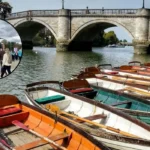
Fulham Palace stands as a historic gem, once the Bishops of London’s residence within the Thames loop, bordered by Kensington & Chelsea, Hammersmith, and Putney across the river. St Paul’s Church in Hammersmith, rebuilt in 1883, preserves Crispe’s monument and 17th-century artifacts. Riverside walks along the Thames highlight the borough’s scenic appeal.
Sports icons define the area: Chelsea FC, based here, has clinched six English championships (1955, 2005, 2006, 2010, 2015, 2017) and two UEFA Champions Leagues (2012, 2021). Fulham FC, London’s oldest professional club, and Queens Park Rangers in the Championship, add football fervor. These sites draw crowds year-round.
Modern Borough and Community Life
Renamed the London Borough of Hammersmith and Fulham on January 1, 1979, after initial calls as just Hammersmith, the area thrives today. The Fulham & Hammersmith Historical Society, formed in 1971 from earlier groups, promotes local archaeology through publications and events. Green spaces and transport links keep it accessible for West Londoners.
Demographics reflect diversity, with strong community ties fostering evergreen events like markets and festivals. Proximity to central London via Tube and buses enhances livability. Preservation efforts by groups like the Fulham Society safeguard this blend of old and new.

Why Hammersmith and Fulham Endures
This borough captivates with its Thames-side evolution from medieval parish to industrial powerhouse and cultural hub. Families enjoy parks, history buffs explore palaces, and sports fans cheer at iconic grounds. For West London locals, it remains a timeless treasure of heritage and vibrancy.