Schools in West London comprise a diverse network of state-funded academies, comprehensive community institutions, grammar schools, and independent fee-paying establishments regulated by the Department for Education and inspected by Ofsted. This urban region spans multiple London boroughs, including fulham/hammersmith/">hammersmith-and-fulham/">Hammersmith and Fulham, Ealing, Hounslow, Brent, Hillingdon, and Richmond upon Thames.
- How do state secondary schools and academies operate in West London?
- What role do independent and private schools play in West London?
- How are academic performance and examination results measured across West London?
- What support systems exist for special educational needs in West London schools?
- What options are available for post-16 education in West London?
The educational ecosystem in West London serves a multicultural, densely populated demographic requiring varied academic pathways. The sector is divided primarily between state-funded education, which follows the National Curriculum without charging tuition fees, and the independent sector, which sets its own curriculum and admissions criteria. State-funded options include community schools operated by local authorities, academies funded directly by central government, and free schools established by charitable trusts or parents.
Independent establishments in West London, such as St Paul’s School in Barnes and St Paul’s Girls’ School in Hammersmith, maintain centuries-old traditions of academic excellence. Concurrently, state secondary providers like The Tiffin Girls’ School and Tiffin School in neighboring Kingston offer high-performing selective environments. The geographic distribution of these institutions reflects historical development patterns, with dense clusters of private institutions located near the Thames corridor in Hammersmith, Kensington, and Chelsea, while comprehensive state networks dominate suburban sectors in Ealing and Hillingdon.
How do state secondary schools and academies operate in West London?
State secondary schools and academies in West London operate under government funding provisions to deliver free education to children aged 11 to 18, adhering to statutory performance frameworks and national curriculum guidelines set by the Department for Education.
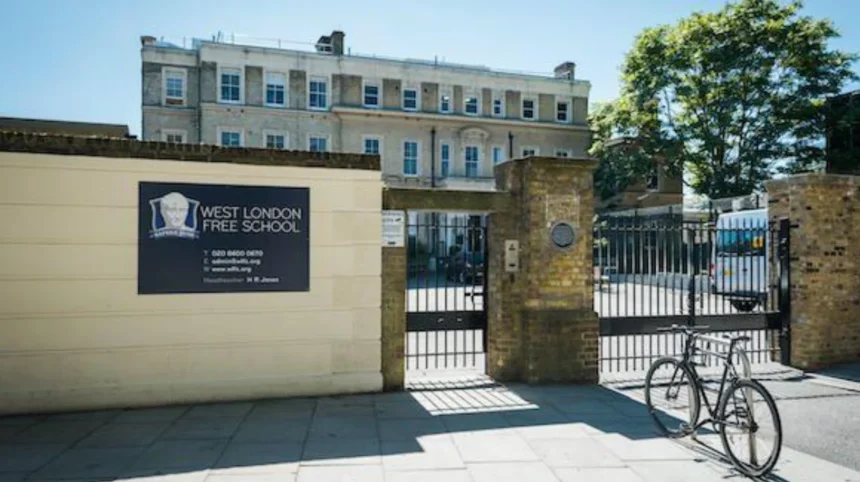
State-funded secondary education in this region incorporates several distinct operating models. Community schools are directly controlled by local authorities regarding admissions policies, whereas foundation schools and voluntary-aided schools enjoy greater autonomy over their asset management and religious character. Academies and free schools operate as independent, non-profit charitable trusts directly funded by the central government, bypassing local authority control. Examples of these structures include the West London Free School in Hammersmith and Ark Burlington Danes Academy in White City.
Admissions to these state institutions are governed by the pan-London admissions system, coordinated by local councils. Oversubscription criteria typically prioritize children in public care, children with statements of Special Educational Needs, siblings of current pupils, and applicants residing within designated geographic catchment areas. Performance monitoring is conducted rigorously by the Office for Standards in Education, Children’s Services and Skills (Ofsted), which assigns grades ranging from Outstanding to Inadequate based on quality of education, behavior, leadership, and personal development.

What role do independent and private schools play in West London?
Independent and private schools in West London operate outside state funding and national curriculum mandates, charging tuition fees while delivering elite academic preparation, extensive co-curricular programs, and selective entry examinations at ages 7, 11, and 13.
The independent sector in West London represents one of the densest concentrations of private education globally. Prominent examples include Godolphin and Latymer School, Latymer Upper School, and the Harrodian School. These establishments derive their income primarily from tuition fees, endowments, and charitable donations, allowing for smaller class sizes, specialized facilities, and extensive physical resources.
Selection processes for these institutions involve rigorous entrance assessments, including the Common Entrance examination or proprietary digital aptitude tests, alongside interviews and headteacher references. While exempt from the National Curriculum, independent schools prepare pupils for public examinations such as International General Certificate of Secondary Education (IGCSE) and General Certificate of Education Advanced Level (A-Level) qualifications. Academic league tables consistently position West London independent schools among the highest-performing institutions nationwide, with top establishments regularly recording over 80 percent of A-Level entries graded at A* or A.
How are academic performance and examination results measured across West London?
Academic performance across West London schools is evaluated using standardized national metrics, including Attainment 8, Progress 8, the percentage of pupils achieving strong passes in English and mathematics at GCSE, and the proportion of top grades achieved at A-Level.
Performance metrics provide objective benchmarks for comparing educational efficacy across different boroughs. At Key Stage 4, the GCSE level, the Department for Education tracks Attainment 8, which measures student achievement across eight qualifying subjects, and Progress 8, which calculates the value added by the school from the end of primary education. A strong pass is defined as a grade 5 or above under the numerical grading scale introduced to replace traditional letter grades.
At Key Stage 5, representing sixth-form education, performance is evaluated by the average point score per A-Level entry and the percentage of students securing top grades from A* to B. West London institutions frequently exceed national averages in these metrics. For instance, selective state and independent institutions in the region regularly report over 90 percent of GCSE entries awarded grades 9 to 7. These publicly available datasets enable families to assess long-term educational outcomes and institutional consistency across successive academic years.
Explore More Area Guide
Film Locations in West London: Iconic Sites and Screen History
Historic Landmarks in West London: Heritage Guide 2026
What support systems exist for special educational needs in West London schools?
Support systems for special educational needs and disabilities across West London schools operate under the statutory guidelines of the Children and Families Act 2014, requiring institutions to provide tailored intervention, specialized learning resources, and Education, Health and Care plans.
Educational providers in the region are legally mandated to identify and support children with diverse learning requirements, spanning cognition and learning, communication and interaction, social, emotional and mental health, and sensory or physical needs. Schools appoint a designated Special Educational Needs Coordinator to oversee the implementation of individualized support strategies. When a child’s needs exceed the resources normally available within a mainstream school’s delegated budget, local authorities conduct statutory assessments to issue an Education, Health and Care plan.
West London local authorities maintain specialized resource bases and partnered special schools to accommodate students requiring intensive, specialized intervention. These state-funded provisions work in tandem with independent therapeutic centers to ensure equitable access to the curriculum. Regular reviews involving educational psychologists, speech therapists, and pediatricians monitor student progress against specific developmental milestones outlined in statutory documentation.

What options are available for post-16 education in West London?
Post-16 education options in West London encompass school sixth forms, sixth-form colleges, and further education establishments offering academic A-Level courses, vocational diplomas, technical qualifications, and structured apprenticeship pathways.
Following the completion of compulsory secondary education at age 16, students in West London navigate a diversified post-16 landscape. School sixth forms, such as those attached to comprehensive academies and independent schools, traditionally focus on academic A-Level routes designed for university entrance. Conversely, dedicated further education providers, such as the College of North West London with campuses in Willesden, offer career-focused vocational training, BTEC diplomas, T-Levels, and technical certifications aligned with regional employment priorities.
Funding for post-16 education is administered through the Education and Skills Funding Agency, ensuring that provision remains free for students aged 16 to 18. These institutions incorporate robust careers guidance frameworks, work placement partnerships with local employers, and structured progression routes into higher education or skilled employment sectors, reflecting the economic demands of Greater London.
What types of schools are available in West London?
West London offers a wide range of educational options, including state-funded schools, academies, free schools, grammar schools, special schools, and independent private schools. Families can choose between free government-funded education and fee-paying institutions with selective admissions processes.