Key Points
- Ealing Council has approved plans for a large data centre complex on Southall Industrial Estate, West London.
- The data centre’s estimated electricity demand is 1,610,528 MWh per year — equivalent to the annual consumption of approximately 530,000 homes.
- Ealing borough only has 137,113 households, meaning the centre will use about four times the electricity of all homes in the area.
- Solar panels on the data centre roof will generate just 150,000 kWh per year, less than one ten-thousandth of its electricity demand.
- The project raises serious concerns about carbon emissions and further strain on London’s electricity grid.
- The London Assembly and other bodies have previously warned about data centres’ impact on energy infrastructure and climate commitments.
- Foxglove, a tech justice non-profit, criticises the council’s approval and calls for more renewable energy to power the facility.
- The council’s planning report recommends the project be referred to the London Mayor’s office for a ‘stage 2’ decision.
- Another large-scale data centre development in Ealing is also awaiting mayoral review.
What Has Ealing Council Approved Regarding the Data Centre?
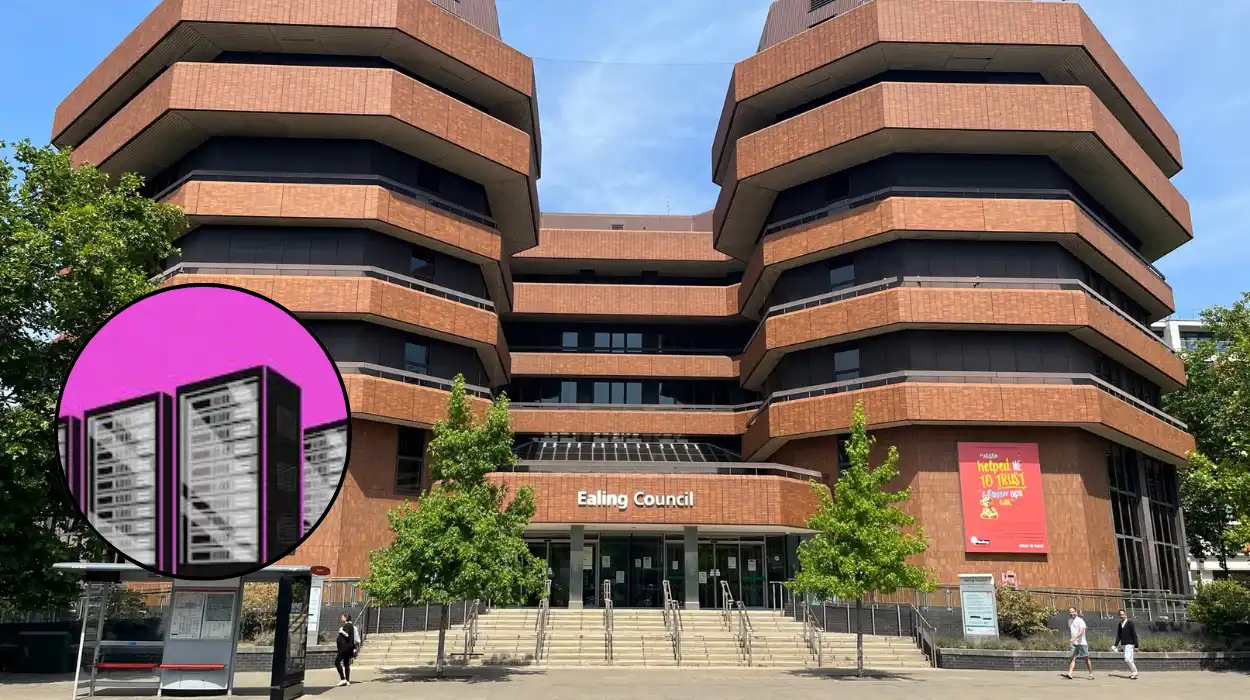
As reported by Foxglove, a tech justice non-profit, Ealing Council gave the green light late last month for the construction of a significant data centre campus on the Southall Industrial Estate. The council’s own planning documents reveal the immense scale of the project’s energy consumption. According to the planning report, the data centre’s total estimated electricity demand is 1,610,528 MWh per year, which equates to the annual electricity use of around 530,000 homes.
- Key Points
- What Has Ealing Council Approved Regarding the Data Centre?
- Why Is the Electricity Consumption of the Data Centre Controversial?
- How Effective Will the Data Centre’s Solar Panels Be?
- What Have Other Authorities Said About Data Centres and London’s Electricity Grid?
- What Is the Next Step in the Approval Process?
- What Are the Environmental and Economic Implications of This Data Centre?
- How Are Data Centres Changing the Energy Landscape?
Given that the borough of Ealing has 137,113 households, according to the council’s website, this means the new data centre will consume approximately four times as much electricity as all homes in the area combined. This figure highlights the vast power needs of such hyperscale data centres.
Why Is the Electricity Consumption of the Data Centre Controversial?
Donald Campbell, advocacy director at Foxglove, emphasised the worrying implications of this approval. He stated:
“Data centres use staggering amounts of electricity – according to the council’s own report, these ones will use as much power as half a million homes. That’s four times the number of households in Ealing. The data centre owners may pay for the electricity, but in many ways the rest of us will be footing the bill.”
He further warned that using such vast quantities of electricity will lead to “huge carbon emissions as it’s generated,” which threatens efforts to combat climate change.
“This extra demand on electricity is also likely to put further burdens on our already creaking grid, and drive up prices for other consumers – as has been seen already in America’s data centre boom,” Campbell added.
How Effective Will the Data Centre’s Solar Panels Be?
Ealing Council’s report did mention that the data centre’s roof will host “one of the largest photovoltaic (PV) installations in the borough.” However, it also notes that these solar panels will produce only 150,000 kilowatt hours (kWh) per year. This represents less than one ten-thousandth of the total electricity demand of the data centre.
This minimal renewable energy generation has been criticised as insufficient to mitigate the environmental impact. According to Campbell of Foxglove:
“Putting solar panels on the data centre’s roof will be a drop in the ocean compared to the vast electricity demand it will create. At the very least, data centre developers should be required to build enough new renewable energy capacity to power their facilities.”
What Have Other Authorities Said About Data Centres and London’s Electricity Grid?
The challenges posed by data centre electricity demands have been flagged by the London Assembly earlier this year. A press release from the Assembly highlighted that London’s energy grid capacity is under serious pressure not only from planned new housing developments but also from the surge in hyperscale data centre construction.
This reflects broader concerns that such developments could compromise the city’s ability to meet climate goals and may necessitate costly upgrades to electricity infrastructure.
What Is the Next Step in the Approval Process?
According to Ealing Council’s planning report, the newly-approved data centre should be referred to the London Mayor’s office for a ‘stage 2’ decision. Notably, another proposed large-scale data centre in the borough, located at the ‘Honey Monster’ site, is also awaiting comment from the Mayor.
This means the final approval at the city-wide level is pending, providing an opportunity for further review and possible conditions related to energy use and environmental impact.
What Are the Environmental and Economic Implications of This Data Centre?
The decision to approve a data centre that uses four times the electricity of all local homes raises multi-faceted concerns:
- Environmental: The extensive power consumption will likely contribute to increased carbon emissions unless renewable energy sources are significantly scaled up.
- Energy Infrastructure: London’s electricity grid, already under pressure, could face further strain, risking both supply stability and higher costs for consumers.
- Economic: Data centre operators cover electricity costs, yet the wider community may bear indirect costs through increased strain on energy systems and slower progress toward climate targets.
Environmental advocates urge London’s councils, the Mayor, and the UK Government to control the rapid expansion of data centres to prevent unchecked environmental damage.
How Are Data Centres Changing the Energy Landscape?
Hyperscale data centres are a growing phenomenon worldwide, serving surging demand for cloud computing, streaming, and digital services. Their enormous energy needs are reshaping regional electricity markets and infrastructure requirements.
As reported by various media sources including Foxglove, this trend demands urgent policy attention to balance economic benefits with environmental sustainability.