Key Points
- Arlo Babin, a 16-year-old student from Feltham, achieved outstanding GCSE results despite suffering a severe infection and experiencing housing instability during the examination period.
- The Logic Studio School pupil was hospitalised and forced to miss crucial GCSE examination papers in both Mathematics and History.
- Babin recorded high-tier marks across eight subjects, securing a D2 in Creative Media Production, grade 8 in Business, grade 8 in English Language, grade 7 in History, grade 7 in Maths, grade 7 in Computer Science, grade 6 in Physics, and grade 6 in English Literature.
- The student credited the tailored intervention sessions, small class sizes, and personal academic support provided by Logic Studio School for enabling her academic success under extreme personal pressure.
- Babin has expressed a strong ambition to pursue higher education and a future career as a Formula 1 engineer.
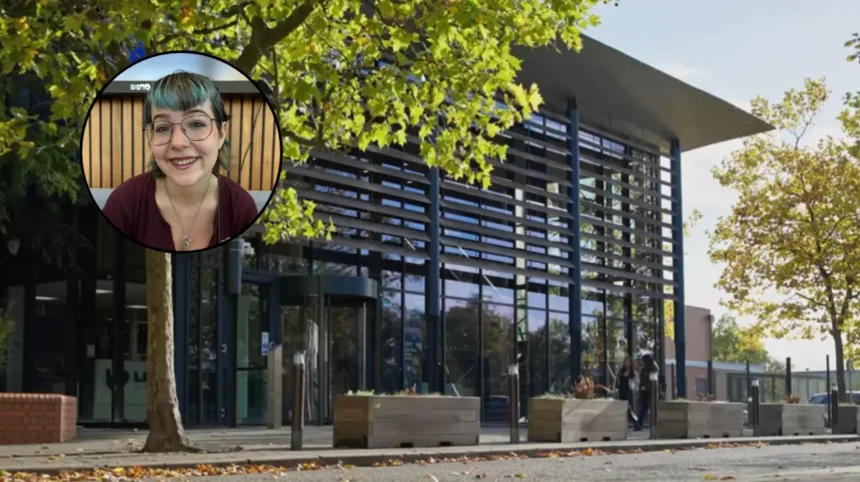
Feltham (West London News) August 21, 2026 – A sixteen-year-old secondary school pupil from Feltham, South West London, has successfully overcome severe medical complications and domestic displacement to achieve a top-tier set of GCSE results. Arlo Babin, a student attending Logic Studio School, faced extreme disruptions in the crucial weeks leading up to and during her terminal secondary education examinations. While preparing for her papers, Babin contracted a severe infection that ultimately resulted in hospitalisation, causing her to miss critical examination sessions in both Mathematics and History. Concurrently, a sudden alteration in her family circumstances forced an unexpected house move during the height of the examination timetable, leaving her without a stable living environment or dedicated study space.
- Key Points
- How Did Health and Domestic Crises Impact Examination Preparation?
- What Role Did School Support Play in Navigating Academic Interventions?
- What Are the Pupil’s Ambitions for Future Academic and Professional Pathways?
- Background of the Particular Development
- Prediction: How This Development Can Affect the Educational Sector and Local Stakeholders
Despite the compounded physical, operational, and psychological strain, the published examination figures confirm that Babin secured impressive results across eight subjects. Her final transcript includes a distinction-level D2 grade in Creative Media Production, grade 8s in both Business and English Language, grade 7s in History, Mathematics, and Computer Science, alongside grade 6s in Physics and English Literature.
How Did Health and Domestic Crises Impact Examination Preparation?
The period surrounding the national GCSE assessment window was marked by profound disruption for the Feltham teenager. The onset of a severe infection not only impaired her physical health but required emergency medical intervention and subsequent admission to hospital. The timing of the hospitalisation directly coincided with the national examination timetable, preventing her attendance at key papers.
Reflecting on the traumatic series of events that transpired during the evaluation window, Babin explained that her personal circumstances deteriorated rapidly at a moment when stability was most required. She noted that her life felt as though it was falling apart, particularly when the illness escalated to the point of hospitalisation, forcing her to miss her Mathematics and History exams.
In addition to the acute health emergency, domestic complications further compromised her ability to prepare for the remaining academic assessments. A change in family circumstances dictated a forced relocation, resulting in her household belongings being packed into storage containers during the peak revision weeks.
Detailing the physical constraints imposed by the domestic move, Babin stated that in the direct run-up to her GCSEs, her family was moving house, which left everything packed in boxes. She recalled having to revise whilst seated on her bed using a tray, as she lacked access to a proper, quiet study desk or a dedicated learning space.
What Role Did School Support Play in Navigating Academic Interventions?
In navigating the severe academic disadvantages brought about by illness and displacement, the specific infrastructure and pastoral framework of Logic Studio School proved instrumental. The specialist studio school setting, which operates with smaller cohort sizes than traditional secondary establishments, enabled staff to deliver targeted educational interventions tailored to high-achieving pupils whose attendance had been involuntarily disrupted.
Babin emphasised that the institutional structure of her school offered a crucial safety net during the crisis period. She highlighted that she was fortunate to attend a school that was exceptionally supportive, noting that the smaller scale of the institution permitted extensive after-school revision opportunities.
The academic recovery strategy deployed by the teaching staff involved small-group intervention workshops specifically designed to maintain the momentum of pupils targeted for top-tier grades. These focused sessions allowed for an individualized approach to complex subject content that Babin had missed during her period of hospitalisation and convalescence.
Describing the nature of the academic support she received, Babin explained that she benefited from targeted interventions conducted in small groups of fewer than ten pupils, specifically aimed at those predicted higher grades. She noted that this setup was highly beneficial because the dynamic was distinctly personal, granting pupils significantly greater freedom to ask detailed questions and clarify complex content.
What Are the Pupil’s Ambitions for Future Academic and Professional Pathways?
The attainment of strong GCSE grades across technical, scientific, and humanities subjects positions Babin to progress into advanced post-16 qualifications. Her academic performance, particularly the high marks achieved in Mathematics, Physics, Computer Science, and Creative Media Production, directly aligns with her long-term vocational objectives within the high-performance engineering sector.
Babin has explicitly outlined her career target, confirming her intention to complete further academic training to become a Formula 1 engineer. Motorsport engineering demands rigorous foundations in STEM subjects (Science, Technology, Engineering, and Mathematics), a track record that Babin has established despite missing key assessment components due to hospital admission. The resilience demonstrated throughout her secondary assessments is expected to serve as a strong baseline as she transitions into specialized A-Level or vocational Level 3 qualifications.
Explore More Feltham News
London Waterloo SWR Trains Delayed After Feltham Trackside Fire West London 2026
SWR Disruption as Feltham Fire Halts Waterloo Trains West London 2026
Background of the Particular Development
GCSE examinations represent the baseline national standard for secondary education in England, Wales, and Northern Ireland, serving as the primary metric for entry into further education colleges, sixth forms, apprenticeships, and university courses. The administration of these examinations is governed by strict national frameworks set by examination boards and regulated by Ofqual. Under standard joint council guidelines, when candidates miss an examination paper due to verifiable medical emergencies or acute illness, special consideration protocols may be invoked. These procedures allow awarding bodies to calculate an overall grade based on completed components, provided the candidate has satisfied the minimum percentage requirement of the qualification’s assessment criteria.
Studio schools, such as Logic Studio School, were introduced into the English state education landscape to offer an alternative approach to traditional secondary education. Designed for pupils aged 14 to 19, these small-scale institutions combine mainstream academic qualifications with vocational pathways and direct employer engagement. By maintaining small overall enrolments—typically around 300 pupils—studio schools aim to foster close pastoral oversight, personalized academic mentoring, and small class sizes. Babin’s case illustrates the specific operational model of studio schools, where small cohort sizes facilitate immediate, small-group interventions for pupils experiencing acute personal, domestic, or medical trauma during key assessment windows.
Prediction: How This Development Can Affect the Educational Sector and Local Stakeholders
This development carries notable implications for educational practitioners, institutional policy makers, local pupils, and pastoral support teams within Southwest London.
- Validation of Small-Cohort Educational Models: The success of Babin under severe personal adversity provides a clear case study supporting the efficacy of small-cohort secondary settings. Educational authorities and multi-academy trusts evaluating pastoral strategies are likely to examine the small-group intervention model used by Logic Studio School to improve retention and attainment rates for pupils experiencing acute crisis.
- Refinement of Special Consideration and Crisis Protocols: Secondary schools across the London Borough of Hounslow may use this instance to review their internal crisis management frameworks. Ensuring that vulnerable or acutely ill pupils are rapidly transitioned into small-group interventions—rather than relying solely on independent study—can become a standardized benchmark for school pastoral departments.
- Inspiration for Local STEM Candidates: For pupils from non-traditional backgrounds or those facing socio-economic disruptions in Feltham and surrounding areas, Babin’s academic attainment within technical subjects (Computer Science, Physics, Media) provides a visible precedent. Her trajectory towards Formula 1 engineering highlights the viability of pursuing specialized STEM careers despite significant personal disruptions during secondary schooling.