Key Points:
- Kensington and Chelsea Council has seized 1,000 rental e-bikes since January due to dangerous parking.
- The bikes come from Lime, Forest, Bolt, and Voi.
- Residents have complained about trip hazards and blocked pavements and roads.
- Over £81,000 has been collected in seizure and storage fees, reinvested to expand enforcement.
- The council has 246 designated e-bike bays, compared with approximately 3,000 in London.
- Kingston Local Authority Support assists with street enforcement.
- Operators are given up to six hours to move bikes that are out of designated areas but not obstructing.
- Lime and Forest have pledged to improve bike parking and service.
- Councillor Johnny Thalassites calls for government intervention to manage e-bike operations long-term.
What prompted Kensington and Chelsea Council to start seizing e-bikes?
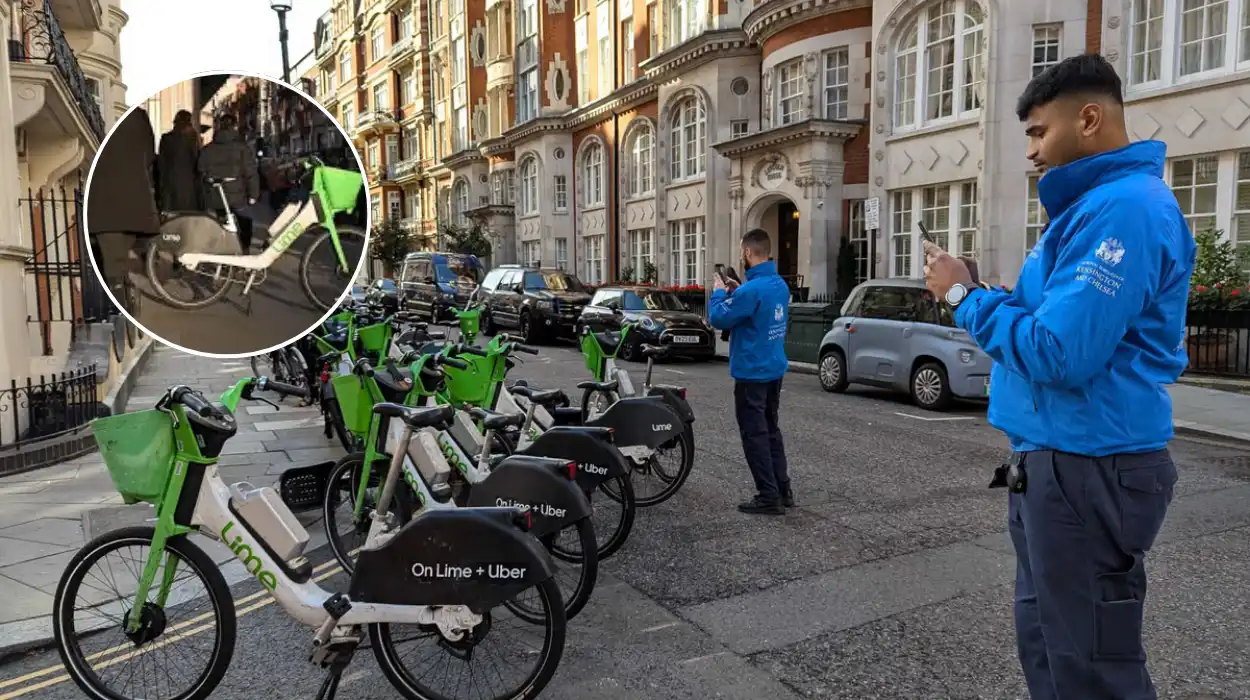
As reported by BBC News, the west London borough has taken action to remove rental e-bikes that are causing safety hazards on streets and pavements. Since January 2025, following residents’ complaints of trip hazards and blocked thoroughfares, the council has seized 1,000 “dangerously parked” bikes. These bikes obstruct pedestrian and vehicle pathways, posing risks to the public.
- Key Points:
- What prompted Kensington and Chelsea Council to start seizing e-bikes?
- Which e-bike operators are affected by the seizures?
- How is Kensington and Chelsea Council enforcing the new regulations?
- What financial impact has the enforcement had?
- How many e-bike parking bays exist in Kensington and Chelsea?
- What does Johnny Thalassites suggest for the future of e-bike regulation?
- Are there similar initiatives or concerns across London?
- How have e-bike companies responded to complaints about parking?
Johnny Thalassites, lead council member for planning and environment, expressed the residents’ frustration, saying they were “sick” of bikes being left obstructively on pavements and roads. The council aims to improve pedestrian safety and accessibility by enforcing stricter bike parking regulations.
Which e-bike operators are affected by the seizures?
The e-bikes removed come from several major hire providers including Lime, Forest, Bolt, and Voi. Lime and Forest, which operate extensively across London, have already acknowledged the problem. A Lime spokesperson told BBC London in October 2025 that the company recognises the challenge of correct bike parking, stating, “We never want our bikes to get in anyone’s way.” They highlighted their contributions to funding more than 3,250 parking bays in London and said they have increased their on-street teams to help manage bike placement.
How is Kensington and Chelsea Council enforcing the new regulations?
The council’s street enforcement is carried out by staff supplemented since July by Kingdom Local Authority Support, a private contractor providing trained enforcement officers for various local authorities. These officers respond promptly to resident reports and conduct patrols in known hotspot areas such as near Harrods.
Under the Highways Act, officers can remove bikes that obstruct pavements, create a risk of falling over, or endanger other road users. Bikes found outside designated bays but not causing obstruction trigger a warning to the operators, who are given between two to six hours to relocate them before potential seizure.
What financial impact has the enforcement had?
Kensington and Chelsea Council has collected over £81,000 in fees from e-bike operators for seizure and storage costs as of November 2025. This income is reinvested into expanding the enforcement programme, adding more staff and resources to continue tackling the problem throughout the borough.
How many e-bike parking bays exist in Kensington and Chelsea?
Currently, Kensington and Chelsea Council has established 246 designated parking bays for rental e-bikes. This number is relatively small compared to around 3,000 such bays across the wider London area, indicating a potential need for more infrastructure to accommodate growing e-bike use.
What does Johnny Thalassites suggest for the future of e-bike regulation?
Johnny Thalassites emphasised the growth in e-bike use and the need for clear legislation. “E-bikes have boomed and they are a convenient way for people to get around, but legislation is lagging behind,” he told BBC News. As a Conservative councillor, he called for a long-term solution from the UK government to manage e-bike demand and operations by providers to avoid ongoing public safety and congestion issues.
Are there similar initiatives or concerns across London?
The issue of e-bike parking and safety has attracted attention citywide. The Mayor of London has described e-bike hire schemes as “like Wild West,” highlighting the challenges of unregulated or poorly managed bike fleets. Surveys also indicate that injuries from e-bikes are becoming a significant burden for emergency and surgical services in the capital.
For example, a BBC News report cited surgeons describing the rising incidents of accidents caused by e-bikes and e-scooters. Other councils have introduced bans or specific restrictions on leaving e-bikes on pavements to prevent obstructions.
How have e-bike companies responded to complaints about parking?
Lime and Forest have publicly committed to improving their service and addressing pavement blocking. Lime, as previously noted, highlights its efforts to fund parking infrastructure and deploy on-street teams for maintenance and redistribution. The company stresses ongoing collaboration with councils to reduce inconvenience and hazards.
Forest echoes these commitments and has implemented technology to encourage riders to park in designated bays. Bolt and Voi, other major London e-bike suppliers, have also been part of discussions with local authorities to find better operational models.