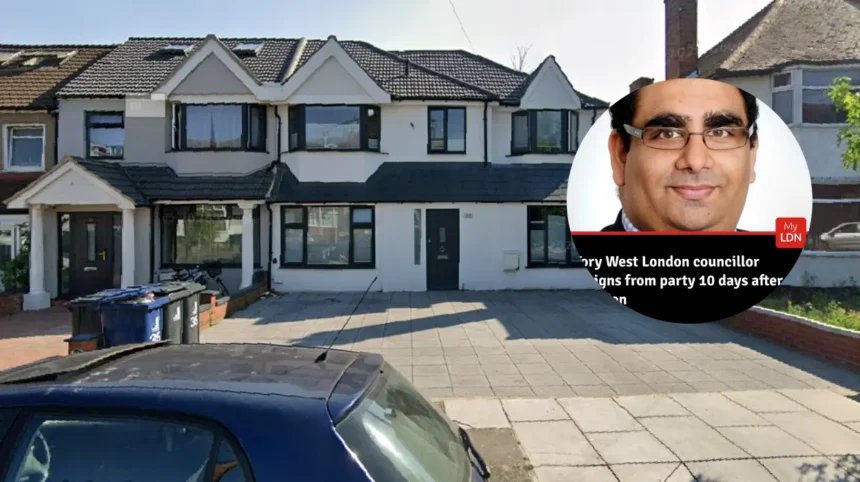
Key Points
- Cllr Kaushik Banerjee, former Conservative councillor for Ickenham & South Harefield, has broken his silence after suddenly resigning from the Conservative Party
- The councillor released an almost 1,500-word statement criticising Hillingdon Council’s new leadership under Cllr Steve Tuckwell
- Banerjee claims the new leadership lacks “a sufficiently clear or credible long-term strategy for addressing the financial and structural challenges now facing Hillingdon”
- The Conservatives have called on Banerjee to resign completely, arguing he lacks a mandate to represent his ward as an independent
- Cllr Ian Edwards stood down as council leader following the May 7, 2026 local elections, replaced by Cllr Steve Tuckwell
- Banerjee resigned last week without any public statement or warning according to Hillingdon Conservatives
- Banerjee won 2,482 votes on May 7 in the Ickenham and South Harefield ward election as a Conservative
- The councillor remained silent for over a week before releasing his detailed statement addressing the controversy
Local West London(West london) May 26, 2026 – A political controversy has erupted in West London after Councillor Kaushik Banerjee, who represented Ickenham & South Harefield as a Conservative, suddenly resigned from his party and now faces calls to step down completely from his council position.
- Key Points
- Why Has Banerjee’s Resignation Sparked Calls For Him To Resign Completely?
- What Did Banerjee Say About The New Hillingdon Council Leadership?
- How Did The 2026 Local Elections Shape Hillingdon’s Political Landscape?
- What Does This Mean For Hillingdon Council’s Future Governance?
- What Background Led To This Political Development?
- How Will This Development Affect West London Residents And Conservative Voters?
As reported by Philip James Lynch, Local Democracy Reporter for mylondon.news, the now ex-Tory councillor has broken his silence amid mounting pressure, releasing an almost 1,500-word statement that takes direct aim at the new leadership of hillingdon/hillingdon-council/">Hillingdon Council. According to Lynch’s reporting, Banerjee “tears into the new leadership of Hillingdon Council, which he describes as lacking a ‘sufficiently clear or credible long-term strategy for addressing the financial and structural challenges now facing Hillingdon'”.
The resignation came without any public explanation last week, and according to Hillingdon Conservatives, occurred without any warning to party colleagues. This sudden departure has left the party and local residents seeking answers about what drove the councillor to abandon the Conservative group just weeks after winning re-election with 2,482 votes on May 7, 2026.
Why Has Banerjee’s Resignation Sparked Calls For Him To Resign Completely?
The Conservative Party in Hillingdon has formally called on Banerjee to resign from his council seat entirely. As reported by Philip James Lynch of mylondon.news, the party argues that Banerjee “lacks a mandate to represent his ward as an independent”. This position stems from the fact that voters elected him specifically as a Conservative candidate, not as an independent councillor.
The timing of the resignation has intensified scrutiny. Banerjee was elected on May 7, 2026, representing Ickenham & South Harefield alongside fellow Conservatives Cllr Eddie Lavery and Cllr Jane Palmer. His departure from the party less than three weeks after the election has raised questions about whether he can legitimately claim to represent constituents who voted for him as a Conservative.
According to the Hillingdon Conservatives’ position as reported by Lynch, the councillor’s sudden exit “without any warning” demonstrates a lack of respect for both party members and constituents. The party maintains that independent councillors should be those who ran as independents, not former party members who abandon their ticket after winning election.
What Did Banerjee Say About The New Hillingdon Council Leadership?
In his detailed statement, Banerjee directed sharp criticism at Cllr Steve Tuckwell, who became leader of Hillingdon Council following the local elections. As reported by Philip James Lynch of mylondon.news, Banerjee specifically targeted the new leadership’s strategic vision, stating they lack “a sufficiently clear or credible long-term strategy for addressing the financial and structural challenges now facing Hillingdon”.
The leadership change occurred when Cllr Ian Edwards stood down as leader after the local elections, to be replaced by Cllr Steve Tuckwell. Edwards had announced his decision not to seek re-election as Leader of the Hillingdon Conservative Group at their Annual General Meeting on Saturday, May 9, 2026.
Banerjee’s statement represents a significant public rift within the Conservative group that held Hillingdon Council with a majority of 30 seats out of 50 total confirmed councillor positions. The councillor’s criticism suggests internal disagreements about how the council should manage its finances and address structural challenges facing the borough.
How Did The 2026 Local Elections Shape Hillingdon’s Political Landscape?
The May 7, 2026 local elections produced a decisive Conservative victory in Hillingdon. As reported by the NW Londoner, “The Conservative Party held on to Hillingdon Council receiving a majority of 30 seats” out of 50 confirmed councillor positions. Labour gained 16 seats, Reform secured four seats, and the Green Party won one seat.
Going into the election, the Conservatives held 30 of the 53 council seats, Labour held 18, the Hayes Independent Party group held five seats, and the Green Party held one seat. The Conservative Party maintained its position with the same number of seats despite boundary changes.
In the Ickenham & South Harefield ward specifically, Banerjee won alongside Eddie Lavery and Jane Palmer, all Conservatives. This ward contains a mixture of residential areas and green space, with Ickenham Village at its heart, including South Harefield following 2022 boundary changes.
Banerjee’s resignation represents one of several political developments following the elections, though unlike some defections reported in neighbouring areas, his departure from the Conservative Party is unusual given his recent election victory on the Conservative ticket.
What Does This Mean For Hillingdon Council’s Future Governance?
The controversy surrounding Banerjee’s resignation occurs as Hillingdon Council begins working under new leadership. With Cllr Steve Tuckwell now leading the council after Edwards stood down, the Conservative group faces internal challenges to maintaining unity.
The council’s 30-seat majority means that losing even one councillor could impact the group’s ability to pass legislation, though Banerjee would still sit as an independent councillor unless he resigns completely. His continued presence on the council as an independent, despite Conservative calls for his complete resignation, creates an unusual political dynamic in the chamber.
Councillor Kaushik Banerjee had previously served as Membership Officer of the Ruislip, Northwood and Pinner Conservative Association since July 2020 and was also a Local Authority Governor at Hillside Infant School. This background suggests deep involvement in local Conservative politics before his election as councillor.
The financial and structural challenges Banerjee referenced in his statement remain unresolved, with no public details available about the specific issues he believes the new leadership is mishandling.
What Background Led To This Political Development?
Councillor Kaushik Kumar Banerjee represents Ickenham & South Harefield at Hillingdon Council, having won re-election on May 7, 2026, with 2,482 votes as a Conservative candidate. He sits alongside fellow Conservatives Cllr Eddie Lavery, a resident of the area for 30 years and councillor since 2006, and Cllr Jane Palmer in the ward.
The Ickenham & South Harefield ward contains key locations including Ickenham Village conservation area, Swakeleys Park, Swakeleys House, River Pinn, Moorhall Recreation Ground, Denham Quarry Woods, and schools including Vyners and Douay Martyrs Secondary Schools. The Conservative trio of Banerjee, Lavery, and Palmer had previously highlighted their track record supporting residents on issues including HS2 mitigation, road resurfacing, flooding support, and speed sign installations.
Cllr Ian Edwards, who previously led Hillingdon Council, announced on Friday, May 8, 2026, that he would not seek re-election as Leader of the Hillingdon Conservative Group at their Annual General Meeting on Saturday, May 9, 2026. Edwards stood down to be replaced by Cllr Steve Tuckwell, who previously served as Cabinet Member for Planning, Housing & Growth.
The resignation occurred without Banerjee providing any public explanation for over a week, according to Hillingdon Conservatives, who stated he departed “without any warning”. This silence period ended with the release of his nearly 1,500-word statement on May 26, 2026, approximately 19 days after the election and roughly two weeks after his undisclosed resignation from the party.
How Will This Development Affect West London Residents And Conservative Voters?
This political development directly impacts residents of Ickenham & South Harefield ward, who elected Banerjee specifically as a Conservative candidate with expectations of party-backed representation and support. The ward’s 2,482 voters who chose Banerjee as a Conservative now face uncertainty about whether their elected representative can effectively deliver on promises made during the campaign without Conservative party resources and backing.
Conservative voters across Hillingdon face questions about party unity and stability under new leader Cllr Steve Tuckwell. With the Conservatives holding 30 of 50 seats, internal divisions like Banerjee’s resignation could affect the group’s ability to govern cohesively and implement their agenda for the borough.
The controversy may also influence future elections in the ward and broader Hillingdon. Voters may question whether candidates who might later abandon their party will stand again, potentially affecting turnout and trust in the electoral process. Local democracy faces challenges when elected representatives change party affiliation shortly after winning election on a specific party ticket.
Residents seeking council services, planning decisions, housing support, and transport improvements may experience disruption if the internal Conservative conflict delays decision-making or diverts attention from service delivery. Banerjee’s criticism about the lack of clear long-term strategy for financial and structural challenges suggests unresolved issues that could affect council services affecting all Hillingdon residents.
The situation also sets a precedent for how independent councillors who previously ran as party members will be treated, potentially influencing future political behaviour among councillors considering party changes after election.