

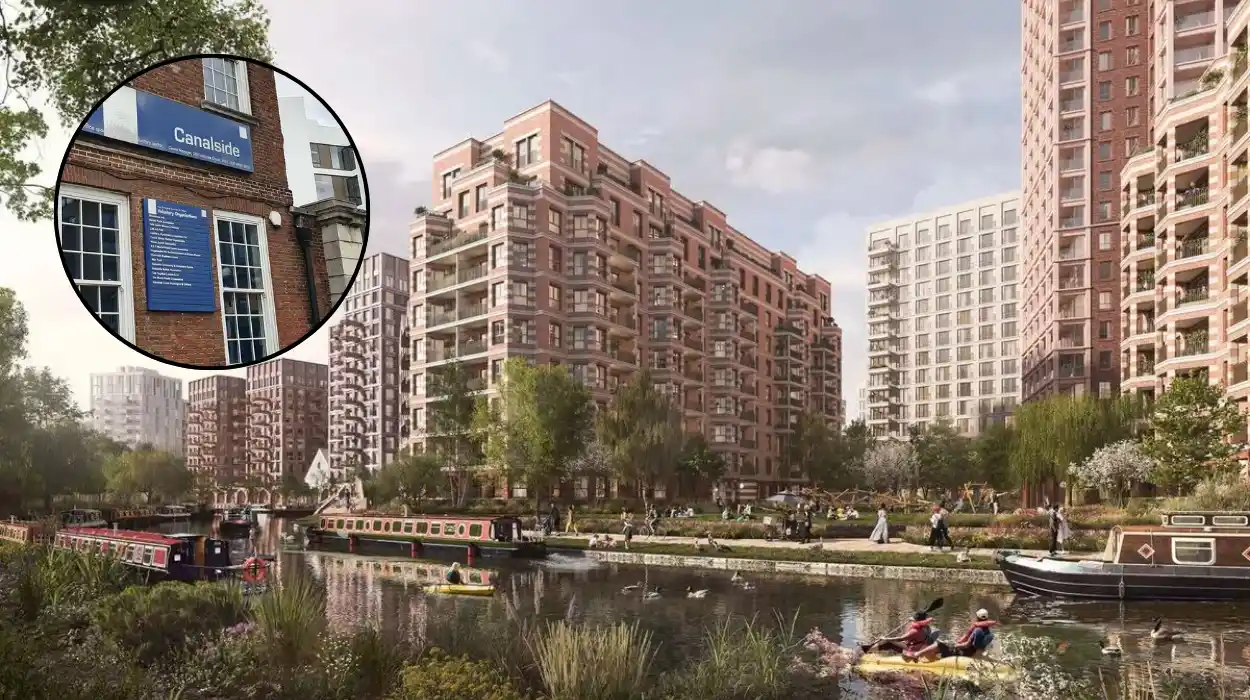
Key Points
- Proposal for a massive redevelopment at Canal Way, North Kensington, West London, aka Kensal Canalside Opportunity Area (KCOA)
- Project by Ballymore and Sainsbury’s includes 2,519 homes with 500 affordable units, offices, healthcare, nursery, restaurants, leisure and a public park
- Towers will range from 9 to 29 storeys; total of six plots with five under current planning application
- Over 1,800 objections and 1,673 letters of support received
- Local council officers recommend approval; Kensington and Chelsea Council to vote November 11
- Mayor of London Sadiq Khan to give final approval due to the scale of the development
- Site currently a disused gasworks with existing Sainsbury’s, petrol station, car park, community hub, and 16 social homes that will be demolished
- Development exempt from Community Infrastructure Levy but £21.9 million contributions to City Hall required
- Project forecasted to take 11 years from next year, finishing in 2037, with two construction phases
- Objection concerns include transport infrastructure, height, building mass, and insufficient affordable housing
- Council counters objections citing new bus routes, station upgrades, and bridge plans to improve accessibility
- Affordable housing accounts for 20% of units (500 homes), below council’s 35.7% target due to site challenges
- 342 social homes and 158 intermediate rental homes planned, tenants in current social homes guaranteed new flats on site
- Development will impact Grade I listed Kensal Green Cemetery and canal towpath through overshadowing
- Ladbroke Grove Rail Crash memorial will remain unaffected
- Ownership of site split between Ballymore, Sainsbury’s, council, Berkeley St William, Network Rail, Department for Transport, and St William Homes
What Is the Proposed Development at Kensal Canalside in West London?
As reported by Adrian Zorzut of London World, the proposed scheme at Canal Way in North Kensington, West London, aims to transform the currently disused gasworks site into a large-scale mixed-use development. It will feature 2,519 residential properties across towers ranging from nine to 29 storeys. The project includes 500 affordable homes, office space, healthcare, a nursery or creche, restaurants, leisure facilities, a neighbourhood centre, and a public park. The redevelopment site comprises existing facilities such as a Sainsbury’s supermarket, petrol station, car park, community hub, and 16 social homes that are set for demolition.
Why Is This Development Significant for West London’s Skyline?
The scale and height of the buildings will dramatically alter West London’s local skyline, notably introducing tall towers up to 29 storeys high in an area currently low-rise. London World emphasises that the site is within one of London’s 48 ‘Opportunity Areas’ designated for redevelopment and housing growth. The project is therefore intended to support London’s housing needs but has drawn criticism due to its size, massing, and impact on surrounding heritage sites in West London.
Who Are the Key Stakeholders and What Is the Planning Process in West London?
The planning application is jointly submitted by Ballymore and Sainsbury’s. Ownership of the land is fragmented: Ballymore, Sainsbury’s, Kensington and Chelsea Council, Berkeley St William, and Network Rail own the northern section, while the Department for Transport owns the southern section. St William Homes owns a separate sixth plot excluded from this application but subject to a separate approval process.
Kensington and Chelsea Council’s planning officers have recommended approval, and the council is set to decide at its meeting on Tuesday, 11 November. Given the development’s scale, the matter must receive final approval from Mayor of London Sadiq Khan.
What Are the Community Reactions and Concerns in West London?
The application has generated significant public response in West London: over 1,800 objections and 1,673 letters of support. Objectors express concerns mainly about:
- Inadequate transport links and infrastructure for the increased population
- Excessive building height and mass impacting West London’s character
- Insufficient affordable housing proportion, with the scheme offering 20% compared to the council’s 35.7% target
London World notes that supporters highlight the necessity for additional housing and regeneration in West London.
How Will Infrastructure and Transport Be Managed for the New Residents of West London?
Kensington and Chelsea Council stated plans to introduce new bus routes and construct a pedestrian bridge to improve access to the nearest Underground station, Ladbroke Grove, serving West London residents. Funds have also been secured for station upgrades. This is intended to address transport concerns raised during the consultation.
Why Is the Affordable Housing Proportion Lower Than the Council’s Target in West London?
The council acknowledges that the affordable housing offer falls short of its 35.7% target but points to unique challenges with the site. These include the high cost of decontaminating the former gasworks and the mixed ownership structure complicating delivery. The 500 affordable homes — representing 20% of units — include 342 social rent and 158 intermediate rent units. Existing tenants in the 16 social homes will be guaranteed replacement flats within the development.
What Are the Environmental and Heritage Impacts of the Development in West London?
The development will have visual and environmental effects, particularly overshadowing Grade I listed Kensal Green Cemetery and parts of the canal towpath, as outlined in the planning application. However, the Ladbroke Grove Rail Crash memorial will remain untouched.
How Long Will the Development Take and What Are the Next Steps in West London?
If approved, construction is expected to begin next year and conclude in 2037, spanning 11 years. Work will proceed in two phases, with most residential units built during the first phase. The planning application is a hybrid form, combining detailed plans with outline proposals to guide future development decisions.
The decision by Kensington and Chelsea Council on 11 November will be the first step before referral to Mayor Sadiq Khan, who holds final authority to approve the scheme.
