Key Points
- A Brent semi-detached property has been listed for £6,000,000, provoking widely cited local disbelief over its price tag.
- The listing exemplifies tension in West London’s luxury property market, where stagnating demand collides with persistent high asking prices.
- Market analysts cite broader economic challenges: rising mortgage rates, stricter affordability, and shifting buyer demographics in 2025.
- International buyers, especially Americans, are increasingly influential, targeting homes with sustainability and privacy features.
- Sellers often resist price reductions, but some deals now close well below original asking prices as negotiation power shifts to buyers.
- Fresh scrutiny also faces Brent Council for social housing quality, fire safety failings, and regulatory criticism.
- Affordability pressures mount, with average Brent home prices now 16 times average local incomes and a surge in privately rented homes.
- Calls grow for more affordable and specialist housing, with debates over the role of institutional investors and multi-occupancy homes.
- The listed property’s price has reignited broader debates about value, supply, and the future of London’s luxury market.
Why is Brent’s £6m semi-detached home stirring debate in 2025?
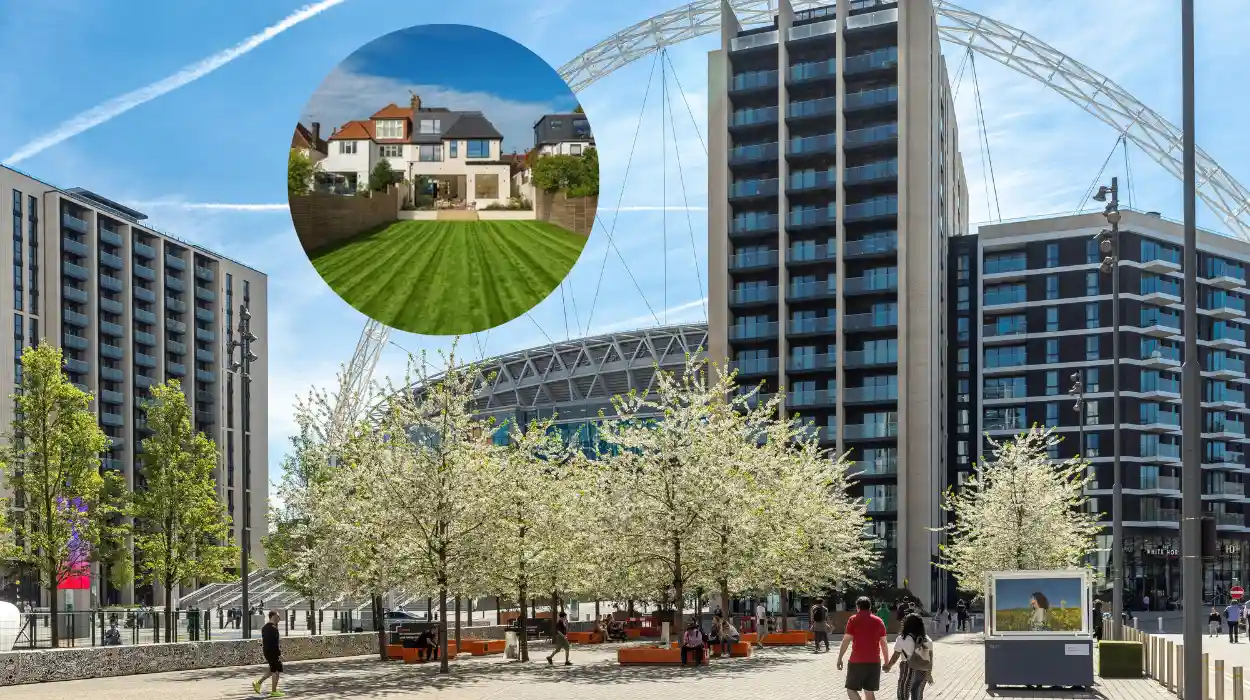
As reported by the Metro.co.uk Lifestyle Reporter, a new West London property listing in Brent has caused ‘bafflement’ across the community after surfacing with a staggering £6,000,000 price tag for a semi-detached home. The move has provoked fierce discussion across newsrooms and social media, exposing persistent tensions within London’s luxury real estate market between sellers’ expectations and buyers’ willingness to pay.
- Key Points
- Why is Brent’s £6m semi-detached home stirring debate in 2025?
- How are sellers and buyers behaving in Brent’s luxury market?
- What are the economic pressures impacting London’s property prices?
- Who is driving demand for West London luxury homes in 2025?
- What is the local impact on Brent’s community and renters?
- Why are Brent Council and local landlords under scrutiny for housing quality?
- How is the luxury market’s surplus affecting wider London house prices?
- What are the next steps for Brent’s property and housing landscape?
- Are such ‘delusional’ price tags here to stay, or will the market reset?
According to the headline coverage by Metro, many locals have gone as far as to label the asking price ‘delusional’, reflecting deepening scepticism about affordability and value in one of the city’s most diverse boroughs.
How are sellers and buyers behaving in Brent’s luxury market?
In recent analysis by LondonProperty.co.uk, Brent remains a strategic location for investment thanks to the ongoing potential for property value appreciation, especially given various regeneration initiatives across the borough. Yet, as highlighted in August reporting by TheGlobal1, London’s luxury sector in 2025 is experiencing “stagnation”, with a marked increase in prime properties available for sale but a decrease in buyer competition, pushing power towards well-informed buyers.
As detailed by Bloomberg, sellers across the luxury segment have often been reluctant to reduce prices, despite lengthening sale times and waning demand, resulting in more deals closing below initial listing values. Across London, properties listed above £5 million rose by nearly 30% in the past year, a trend also echoed by The Telegraph, suggesting a surplus of high-end stock and shifting market dynamics.
In this context, the £6 million Brent semi is held up as an emblem of these tensions: a seller holding fast to an aggressive price amidst a cooling, more buyer-driven market.
What are the economic pressures impacting London’s property prices?
According to the Residential Real Estate Market report by Mordor Intelligence, several key factors are contributing to market turbulence in 2025: rising mortgage rates, stricter affordability checks, ongoing Brexit-induced construction cost spikes, and a chronic shortage of skilled-trades labour.
“Base rates climbed from 0.1% in 2021 to 5.25% in 2025, lifting the average first-time-buyer mortgage to more than £1,000 a month and adding 61% to payments since 2019,”
the Mordor Intelligence report states, noting further that
“overall annual mortgage outlays surged to £11,400, pushing an additional 320,000 adults into poverty according to the Institute for Fiscal Studies.”
Despite this, the luxury segment is forecast to grow at 5.13% annually through 2030, buoyed by international buyers attracted by the relative weakness of the pound and select trophy properties. Still, transaction volumes are modest, and every major sale is disproportionately influential on public perception and headline prices.
Who is driving demand for West London luxury homes in 2025?
As observed by TheGlobal1,
“international buyers—particularly Americans—have become even more prominent in London’s prime property scene,”
driven by favourable exchange rates and a revived appetite for global urban lifestyles. These buyers reportedly shape new trends for sustainability, personalisation, and ultra-private amenities.
However, TheGlobal1 also points out that local Londoners and seasoned investors are increasingly motivated by genuine value rather than mere exclusivity, making them far choosier and more price-sensitive. According to LondonProperty.co.uk,
“It’s not unusual to see negotiations where properties close below their original asking price, giving purchasers a unique edge in securing trophy homes that might have previously sparked bidding wars.”
What is the local impact on Brent’s community and renters?
Brent faces mounting affordability challenges, and the local plan from Brent Council openly acknowledges that “homes are now 16 times the average income,” as detailed in their own assessment. The borough’s rapid population growth, with a 65% rise in privately rented homes over the past decade, is putting increased pressure on housing supply and quality.
Brent’s Local Plan underlines,
“an identified need for 46% of new homes to be affordable, particularly those at or around the equivalent of council housing rent levels.”
The recent trend towards larger institutional landlords and increased Houses in Multiple Occupation (HMOs) sparks concerns about community cohesion, environmental impacts, and the changing makeup of local neighbourhoods, notes the same council document.
Why are Brent Council and local landlords under scrutiny for housing quality?
As noted by BBC News’ Housing Regulator report, Brent Council received a C3 rating in 2025 and was heavily criticised for “serious failings in fire safety and home quality standards”. The Regulator said,
“significant improvement is needed in the council’s capacity as a landlord”.
Follow-up reporting by Property118 captured mounting public frustration, with community groups and opposition leaders expressing concern that “serious improvements” were needed to ensure safety and dignity for tenants. This scrutiny, while not directly tied to the luxury market, is affecting local attitudes toward all property listings—including the high-priced Brent home in question.
How is the luxury market’s surplus affecting wider London house prices?
As outlined by The Telegraph’s property coverage, “the number of homes for sale above £5m” in London “has risen by almost 30pc over the past 12 months,” contributing to what The Telegraph terms a ‘hollowing out’ of traditional, exclusive prime neighbourhoods.
Several analysts, including Bloomberg’s June property outlook, describe the market as being in “chronic decline, with no recovery in sight”, with sellers slashing prices and deals dragging for months, if not years.
Hudson Brown Residential’s August 2025 update states,
“Buyer demand has risen with new mortgage rules, but prices are up just 2.2% annually, with Prime Central struggles continuing,”
highlighting a complex, uneven landscape with pockets of resilience but widespread caution.
What are the next steps for Brent’s property and housing landscape?
According to London Law and Brent Council’s Local Plan, regeneration and new-build opportunities continue to offer hope for more strategic investment and expanded affordable housing supply in Brent.
Initiatives include increased institutional investment in rental portfolios, pilot projects in modular construction, and ambitious government targets for new builds. However, affordability, liveability, and neighbourhood stability remain pressing issues, as many residents still feel shut out of the market.
Are such ‘delusional’ price tags here to stay, or will the market reset?
Most property experts from Bloomberg, The Telegraph, and TheGlobal1 agree that luxury market supply and softened buyer activity mean that ultra-high prices—like the £6 million Brent listing—will increasingly be challenged and negotiated, even if a high-profile trophy home occasionally makes headlines. While international interest may temporarily support record valuations, underlying economic pressures are strengthening calls for value-driven and sustainable pricing models, especially at the upper end of the market.