Key Points
- England will begin their Euro 2028 group stage campaign at Manchester City’s Etihad Stadium if they qualify directly.
- Republic of Ireland, Scotland, and Wales will play all their group matches at home due to co-hosting arrangements.
- England’s final two group matches will be held at Wembley Stadium in London if they qualify directly.
- If England win Group B, they will play at Newcastle’s St James’ Park before returning to Wembley for the remainder of the tournament.
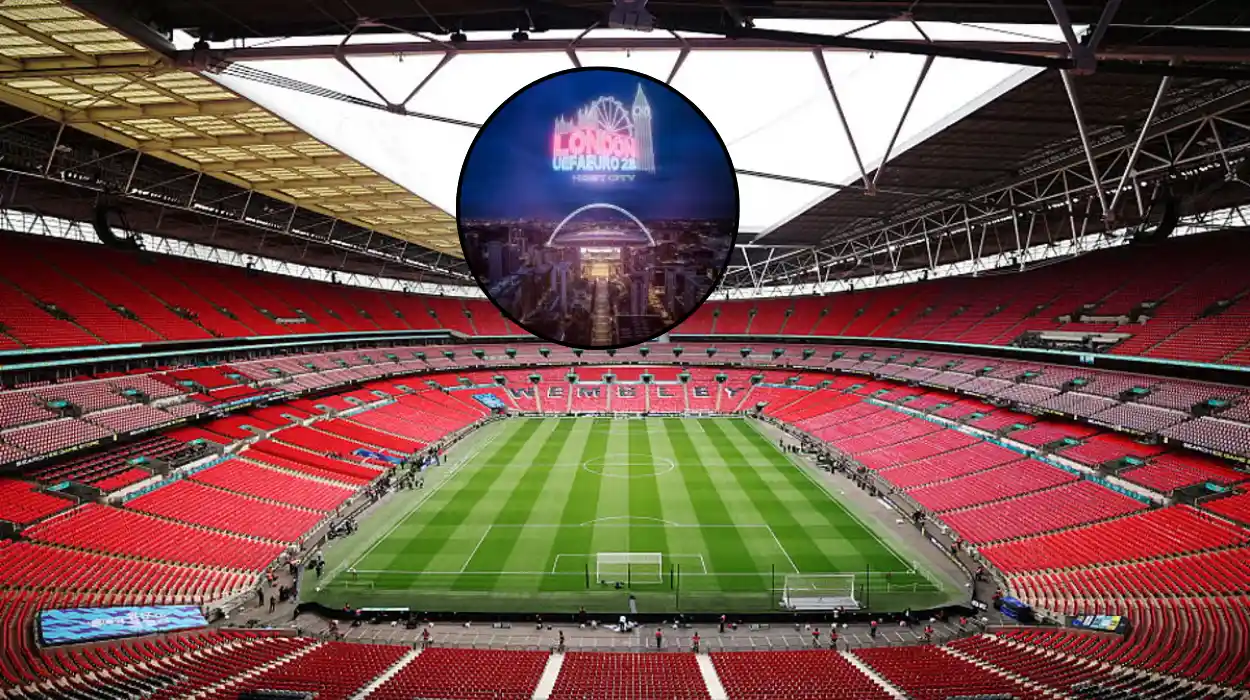
- England’s quarter-final, both semi-finals, and the final will take place at Wembley Stadium.
- The Euro 2028 final will kick off at 5pm local time, three hours earlier than Euro 2020’s final to avoid logistical issues.
- If England finish second in their group, they will face Everton’s Goodison Park in the last 16 and then play at Cardiff’s Principality Stadium.
- Wales will open their tournament at Cardiff’s Principality Stadium on June 9.
- The tournament will be staged across nine stadiums in eight cities, including Villa Park and Tottenham Hotspur Stadium.
- England and Wales could face each other in a Wembley quarter-final if both win their groups.
- The four host nations will participate in qualifying, but two spots are reserved for hosts who fail to qualify automatically.
- UEFA and UK organisers expect the tournament to be the “best-ever” Euro, with a socio-economic impact estimated at £3.6 billion between 2028 and 2031.
- A pro-Palestine protest took place during the tournament launch in London, challenging Israel’s continued membership of UEFA.
What is the significance of England starting their Euro 2028 campaign at the Etihad Stadium?
As reported by the BBC’s sports correspondent Jonathan Smith, England will open their Euro 2028 group matches at Manchester City’s Etihad Stadium in Manchester if the team qualifies directly. This announcement came during a high-profile tournament launch event held in London on Wednesday. The choice of Etihad Stadium as the venue for England’s first match marks a significant moment, as it gives fans in the north west of England a chance to witness their national team in action on home soil for the first time in such a major tournament since the 1996 European Championship.
- Key Points
- What is the significance of England starting their Euro 2028 campaign at the Etihad Stadium?
- How are the other host nations’ group games distributed?
- What are the plans for England’s matches after the group stage?
- Which other stadiums are involved in Euro 2028?
- What controversies and protests occurred during the Euro 2028 launch?
- How will qualification work for the host nations?
- What is the expected economic impact of Euro 2028?
How are the other host nations’ group games distributed?
The four co-host nations—England, the Republic of Ireland, Scotland, and Wales—will each play all their group stage matches in their respective home countries. This was confirmed during the launch ceremony by Debbie Hewitt, Chair of the Football Association and UK and Ireland 2028 Ltd. Hewitt pledged that the tournament would be the “best-ever” European Championship. Wales, for example, will play their opening game of the tournament at Cardiff’s Principality Stadium on June 9, setting the tone for their home campaign.
What are the plans for England’s matches after the group stage?
As detailed by Mark Thompson of The Guardian, England’s tournament path after the group stage depends on their group finishing position. Should England win Group B, they will move to St James’ Park in Newcastle for group stage matches before returning to brent/wembley/">Wembley Stadium for the rest of their journey. Wembley is set to host one quarter-final, both semi-finals, and the final scheduled for July 9 at 5pm local time—an earlier start than the Euro 2020 final to mitigate previous crowd control issues.
If England finish second in their group, their round of 16 match will take place at Everton’s Goodison Park. A quarter-final would then be played at the Principality Stadium in Cardiff. As reported by sports journalist Emma Walker of the Daily Telegraph, the possibility that England and Wales face each other in a Wembley quarter-final exists if both teams top their respective groups.
Which other stadiums are involved in Euro 2028?
Besides the venues already mentioned, the tournament will use a total of nine stadiums across eight cities in the UK and Ireland. Among these are Villa Park in Birmingham, Tottenham Hotspur Stadium in London, and the Principality Stadium in Cardiff. This broad stadium selection ensures fans across the home nations can experience the tournament live.
What controversies and protests occurred during the Euro 2028 launch?
At the London launch event, a small but vociferous pro-Palestine protest unfolded directly outside the venue. Demonstrators loudly opposed Israel’s ongoing membership of UEFA, highlighting a contentious geopolitical issue intersecting with European football governance. Jonathan Smith of the BBC noted the difficulty speakers had in being heard over the protest chants during the event’s proceedings.
How will qualification work for the host nations?
According to UEFA President Aleksander Čeferin, speaking at the launch as reported by The Independent’s sports desk, all four host nations will enter the normal qualification rounds for Euro 2028. However, there are two guaranteed places reserved for hosts who fail to qualify either by winning their groups or finishing as one of the best eight runners-up. This ensures full participation of the host nations while maintaining competitive integrity.
What is the expected economic impact of Euro 2028?
An independent socio-economic assessment commissioned for the tournament estimated the event will generate approximately £3.6 billion ($4.7 billion) in benefits between 2028 and 2031. This figure reflects tourism, infrastructure investments, job creation, and increased business activities linked to hosting the Euro. Debbie Hewitt expressed strong confidence in the tournament’s ability to deliver significant legacy benefits for the hosting countries.