West London offers a dense network of river paths, park roads, canal towpaths, and signed cycle routes that connect boroughs such as fulham/hammersmith/">hammersmith-and-fulham/">Hammersmith and Fulham, Ealing, Richmond upon Thames, Hounslow, Kensington and Chelsea, and Brent. The area suits commuting, leisure rides, family outings, and longer training loops with a mix of traffic-free sections and quiet streets.
- What are cycling routes in West London?
- Why do cyclists use West London routes?
- Which are the best cycling routes in West London?
- How does Richmond Park fit into West London cycling?
- What role does the Thames Path play?
- How does the Grand Union Canal help cyclists?
- Which West London routes suit beginners?
- Which routes suit experienced riders?
- What makes West London routes useful for commuting?
- How should cyclists plan a West London ride?
- What safety factors matter most?
- What is the future of cycling in West London?
- Which West London route is best overall?
What are cycling routes in West London?
Cycling routes in West London are mapped roads, paths, and shared-use corridors designed for bicycle travel across the western side of the capital. They include riverside paths, park circuits, canal routes, and signed urban links that connect homes, centres, and transport hubs.
These routes form part of a wider London cycling network. They support short local journeys, cross-borough travel, and recreational riding. The most useful routes combine low traffic, clear wayfinding, and access to rail stations, parks, and the Thames corridor.
West London stands out because it includes several major green and blue corridors. The River Thames, the Grand Union Canal, Richmond Park, and large park systems create continuous riding sections that reduce reliance on busy main roads.
Why do cyclists use West London routes?
Cyclists use West London routes because they connect residential districts, business areas, parks, and riverside destinations with practical and scenic riding conditions. Many routes are suitable for commuting, fitness training, and relaxed weekend cycling.
The area supports different riding goals. Commuters use direct links to central and inner London. Leisure riders use longer loops through riverside and park environments. Families use flatter, slower sections with fewer junctions and more predictable traffic.
West London routes also benefit from their geography. The Thames runs through several western districts, while canal-side and park-based paths create long sections with fewer signals and interruptions. That structure improves route continuity and reduces stop-start riding.
Which are the best cycling routes in West London?
The best cycling routes in West London are the Thames Path, Richmond Park loop, Grand Union Canal corridor, Ealing to Richmond ride, and the connected routes through Chiswick, Kew, and Putney. These routes combine distance, scenery, and practical access.
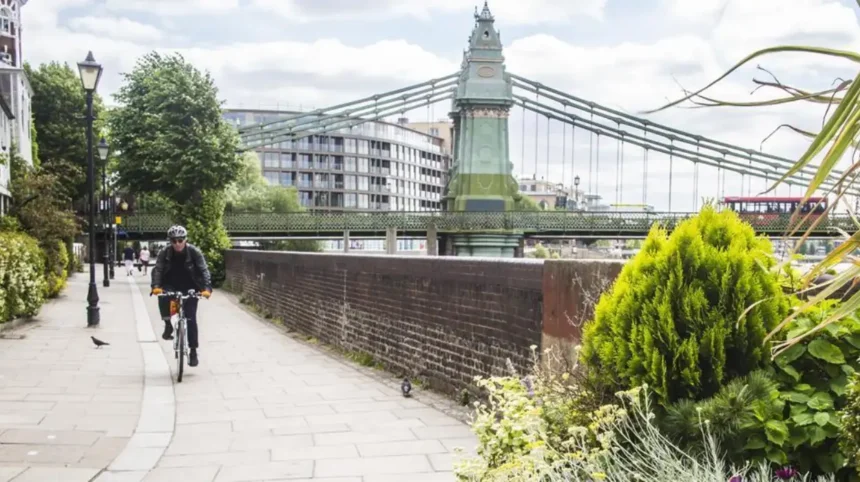
The Thames Path is one of the most useful cycling corridors in the west of the city where cycling access exists. It provides riverside continuity, landmark views, and links between Putney, Hammersmith, Kew, and Richmond-adjacent areas. The route works well for steady leisure riding.
Richmond Park remains a major cycling destination. Its perimeter roads and internal loops attract riders seeking a controlled environment, sustained effort, and hill work. The park’s size and layout make it one of the clearest training locations in inner west London.
The Grand Union Canal corridor offers a different riding experience. It creates a mostly straight, calmer route with long uninterrupted stretches. This makes it useful for slow touring, relaxed travel, and riders who prefer simple navigation.
The Ealing to Richmond ride links suburban west London with the Thames valley edge. It is attractive because it passes through mixed urban and green settings. Chiswick and Kew also form a strong route cluster because they connect parks, riverside paths, and quieter residential streets.
How does Richmond Park fit into West London cycling?
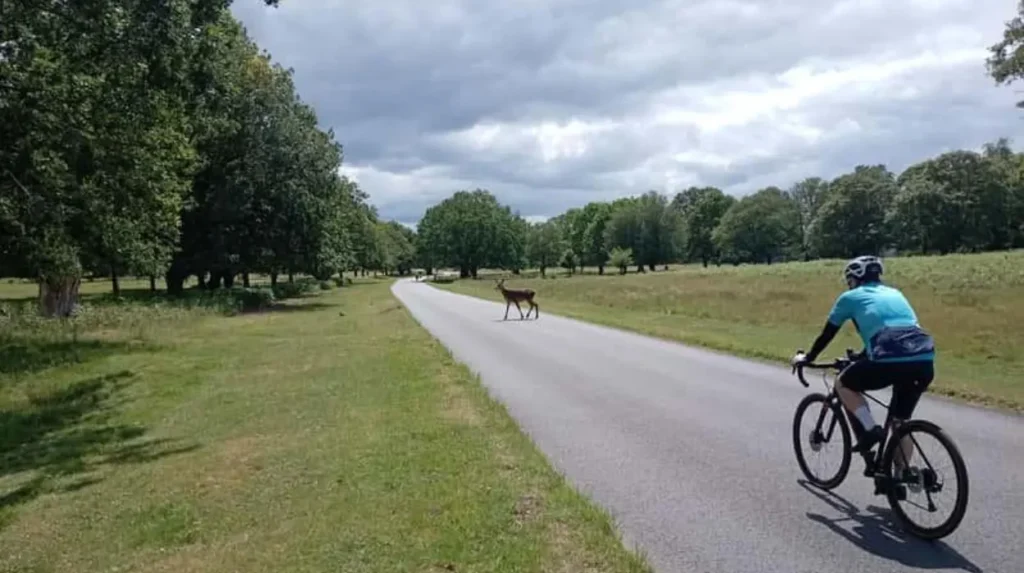
Richmond Park is the most important enclosed cycling environment in West London. It offers long, continuous road loops, limited through traffic, and a setting that supports training, social rides, and controlled recreational cycling.
The park is a major draw because it allows riders to stay on broad roads with clear circulation. That makes it useful for cyclists who want consistent pacing and fewer junction conflicts. It is also a key location for hill repeats, endurance sessions, and family rides at quieter times.
Richmond Park also anchors many West London route combinations. Cyclists often combine it with roads through Roehampton, Kingston, Putney, Kew, or Ham. That creates longer rides that mix park riding with riverside or suburban links.
The route character changes by time of day and season. Early rides usually feel calmer, while peak leisure times increase pedestrian and cyclist volumes. That pattern makes timing important for ride planning and comfort.
What role does the Thames Path play?
The Thames Path is a central cycling corridor in West London where cycling access is allowed. It offers riverside continuity, recognisable landmarks, and links between major western districts such as Putney, Hammersmith, Barnes, Kew, and Richmond.
The route is valuable because riverfront paths reduce the need for repeated turns through dense street grids. Riders follow a clear geographic line, which supports navigation and route memorability. The scenery also improves the experience for low-intensity and mixed-pace riding.
The Thames corridor also links directly to transport, hospitality, and leisure destinations. That makes it practical for city visitors, local riders, and people combining cycling with rail travel or riverside stops.
Several West London segments work best as part of a broader route rather than as isolated short rides. That matters because the Thames Path fits naturally into point-to-point travel, out-and-back rides, and circular loops with park or canal sections.
How does the Grand Union Canal help cyclists?
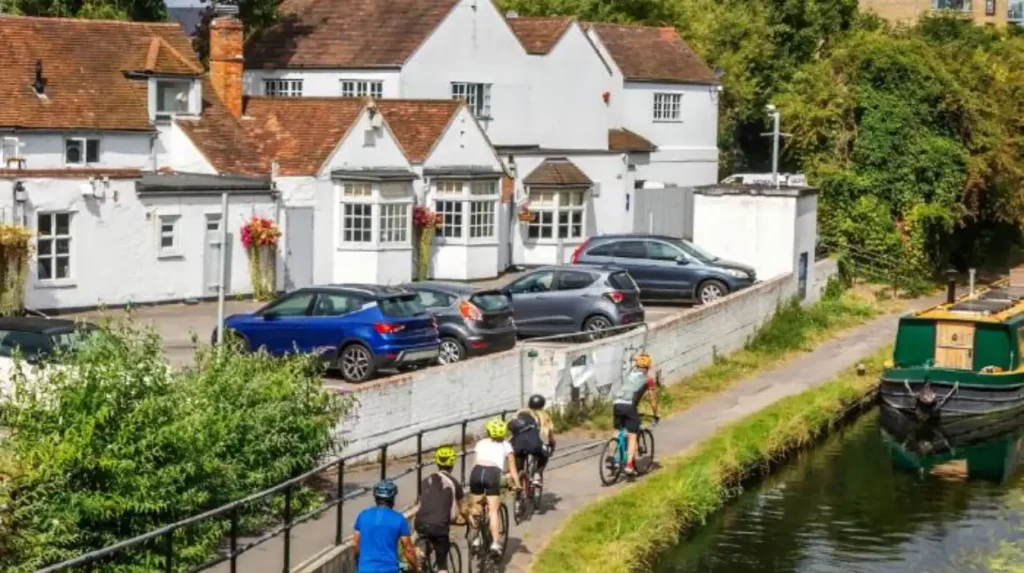
The Grand Union Canal helps cyclists by providing a mostly level west London corridor with long straight sections, calmer surroundings, and simple route logic. It is especially useful for relaxed rides and local cross-borough travel.
Canal routes are attractive because they minimise traffic signals and complex junctions. This makes them easier to follow than many urban streets. They also suit riders who want steady movement rather than repeated accelerations.
In West London, the canal corridor supports travel across neighbourhoods where road conditions vary widely. That gives cyclists a practical alternative when they want to avoid major arterial roads. It also links well with local parks, estates, and residential streets.
The canal environment is not identical along every stretch. Surface quality, width, and pedestrian activity vary by section. Cyclists need to maintain awareness, especially where the path narrows or intersects with access points and bridges.
Which West London routes suit beginners?
Beginner-friendly cycling routes in West London are flat park edges, riverside paths, canal-side sections, and quiet residential links with fewer junctions. These routes reduce navigation pressure and support stable, low-speed riding.
Beginners usually benefit from predictable environments. The best options are routes with wide paths, clear sightlines, and limited fast traffic. Richmond Park at quieter times, the Thames Path on suitable stretches, and sections of the Grand Union Canal all fit that profile.
Flat terrain matters as well. West London has many low-gradient routes compared with hilly outer areas. That makes it easier for new cyclists to manage effort, maintain balance, and practise braking, signalling, and positioning.
Route choice should also reflect confidence at junctions. A beginner route works best when it avoids large roundabouts, complex lane changes, and heavy bus corridors. Quiet roads in Chiswick, Kew, Ealing, and Barnes often work better than direct main-road options.
Which routes suit experienced riders?
Experienced riders in West London use longer loops, park circuits, and mixed-surface routes that combine speed, distance, and route variety. Strong options include Richmond Park loops, Thames-connected rides, and longer westward routes toward Ealing, Hounslow, and the outer borough edge.
Experienced cyclists often want sustained rhythm. Richmond Park supports repeated laps and climbing effort. Thames-linked routes support longer endurance rides with clear continuity. Canal and suburban connectors help build circular rides with minimal dead ends.
The west side of London also supports structured training rides. Riders can build routes around flat tempo work, hill efforts, recovery spins, or mixed urban endurance. That flexibility makes the area useful for road cyclists, hybrid cyclists, and riders using lighter commuter bikes.
Longer rides in West London often link into Surrey or outer west London. That expands distance options without requiring a full escape from the city network. The result is a route environment that works for both short sessions and serious mileage.
What makes West London routes useful for commuting?
West London routes are useful for commuting because they connect homes, stations, offices, schools, and retail centres through river paths, cycleways, and quieter streets. They reduce car dependence on short and medium journeys.
Commuting routes depend on reliability. Cyclists need paths that are understandable at speed, safe enough in traffic, and consistent across different weather and lighting conditions. West London offers many routes that meet those needs through a combination of signed corridors and traffic-calmed local streets.
The area also supports intermodal travel. Riders can combine cycling with rail and Underground stations in places such as Richmond, Chiswick, Ealing, and Hammersmith. That flexibility shortens journeys and expands the practical commuting radius.
Route repetition matters for commuters. West London’s geography helps because many useful lines repeat across the same corridor types: river, canal, park edge, and residential spine. This makes daily riding easier to learn and more efficient over time.
How should cyclists plan a West London ride?
Cyclists should plan a West London ride by choosing the route type, checking junction complexity, identifying surface conditions, and matching distance to fitness and purpose. Good planning improves comfort, safety, and route reliability.
Start by deciding whether the ride is for commuting, fitness, leisure, or exploration. A commuter route should prioritise directness and consistency. A leisure route should prioritise scenery, rest points, and low-pressure navigation. A training route should prioritise distance, hills, and repeatable loops.
Then check how the route changes across its segments. A river path can become busier near popular destinations. A canal towpath can narrow near access points. A park route can change character by time of day. These details affect speed and comfort.
Distance planning matters as well. West London offers short loops for under an hour and longer rides that extend across the outer edges of the city. Riders should match the route to daylight, weather, and return transport options.
Explore More Area Guide
Walking Routes in West London: Parks, Rivers, Heritage and Long-Distance Trails
Uncover Top Secret Historic Sites and Parks in West London
What safety factors matter most?
The most important safety factors on West London cycling routes are junction awareness, surface awareness, traffic mixing, visibility, and rider speed control. These factors shape the quality of every trip.
Junctions are the main point of risk in mixed urban cycling. Riders need to read lane positions, turn behaviour, and signal phases carefully. This is especially important on routes that cross busier roads or feed into town centres.
Surface conditions matter on riverside and canal routes. Wet leaves, gravel, puddles, pedestrians, and narrow sections all affect stability. Cyclists should reduce speed in poor conditions and keep predictable lines.
Visibility is essential in a dense urban area. Lights, reflective clothing, and clear hand signals improve recognition by other road users. Speed control also matters because mixed-use paths require more reaction time than open road cycling.
What is the future of cycling in West London?
The future of cycling in West London centres on better connectivity, more legible route networks, and stronger links between parks, rivers, stations, and town centres. These changes support everyday cycling and longer recreational travel.
West London already has strong natural route assets. The next stage depends on making connections easier to follow and safer to use. Better continuity between neighbourhoods improves the value of every existing path and cycle corridor.
Demand for local cycling remains tied to convenience. Routes that connect housing, employment, shopping, and rail access continue to matter most. West London is well placed because it already contains the physical structure for practical cycling across multiple boroughs.
The broader relevance is long term. As congestion, travel costs, and urban access pressures rise, cycling routes become more important for daily movement. West London’s mix of river, park, and suburban corridors gives it a strong base for that shift.
Which West London route is best overall?
The best overall West London cycling route depends on purpose, but the strongest all-round option is a Thames-linked ride combined with Richmond Park or nearby quiet streets. It balances scenery, practicality, route choice, and accessibility.
For many riders, this combination gives the best mix of conditions. The Thames corridor provides direction and landmarks. Richmond Park adds a controlled loop and stronger riding rhythm. Quiet streets in Chiswick, Kew, Putney, and Barnes connect the pieces into a usable ride.
That flexibility is the defining feature of West London cycling. The area supports short rides, long rides, beginner rides, training rides, and commuting rides. It does so through a network shaped by water, parks, and residential geometry rather than by a single dedicated cycle motorway.
For riders who want variety without leaving the city, West London remains one of London’s strongest cycling zones. Its routes are practical, scenic, and adaptable across seasons, fitness levels, and trip types.
What is the best cycling route in West London?
The best all-round cycling route combines the Thames riverside paths with a loop through Richmond Park. It offers scenic views, quieter roads, varied terrain, and easy connections to areas such as Kew, Chiswick, Putney, and Barnes.