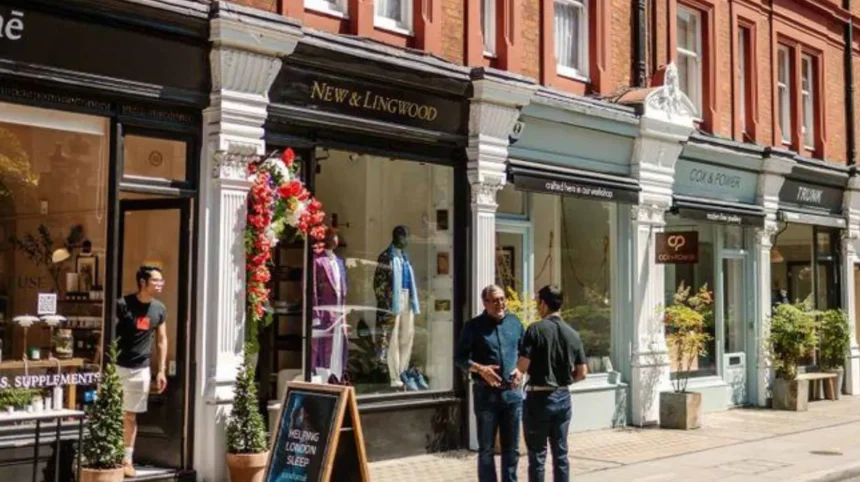
West London has a diverse local business economy built around high streets, town centres, neighbourhood shopping parades, markets, hospitality districts, professional services, creative businesses and industrial areas. The area includes established commercial centres such as Ealing, fulham/hammersmith/">Hammersmith, hounslow/chiswick/">Chiswick, Hounslow, Brentford, Richmond, Acton, Shepherd’s Bush, Harrow and Uxbridge.
- What are local businesses in West London?
- Which areas have the strongest local business communities in West London?
- Why are high streets important to West London businesses?
- What types of local businesses operate in West London?
- How do independent businesses contribute to the West London economy?
- How do Business Improvement Districts support local businesses?
- How does local shopping support West London communities?
- How do transport links affect West London businesses?
- How can visitors discover local businesses in West London?
- What challenges do local businesses in West London face?
- What is the future of local businesses in West London?
- Why are local businesses important to West London?
Local businesses serve both residents and visitors. They also support employment, local supply chains, town-centre activity and community services. West London’s proximity to Heathrow Airport, Central London, major transport corridors and large residential areas gives its commercial districts a strong geographic position.
The term local business covers independently owned shops, cafés, restaurants, tradespeople, professional practices, personal services, specialist retailers, small manufacturers and other enterprises operating within a defined local market. These businesses form an important part of West London’s wider economy.
London’s high streets have also become increasingly important in regeneration policy. Business Improvement Districts, or BIDs, allow eligible businesses in defined areas to collectively fund additional services and improvements. London currently has more than 70 BIDs, covering high streets, industrial areas and cultural districts.
What are local businesses in West London?
Local businesses in West London are enterprises serving nearby communities through retail, food, professional, personal, creative, hospitality and trade services. Examples include independent cafés, family-run shops, salons, accountants, builders, restaurants, studios and specialist retailers.
Local businesses differ from national chains primarily through ownership, operating structure and market reach. An independent bookshop in Ealing, a family-run restaurant in Hounslow and a local plumbing company serving Chiswick all operate within local commercial networks.
The category also includes businesses that do not operate from traditional shops. Examples include electricians, graphic designers, solicitors, accountants, photographers, architects, cleaning companies, tutors and digital agencies.
West London therefore has a broader local-business ecosystem than its high streets alone suggest.
The geography is also important. West London contains dense residential neighbourhoods, suburban town centres, employment areas, transport hubs and industrial locations. Each setting creates different commercial requirements.
A neighbourhood parade often focuses on convenience services. A major town centre supports larger retail, hospitality and professional-service clusters. Industrial districts support logistics, construction, manufacturing and specialist businesses.
This diversity gives local businesses several distinct customer groups. Residents create regular demand. Workers generate daytime spending. Visitors contribute additional hospitality, leisure and retail expenditure.
Which areas have the strongest local business communities in West London?
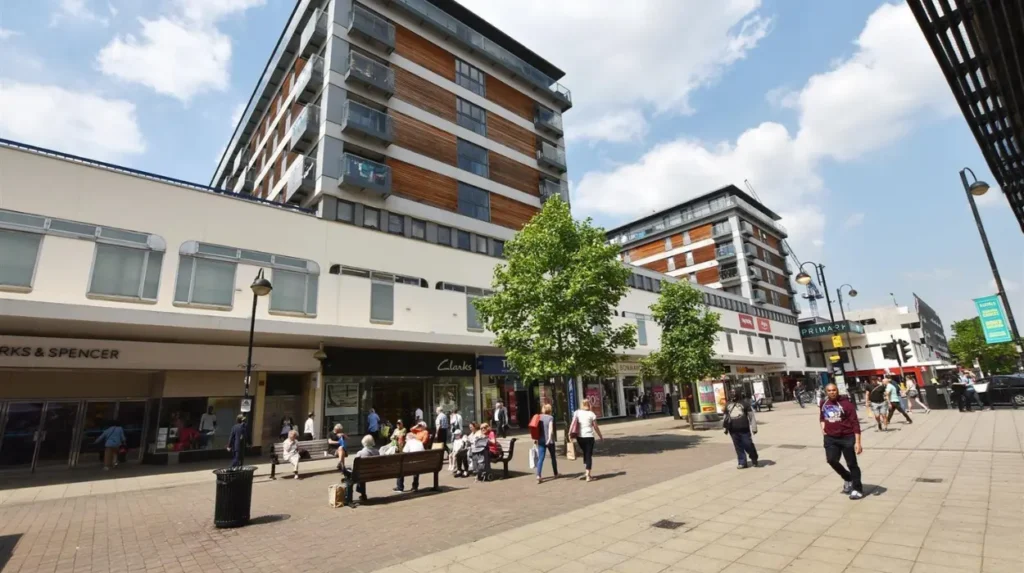
Major West London business communities include Ealing, Hammersmith, Chiswick, Hounslow, Shepherd’s Bush, Acton, Brentford, Richmond, Uxbridge and Harrow, with each centre combining retail, hospitality, professional services and independent enterprises.
Ealing is one of West London’s established commercial centres. Its business environment combines high-street retail, restaurants, cafés, professional services and cultural activity. The area also benefits from extensive public transport connections.
Hammersmith has a stronger employment and commercial-office profile alongside retail and hospitality. Its transport interchange connects several London Underground lines and bus routes, supporting substantial movement through the district.
Chiswick has a mixed neighbourhood economy. Its commercial streets contain independent retailers, cafés, restaurants, personal services and professional businesses. The district also has a significant creative and media presence.
Hounslow serves a large residential population and operates as an important outer-London town centre. Its location near Heathrow gives the wider borough an additional connection to international travel and employment.
Brentford has developed through a combination of residential growth, business activity and regeneration. Its location near the River Thames and major transport routes gives businesses access to both local and wider markets.
Richmond has a strong combination of retail, hospitality, professional services and visitor-oriented businesses. Its town centre benefits from the wider appeal of Richmond Park, the River Thames and historic attractions.
Uxbridge is a major commercial centre in the western part of Greater London. It serves surrounding communities and has a significant concentration of retail, offices and professional services.
Shepherd’s Bush has a dense commercial environment supported by retail, food, entertainment and transport infrastructure.
These locations demonstrate that West London does not have a single business model. Local economies operate at neighbourhood, town-centre and regional levels.
Why are high streets important to West London businesses?
West London high streets provide concentrated locations for shops, restaurants, cafés, services and community facilities. They create regular customer traffic, support local employment and connect businesses with residents, workers and visitors within established commercial centres.
High streets remain important because businesses benefit from proximity to other businesses. A café located near a specialist shop, supermarket, salon and professional service can attract customers generated by the entire commercial area.
This creates a local economic network rather than isolated businesses.
London City Hall identifies traders’ associations, town teams and BIDs as important forms of high-street stewardship. These organisations can support local promotion, environmental improvements, partnerships and business engagement.
West London has several examples of commercial districts where coordinated activity supports local trading conditions.
Hounslow town centre illustrates the role of regeneration investment. Earlier regeneration programmes allocated £2.5 million from the Mayor’s Outer London Fund alongside £1.2 million from Hounslow Council to improve the town centre, attract visitors and increase trade.
High streets also provide accessible locations for businesses that depend on physical interaction. Examples include hairdressers, cafés, pharmacies, repair shops, restaurants, opticians and professional offices.
Their economic function therefore extends beyond shopping.
What types of local businesses operate in West London?
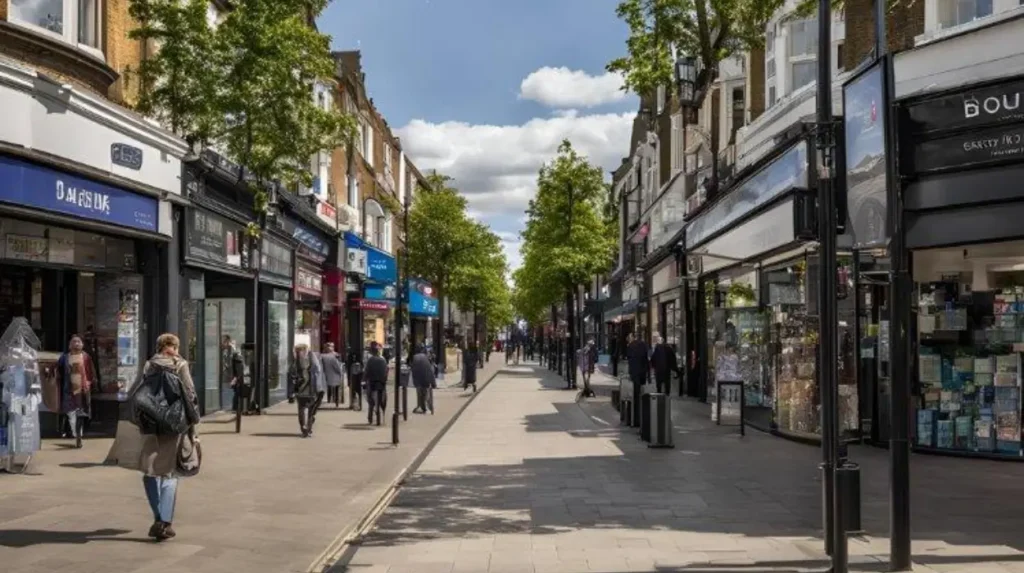
West London supports many business categories, including independent retail, food and hospitality, professional services, personal services, creative enterprises, trades, health-related services and specialist businesses. Examples include cafés, restaurants, salons, accountants, builders, studios and repair shops.
Independent retail remains visible across West London. Examples include clothing shops, bookshops, florists, gift stores, specialist food retailers, furniture businesses and convenience stores.
Food and hospitality represent another major category. Restaurants, cafés, bakeries, pubs, takeaway businesses and specialist food venues serve both local residents and visitors.
Professional services operate across town centres and neighbourhoods. Examples include solicitors, accountants, estate agents, financial advisers, architects and recruitment businesses.
Personal services also form an important part of local commercial life. Examples include barbers, hair salons, beauty businesses, dry cleaners, tailors and repair services.
Trades provide another layer of the local economy. Examples include plumbers, electricians, decorators, builders, roofers, gardeners and heating specialists.
Creative businesses contribute to West London’s wider economic identity. Examples include design studios, photography businesses, production companies, independent galleries and creative agencies.
Technology has also changed how local businesses operate. A West London business can have a physical premises while receiving orders, enquiries and bookings through its website, social media channels or online marketplaces.
This creates a hybrid local-business model. Physical geography remains important, but digital visibility increasingly determines how customers discover businesses.
How do independent businesses contribute to the West London economy?
Independent businesses contribute to West London through employment, local spending, specialist services, entrepreneurship and supply-chain activity. Their revenues circulate through nearby economies when businesses purchase services, employ workers and source products from other local enterprises.
Independent businesses often have shorter decision-making structures than large organisations. Owners or managers can make operational decisions directly.
Their economic contribution extends beyond their premises.
A restaurant purchases food, cleaning services, equipment, accounting services and maintenance. A retailer purchases stock, packaging, marketing and professional support. A construction company purchases materials, transport and specialist subcontracting.
These transactions create connections between businesses.
Local employment is another important contribution. Independent businesses employ shop assistants, chefs, administrators, tradespeople, designers, managers and other workers.
Entrepreneurship also contributes to commercial diversity. New businesses introduce products and services that expand the range available in a neighbourhood.
The presence of independent businesses can also strengthen commercial differentiation. A town centre containing specialist retailers, independent restaurants and distinctive services has a broader commercial identity than an area dominated by identical national formats.
This does not mean independent businesses operate separately from major companies. West London’s commercial economy includes both. National retailers attract customers, while independent enterprises often provide specialist and locally focused services.
The two models form part of the same urban economy.
How do Business Improvement Districts support local businesses?
Business Improvement Districts support local businesses by collecting a levy from eligible businesses after a successful ballot and investing the funds in additional services such as cleaning, security, marketing, environmental improvements, business support and place promotion.
A Business Improvement District is a defined geographical area where eligible businesses collectively fund additional improvements.
Government guidance states that a BID is established through a ballot. A successful ballot requires a simple majority both in votes cast and in the rateable value represented by those votes.
The BID levy normally applies to eligible businesses within the defined area after approval.
Government guidance states that BID levy rates commonly range between 1% and 4% of rateable value, although local arrangements differ and some BIDs use banded systems. A BID can operate for a maximum five-year term before another ballot is required.
The funds support services additional to those normally delivered by the local authority.
Examples include enhanced cleaning, public-realm improvements, security initiatives, events, marketing, business networking and collective procurement.
London City Hall reports that more than 70 BIDs operate across London. Their coverage includes high streets, industrial areas and creative and cultural locations.
BIDs are therefore an important organisational structure for local businesses in London.
Their role is particularly relevant in areas where businesses share common challenges. These challenges include public-realm quality, commercial visibility, visitor attraction, security, waste management and coordinated promotion.
How does local shopping support West London communities?
Local shopping keeps spending connected to neighbourhood economies while providing convenient access to everyday goods and specialist services. Examples include buying food from independent retailers, using local repair services, eating at neighbourhood restaurants and booking services from nearby businesses.
Local shopping reduces the distance between customers and businesses. This is particularly important for everyday services that depend on repeat visits.
A resident can purchase groceries locally, visit a nearby café, use a local pharmacy, book a haircut and employ a local tradesperson without travelling into Central London.
This creates repeated economic interactions.
Local businesses also provide services tailored to neighbourhood requirements. A specialist retailer can focus on a specific customer group. A local restaurant can develop a particular cuisine. A tradesperson can build a customer base across nearby postcodes.
Community activity also supports commercial areas. Markets, cultural events, seasonal events and public-realm improvements can bring additional visitors into town centres.
London’s High Street Data Service represents a collaborative approach involving the Mayor of London, boroughs and BIDs. It demonstrates the increasing importance of data in understanding how high streets function and how local economies can be supported.
The relationship works in both directions. Strong local businesses contribute to active town centres, while attractive and accessible town centres provide better conditions for businesses.
How do transport links affect West London businesses?
Transport connectivity expands the customer and employee catchment of West London businesses. Underground, Elizabeth line, rail, bus and road connections link commercial centres with residential neighbourhoods, employment areas, Heathrow Airport and Central London.
Transport is a major structural factor in West London commerce.
Businesses require customers, employees, deliveries and suppliers to reach their premises efficiently.
Ealing, Hammersmith, Hounslow, Richmond, Shepherd’s Bush and Uxbridge all benefit from different combinations of rail, Underground, bus and road connections.
The Elizabeth line has further strengthened connections between western London and Central London. Stations such as Ealing Broadway provide faster connections across the capital.
Heathrow Airport also has a major economic influence on West London. Its surrounding employment and logistics ecosystem creates demand for hospitality, transport, professional services, accommodation and other businesses.
Road infrastructure remains important for trades, logistics and delivery businesses. Businesses that depend on vans, equipment or physical stock require practical access to customers and suppliers.
Transport therefore affects more than customer footfall. It influences recruitment, operating costs, delivery schedules and commercial location decisions.
Explore more Area Guide
Safest Areas in West London: Top Neighbourhoods to Live
Pet-Friendly Places in West London: Parks, Cafés, Pubs and Walks
How can visitors discover local businesses in West London?
Visitors can discover West London businesses through town-centre exploration, local markets, business directories, official borough information, tourism resources, maps and digital search. Examples include independent cafés, restaurants, specialist shops, galleries, salons, food retailers and neighbourhood services.
Visitors often begin with major attractions but local businesses provide much of the surrounding commercial experience.
Ealing offers restaurants, cafés and independent services around its town centre. Richmond combines visitor attractions with hospitality and retail. Chiswick provides neighbourhood shopping and dining. Hammersmith and Shepherd’s Bush offer dense commercial environments linked to transport and entertainment.
Digital search is now an essential discovery channel.
Businesses increasingly rely on accurate names, addresses, opening information, websites, reviews and local search profiles.
Local search optimisation is particularly relevant for businesses serving defined geographic areas. A restaurant targeting Chiswick should clearly identify its location, cuisine, services and opening information. A tradesperson serving Hounslow should define the service area clearly.
For visitors, accurate information reduces uncertainty.
For businesses, local digital visibility connects physical premises with online discovery.
What challenges do local businesses in West London face?
West London businesses face challenges involving operating costs, commercial rents, staffing, competition, changing consumer behaviour, transport, regulation and high-street conditions. Local partnerships, business support and coordinated town-centre management address some of these pressures.
Commercial costs affect both independent and larger businesses. Rent, utilities, staffing, insurance, supplies and business rates form major operating expenses.
Consumer behaviour has also changed. Customers increasingly research products online before visiting physical businesses. Some complete transactions digitally, while others use online research before purchasing locally.
This creates pressure for businesses to maintain both physical and digital customer journeys.
Staffing is another structural issue. Hospitality, retail, trades and professional services require appropriately skilled employees.
High-street conditions also affect customer behaviour. Clean streets, accessible transport, attractive public spaces, safety and suitable premises all influence commercial activity.
The London Assembly has highlighted the importance of coordinated high-street management and the role of BIDs in supporting shared priorities. Its more recent work also examines how community participation can become more important in high-street regeneration.
These challenges require cooperation between businesses, councils, property owners, residents, transport authorities and other organisations.
What is the future of local businesses in West London?
The future of West London’s local businesses depends on adaptable high streets, strong digital visibility, transport connectivity, coordinated regeneration, business partnerships and changing consumer needs. Local enterprises will remain important across retail, hospitality, professional services, trades and creative industries.
West London’s commercial future is closely connected to the future of its town centres.
London City Hall is developing programmes focused on strengthening local economies, including High Street Place Labs. The programme supports boroughs in developing places where people spend time and money throughout the day and evening.
Future high streets will increasingly combine shopping with food, leisure, services, culture and community activity.
Digital integration will remain important. Local businesses need accurate online information, mobile-friendly websites, digital booking systems and strong local search visibility.
Physical premises will continue to matter for businesses that depend on personal interaction, immediate service or physical products.
Business partnerships will also remain significant. BIDs provide one established mechanism for collective investment. Traders’ associations and other local partnerships provide additional structures for coordination.
Government policy is also evolving. In June 2026, the UK Government stated that its forthcoming High Streets Strategy would include measures to modernise BID rules, simplify voting procedures and strengthen transparency and accountability.
This policy direction reinforces the importance of organised business participation in town-centre management.
For West London, the combination of established commercial centres, residential growth, transport connectivity, employment districts and diverse consumer demand creates a broad foundation for local enterprise.
Local businesses remain an essential part of that structure. They provide goods, services, employment and commercial activity across neighbourhoods ranging from Hounslow and Brentford to Ealing, Chiswick, Hammersmith, Richmond, Shepherd’s Bush and Uxbridge.
Why are local businesses important to West London?
Local businesses are important to West London because they provide everyday services, employment, specialist products, hospitality and professional expertise while contributing to active high streets and diverse neighbourhood economies across the western part of Greater London.
Their importance is visible at several levels.
At neighbourhood level, businesses provide convenience and essential services. At town-centre level, they generate footfall and commercial activity. At regional level, they contribute to employment, investment and supply chains.
Local businesses also create commercial diversity. Independent retailers, restaurants, cafés, tradespeople, professional practices and creative enterprises provide services that reflect different local requirements.
Their continued development depends on practical conditions. These include affordable and suitable premises, transport accessibility, skilled workers, digital visibility, safe and attractive public spaces and effective partnerships.
West London’s local-business landscape is therefore part of a wider urban economic system. Understanding that system helps residents, visitors, entrepreneurs and policymakers identify how commercial areas function and why local enterprises remain significant.
What are local businesses in West London?
Local businesses in West London are enterprises that serve nearby communities through retail, hospitality, professional services, trades, personal services and creative industries. Examples include independent shops, cafés, restaurants, salons, accountants, builders and specialist retailers.