Key Points:
- Hammersmith and Fulham Council is extending its Public Spaces Protection Order (PSPO) banning loudspeakers and audio amplifiers across key public locations in West London.
- Almost 90 per cent of consultation respondents expressed support for expanding restrictions to curb persistent noise pollution and anti-social behaviour.
- The expanded ban covers designated public zones including Hammersmith Town Centre, Shepherd’s Bush, and White City 24 hours a day.
- Enforcement allows police officers, Police Community Support Officers (PCSOs), and council Law Enforcement Officers to issue £100 Fixed Penalty Notices for non-compliance.
- Exemptions remain in place for official council-approved events and licensed commercial premises.
West London (West London News) August 13, 2026 – Hammersmith and Fulham Council has formally confirmed the extension and geographical expansion of its ban on loudspeakers and sound amplification devices across key public areas in West London. The decision follows a comprehensive public consultation in which nearly 90 per cent of local respondents expressed strong backing for heightened community protections against noise-related anti-social behaviour. Under the renewed Public Spaces Protection Order (PSPO), the unauthorised use of megaphones, loudspeakers, powered sound systems, and electronic amplifiers is prohibited 24 hours a day in designated high-footfall zones.
- Key Points:
- What does the extended loudspeaker ban entail?
- Why did Hammersmith and Fulham Council propose expanding the PSPO?
- How will the new restrictions be enforced across West London?
- What is the background behind the West London loudspeaker ban?
- How will this development affect local residents, businesses, and street performers?
What does the extended loudspeaker ban entail?
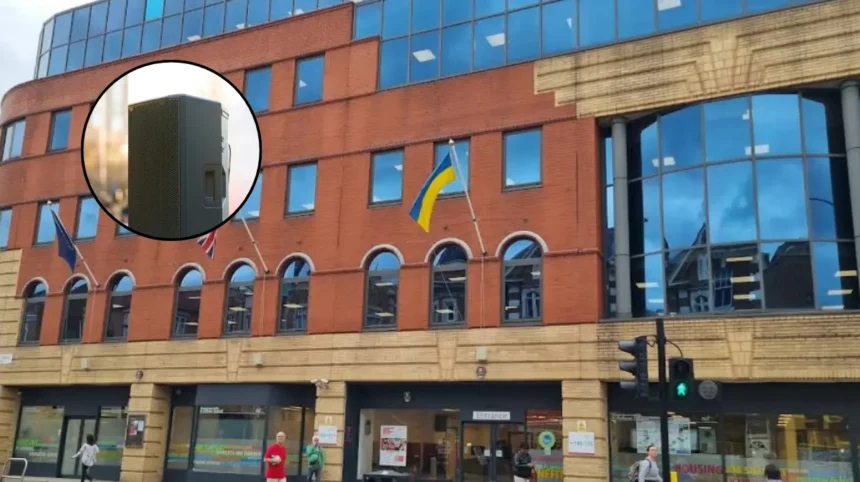
The revised Public Spaces Protection Order prohibits any person from operating equipment designed to amplify speech, music, or broadcasts within designated boundaries in the borough.
This includes battery-powered amplifiers, mains-connected sound systems, loudspeakers, megaphones, and loud hailers.
The restrictions apply continuously 24 hours a day, seven days a week. The order covers key commercial and transit hubs, including fulham/hammersmith/">Hammersmith Town Centre—stretching along King Street near the Broadway Centre—as well as key public zones in Shepherd’s Bush and White City.
Certain activities remain exempt from the restrictions. Organised events that have received explicit prior authorisation from Hammersmith and Fulham Council are permitted to use sound equipment.
Additionally, commercial venues, licensed premises, and emergency services operating within their statutory duties or licensed conditions are not restricted by the order.
Why did Hammersmith and Fulham Council propose expanding the PSPO?
The proposal to expand the PSPO arose from an accumulation of public feedback, business reports, and formal complaints regarding noise nuisance and street-level disruption.
Local authority records indicated that unamplified street entertainment rarely generated persistent complaints, whereas powered loudspeakers significantly elevated ambient noise levels in busy corridors.
In key transit areas such as the Hammersmith gyratory and major pedestrian intersections, high-volume amplification created safety hazards.
Accessibility groups, including representatives for visually impaired residents, noted that excessive noise from loudspeakers obscured essential traffic sounds, making street crossings hazardous for blind and partially sighted pedestrians.
Furthermore, local shopkeepers and traders reported that continuous loud broadcasts outside commercial frontages caused disruption to retail operations and degraded the public shopping environment. In response to these growing concerns, the council initiated a public consultation to evaluate whether existing measures required expansion.
How will the new restrictions be enforced across West London?
Enforcement of the expanded PSPO is managed through a joint framework involving Hammersmith and Fulham Council’s Law Enforcement Team and the Metropolitan Police Service. Authorised personnel with enforcement powers include council law enforcement officers, police officers, and Police Community Support Officers (PCSOs).
Individuals found breaching the terms of the order by using unapproved amplification equipment may be issued an immediate Fixed Penalty Notice (FPN) of £100. If paid within the initial specified timeframe, the penalty amount is reduced to £60.
Failure to pay the fine or persistent refusal to comply with the order can lead to prosecution in the Magistrates’ Court, where summary conviction carries a potential fine up to Level 3 on the standard scale.
Council officials emphasised that non-amplified street performances, busking, and public speaking remain entirely legal within public spaces, provided they do not cause obstruction or general anti-social behaviour.
Explore More Hammersmith And Fulham News
Hammersmith Council Urged to Build Ravenscourt Park Lido West London 2026
HGV Driver Avoids Jail Over Fatal Cyclist Crash in Fulham 2026
What is the background behind the West London loudspeaker ban?
Public Spaces Protection Orders were introduced across the United Kingdom under the Anti-Social Behaviour, Crime and Policing Act 2014. These legal instruments allow local authorities to impose targeted restrictions on specific activities within defined public areas where those activities have a detrimental impact on the quality of life of local residents and businesses.
Hammersmith and Fulham Council initially implemented a localized PSPO targeting amplifier use in Hammersmith Town Centre in 2019, following a public consultation where approximately 70 per cent of participants supported restricting noise in shopping thoroughfares.
That initial order sought to balance public enjoyment of open spaces with the need to prevent excessive disturbance near transportation hubs like Hammersmith Broadway.
Over subsequent years, monitoring by local community safety teams revealed that while the initial order reduced nuisance in central Hammersmith, amplified noise problems displaced into surrounding neighbourhoods, including Shepherd’s Bush and White City.
Consequently, when the council launched its updated consultation covering late 2024 through early 2025, it proposed extending the geographic scope to cover all three commercial hubs under a unified framework. The overwhelming response—with nearly nine out of ten respondents favoring the extension—provided the legal and public foundation for the council’s latest regulatory update.
How will this development affect local residents, businesses, and street performers?
The extension of the loudspeaker ban is anticipated to bring distinct structural changes to daily life across Hammersmith, Shepherd’s Bush, and White City:
For residents residing near main retail corridors and public plazas, the enforcement of the expanded order is expected to bring a measurable reduction in ambient daytime and nighttime noise pollution.
Pedestrians with visual impairments or mobility challenges stand to benefit from clearer auditory cues at major road crossings, improving pedestrian safety around complex traffic junctions.
Town centre businesses and street-level retailers are likely to experience fewer disruptions to commercial trading.
High noise levels immediately outside retail entrances have historically been cited by business operators as a factor deterring customer footfall. The regulation aims to create a more consistent, controlled environment across commercial districts.
Buskers, musicians, and public speakers operating in West London will need to adjust their equipment and performance styles to comply with acoustic-only standards.
While street entertainment itself remains permitted, performers relying on electronic amplification or heavy sound systems must either transition to unamplified acoustic setups or restrict their amplified activities to private venues and council-sanctioned events.