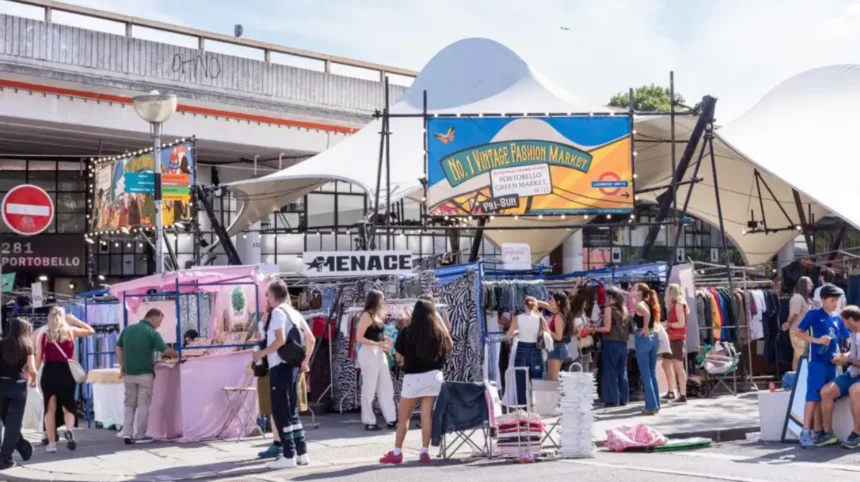
The vintage retail landscape in West London represents a dense commercial ecosystem of archival luxury boutiques, independent retro traders, curated charity stores, and historic street markets. It spans key sub-boroughs, including Notting Hill, Kensington, Chelsea, Shepherd’s Bush, and hounslow/chiswick/">Chiswick.
- How did West London become a historical center for vintage fashion?
- What are the primary geographic clusters for vintage shopping in West London?
- Notting Hill and Golborne Road (W10/W11)
- Chelsea and Kensington (SW3/SW7/W8)
- Chiswick and Hammersmith (W4/W6)
- Which specific vintage stores in West London specialize in luxury designer archives?
- Rellik (8 Golborne Road, W10 5NW)
- One of a Kind (259 Portobello Road, W11 1LR)
- Sign of the Times (5 Elystan Street, SW3 3NT)
- 282 Portobello (282 Portobello Road, W10 5TE)
- How does the Portobello Road Market operate for vintage shoppers?
- What role do charity shops in West London play in the vintage ecosystem?
- How do you authenticate vintage clothing while shopping in West London?
- What economic and environmental factors drive West London’s vintage market?
- How does vintage shopping in West London compare to East London?
- What future trends are shaping the West London vintage retail market?
West London functions as a global destination for high-end second-hand garments, historical costumes, and rare designer pieces. Unlike East London, which emphasizes 1990s streetwear, Y2K aesthetic, and casual thrift items, West London specializes in luxury archival collections, British tailoring, mid-century haute couture, and authenticated period garments.
The structure of vintage retail in this region operates across three distinct operational models:
- Archival and Designer Boutiques: Physical storefronts offering rare items from luxury design houses such as Chanel, Yves Saint Laurent, Vivienne Westwood, and Jean Paul Gaultier. Examples include Rellik on Golborne Road and Sign of the Times in Chelsea.
- Historic Street Markets: Fixed-day open-air markets hosting independent traders who sell anti-curated or specialized apparel. Examples include the Portobello Green Vintage Market and the Chiswick Car Boot Sale.
- Curated Non-Profit and Consignment Hubs: Specialty non-profit stores located in high-income postal codes that receive donations of designer apparel. Examples include Mary’s Living & Giving for Save the Children in Chiswick and the Royal Trinity Hospice boutique in Notting Hill.
This market caters directly to international collectors, fashion stylists, costume designers, and sustainability-conscious consumers. The integration of rigorous garment authentication, textile preservation, and architectural heritage makes West London a central node in the global circular fashion economy.
How did West London become a historical center for vintage fashion?
West London emerged as a historical vintage fashion center during the 1960s counterculture movement, driven by the rise of Portobello Road Market and anti-establishment youth fashion along King’s Road in Chelsea, which prioritized period garments over mass manufacturing.
The post-World War II commercial development of West London created physical infrastructure that favored independent trade. Portobello Road Market, established initially as a fresh food market in the 19th century, underwent a transformation during the 1940s and 1950s as antique dealers occupied the street space. By 1960, vendors began selling Victorian and Edwardian apparel alongside antique furniture.
During the mid-1960s, the “Swinging London” cultural phenomenon shifted the fashion capital from traditional tailors in Mayfair to independent boutiques in West London. Musician communities, artists, and bohemian subcultures in Notting Hill and Ladbroke Grove adopted historical clothing to reject corporate retail standardization. The opening of specialized venues, such as Malcom McLaren and Vivienne Westwood’s boutique at 430 King’s Road in 1971 (later renamed World’s End), codified the practice of using historical textiles and punk styling as commercial retail concepts.
Throughout the 1980s and 1990s, fashion stylists for film, theatre, and editorial publications used West London as a primary sourcing hub. The establishment of permanent covered spaces, such as the Portobello Green Canopy in 1988, institutionalized vintage fashion trading. This structural evolution transitioned West London from a informal flea market network into an organized commercial sector dedicated to textile preservation and luxury resale.
What are the primary geographic clusters for vintage shopping in West London?
The primary geographic clusters for vintage shopping in West London are concentrated in Notting Hill and Golborne Road (W10/W11), Chelsea and Kensington (SW3/SW7/W8), and Chiswick and fulham/hammersmith/">Hammersmith (W4/W6), each displaying distinct retail specialization and price tiers.
Notting Hill and Golborne Road (W10/W11)
This cluster serves as the primary epicenter for vintage retail in London. The zone extends along Portobello Road and branches onto Golborne Road and Pembridge Road. The subculture here ranges from high-density street market stalls to ultra-exclusive fashion archives.
- Key Retail Features: Portobello Green Market, specialized 20th-century luxury boutiques, independent Y2K clothing stores.
- Product Specialization: 1970s bohemian dresses, luxury designer outerwear, rare military surplus, archival streetwear.
Chelsea and Kensington (SW3/SW7/W8)
The Chelsea and Kensington corridor prioritizes authenticated designer consignment, formal mid-century couture, and traditional British sartorial garments. The customer demographic consists largely of luxury collectors and high-net-worth residents.
- Key Retail Features: Consignment houses, long-standing tailoring archives, high-end charity boutiques.
- Product Specialization: Pre-owned Chanel handbags, Savile Row bespoke suits, silk scarves, tailoring from the 1950s through 1990s.
Chiswick and Hammersmith (W4/W6)
The westernmost cluster offers residential-focused, highly curated vintage shopping with an emphasis on wearable everyday apparel, homeware, and mid-tier mid-century fashion.
- Key Retail Features: High-concept charity stores, monthly pop-up vintage fairs, design-focused markets.
- Product Specialization: 1960s daily wear, mid-century textiles, refurbished jewelry, estate accessories.
Which specific vintage stores in West London specialize in luxury designer archives?
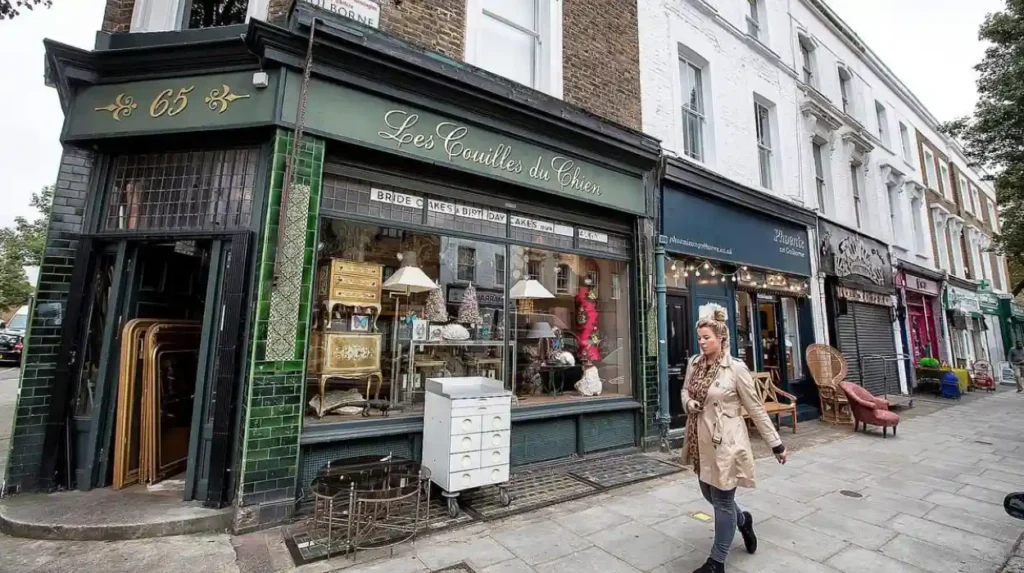
Top vintage stores specializing in luxury designer archives in West London include Rellik on Golborne Road, One of a Kind on Portobello Road, Sign of the Times in Chelsea, and 282 Portobello in Notting Hill.
Rellik (8 Golborne Road, W10 5NW)
Established in 1999 by three former Portobello market traders, Rellik is recognized internationally as an essential archive for 20th-century designer fashion. The inventory features meticulously preserved garments from major fashion houses.
- Primary Brands: Vivienne Westwood, Comme des Garçons, Yves Saint Laurent, Jean Paul Gaultier, Alaïa, Dior.
- Specialization: Rare, runway-quality garments spanning from the 1970s to the early 2000s.
One of a Kind (259 Portobello Road, W11 1LR)
Operating for over 25 years, One of a Kind holds a front-of-house commercial store alongside an private rear archive containing over 5,000 historical garments. The private archive is accessible by appointment only to fashion designers, stylists, and museum curators.
- Primary Brands: Chanel, Gucci, Hermès, Prada, Alexander McQueen.
- Specialization: Rare designer trunks, couture eveningwear, museum-grade textile artifacts.
Sign of the Times (5 Elystan Street, SW3 3NT)
Founded in Chelsea in 1976, Sign of the Times specializes in authenticated pre-owned luxury fashion and contemporary designer consignment. The store utilizes multi-step authentication processes to verify original manufacturing standards.
- Primary Brands: Louis Vuitton, Hermès, Bottega Veneta, Celine, Balenciaga.
- Specialization: Luxury handbags, high-end fine jewelry, seasonal designer apparel.
282 Portobello (282 Portobello Road, W10 5TE)
282 Portobello focuses on traditional English tailoring, heritage outerwear, and classic British luxury fashion.
- Primary Brands: Burberry, Aquascutum, Barbour, Harris Tweed.
- Specialization: Vintage trench coats, tweed tailoring, leather jackets, traditional English formal dresses.
How does the Portobello Road Market operate for vintage shoppers?
Portobello Road Market operates as a continuous weekly street market, reaching its peak density for vintage fashion on Fridays and Saturdays, spanning a two-mile strip from Notting Hill Gate station to Golborne Road.
The operational structure of Portobello Road Market varies significantly depending on the day of the week. Navigating the market effectively requires an understanding of trader schedules, zoning, and product distributions.
Weekly Schedule and Product Distribution
- Friday (The Vintage Specialist Day): Friday is the primary day for vintage clothing collectors, trade buyers, and industry fashion stylists. Traders set up under the sheltered Portobello Green Canopy.
- Operating Hours: 09:00 – 17:00.
- Focus: Curated 20th-century clothing, rare military jackets, vintage denim, antique lace, mid-century eyewear.
- Saturday (The Main Market Day): Saturday offers the largest overall market volume, combining vintage apparel with antiques, bric-a-brac, street food, and contemporary goods.
- Operating Hours: 08:30 – 18:00.
- Focus: High-density browsing, mixed secondhand stalls, accessible thrift items, antiques.
- Monday through Wednesday: Standard brick-and-mortar stores remain open, but street market stalls are minimal.
- Thursday: Market operates from 09:00 to 13:00 (half-day trading).
- Sunday: Portobello Green Canopy hosts independent fashion, antique, and vintage stalls, though the main street market is closed.
Key Market Zones for Fashion
- Portobello Green Canopy (W10 5TZ): Located at the northern section of Portobello Road near Ladbroke Grove. This is the central hub for verified vintage clothing traders.
- Acklam Road Market Area: Focuses on urban vintage, street fashion, deadstock athletic wear, and Y2K garments.
- Golborne Road Intersection: Offers an eclectic mix of industrial vintage, French antique linens, and uncurated second-hand clothing racks.
What role do charity shops in West London play in the vintage ecosystem?
Charity shops in West London serve as high-yield sourcing locations for vintage fashion due to local donation demographics, capturing high proportions of authentic luxury goods and pre-owned high-end designer apparel.
Unlike standard thrift stores, non-profit retail outlets in affluent West London neighborhoods maintain rigorous curation processes. Donated items frequently originate from local residents in Kensington, Chelsea, Notting Hill, and Holland Park, leading to higher rates of luxury item drop-offs.
Prominent West London Charity Outlets
- Mary’s Living & Giving for Save the Children (Chiswick & Westbourne Grove): Concept charity boutiques created by fashion consultant Mary Portas. Stores feature boutique styling, professionally merchandised displays, and curated sections for vintage apparel.
- FARA Charity Shop (Notting Hill & Kensington): Specializes in high-quality secondhand apparel, vintage footwear, and accessories. They operate specialized branches, including FARA Kids and general clothing stores.
- Royal Trinity Hospice (Notting Hill, Kensington, & Hammersmith): Renowned for receiving corporate donations from luxury fashion brands alongside private donor contributions. They regularly stock authenticated designer shoes, suits, and accessories.
- Fight for Sight (Portobello Road): Located directly on the main market thoroughfare, offering a dense selection of affordable secondhand items, vintage denim, and estate accessories.
Explore more Area Guide
Best Vegan and Vegetarian Restaurants in West London
Best Cafés in West London for Coffee, Brunch and Local Charm
How do you authenticate vintage clothing while shopping in West London?
Authenticating vintage clothing in West London requires analyzing brand tags, garment construction methods, zipper hardware, fabric composition labels, and country-of-origin tags.
Due to the commercial value of vintage garments, verifying authenticity is critical when purchasing higher-priced items. Buyers should execute systematic evaluations of garments across five physical indicators:
Key Physical Indicators of Authentic Vintage
- Label Printing and Typography: Modern garments typically use printed synthetic care labels, whereas true vintage items feature woven fabric labels stitched directly into the neck or side seam. Look for historical brand typography variations (e.g., “Christian Dior Boutique Paris” or “Yves Saint Laurent Rive Gauche”).
- Hardware and Zippers: Examine zipper sliders for historical manufacturer stamps. Standard vintage zippers include Talon (common from 1930s–1970s), CC, Opti, RiRi, and Raccagni for European luxury items. Plastic coil zippers generally indicate production after the late 1960s.
- Garment Construction: Examine internal seams. Pre-1970s garments frequently feature generous seam allowances (often exceeding 1.5 cm) to permit alterations, along with bound seams or pinked edges rather than modern modern multi-thread overlocking stitches.
- Care Labels and RN Numbers: Care instructions were not legally mandated on clothing in the United Kingdom or United States until the early 1970s. The presence of a synthetic care instruction tag usually confirms production post-1971. US-sourced vintage garments feature an RN (Registered Identification Number); numbers below 20,000 indicate production before 1960.
- Textile Composition: Synthetic fibers like polyester and acrylic gained commercial dominance after the 1950s. Garments dating prior to 1950 are almost exclusively composed of natural fibers including wool, silk, cotton, or linen, along with early regenerated cellulose like rayon/viscose.
What economic and environmental factors drive West London’s vintage market?
The West London vintage market is driven by consumer shifts toward circular economy practices, rising luxury resale asset values, and increasing environmental legislation targeting fast fashion waste.
The economics of vintage fashion in West London reflect broader shifts in global retail consumption. Modern consumers increasingly treat vintage purchasing as both an environmental necessity and an alternative investment strategy.
Environmental Impact and Sustainability Data
The global apparel industry accounts for roughly 8% to 10% of global carbon emissions and produces over 92 million tonnes of textile waste annually. Reusing a garment extends its average life service by 2.2 years, reducing its carbon, material, and water footprints by 20% to 30%. The density of vintage retailers in West London diverts metric tons of clothing from landfills each year by reintroducing existing garments into circulation.
Resale Valuation and Market Dynamics
Luxury vintage items sourced in areas like Chelsea and Notting Hill retain value significantly better than modern fast fashion. Archival pieces from specific design eras—such as Tom Ford’s tenure at Gucci (1994–2004), Phoebe Philo’s tenure at Celine (2008–2017), or John Galliano’s work at Dior (1996–2011)—have recorded annual resale value increases between 12% and 25% on secondary consignment platforms.
How does vintage shopping in West London compare to East London?
West London vintage shopping focuses on luxury archival collections, formal tailoring, and high-end designer pieces, whereas East London emphasizes 1990s streetwear, Y2K fashion, affordable bulk thrift, and casual reworked apparel.
While both regions are key retail hubs, their inventory profile, store layouts, and target demographics differ significantly.
- Product Selection: West London inventory leans heavily toward mid-century haute couture, tailored outerwear, luxury handbags, and British heritage brands. East London (Brick Lane, Shoreditch, Hackney) focuses on band t-shirts, vintage denim jeans, American sportswear, and reworked garments.
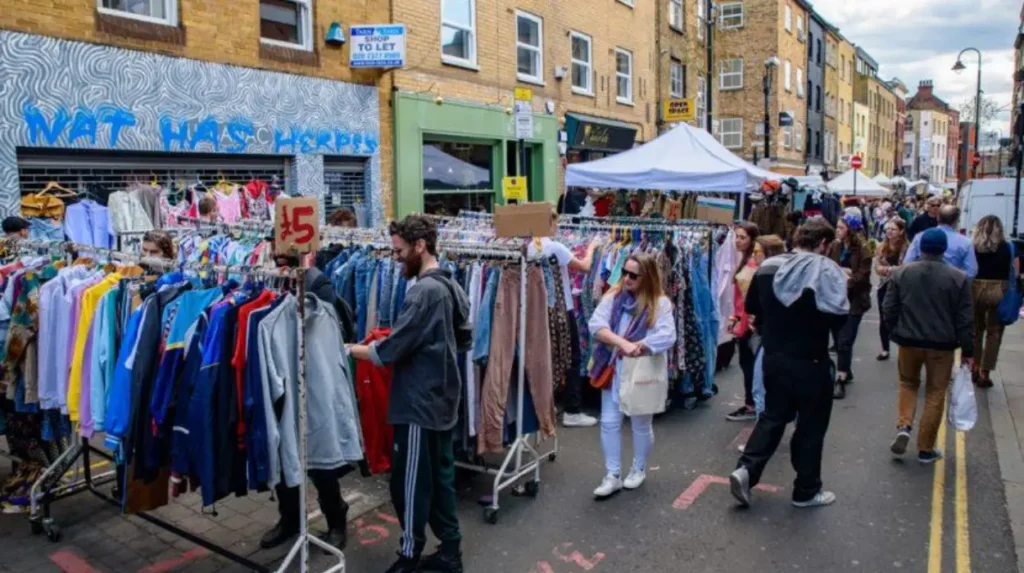
- Pricing Structure: West London stores operate predominantly in the mid-to-high price tier (£80 to £2,000+ per item), reflecting garment rarity and brand authentication costs. East London offers a wider range of low-to-mid tier pricing (£15 to £150), including pay-by-weight vintage warehouses.
- Retail Environment: West London features museum-style archival curation, tailored customer service, and historic market stalls. East London relies on massive industrial spaces, warehouse layouts, and trend-focused concept stores.
What future trends are shaping the West London vintage retail market?
Future trends shaping West London’s vintage market include digital archive cataloging, artificial intelligence authentication tools, private client rental services, and increased integration of repair craftsmanship within physical stores.
As the resale landscape evolves, West London retailers are adapting to new consumer expectations and technological advancements while maintaining their historical character:
- Digital Integration and Hybrid Retail: Retailers on Portobello Road and Golborne Road are increasingly digitizing their inventories. Storefronts utilize digital cataloging to offer real-time inventory access to global buyers via specialized e-commerce platforms alongside physical browsing.
- AI-Powered Authentication: High-end consignment boutiques in Chelsea and Kensington are implementing AI-driven optical scanning tools. Devices like Entrupy analyze microscopic textile weaves, hardware engravings, and stitching patterns to guarantee authenticity for high-value items like Hermes Birkin bags or vintage Chanel tweed.
- Archive Rental Models: Rather than selling rare historical garments outright, several high-end West London boutiques are shifting toward rental models for media productions, red-carpet events, and red-carpet appearances. This preserves local archives while generating recurring revenue.
- In-House Restoration and Upcycling: Stores are increasingly incorporating visible repair stations, offering bespoke alteration, leather restoration, and textile repair services to extend the operational life of vintage garments.
What is the best day to go vintage shopping on Portobello Road?
Friday is the best day for dedicated vintage fashion shopping on Portobello Road. The Portobello Green Canopy hosts specialized vintage clothing dealers offering curated selection, designer archives, and rare garments before the main weekend crowds arrive.