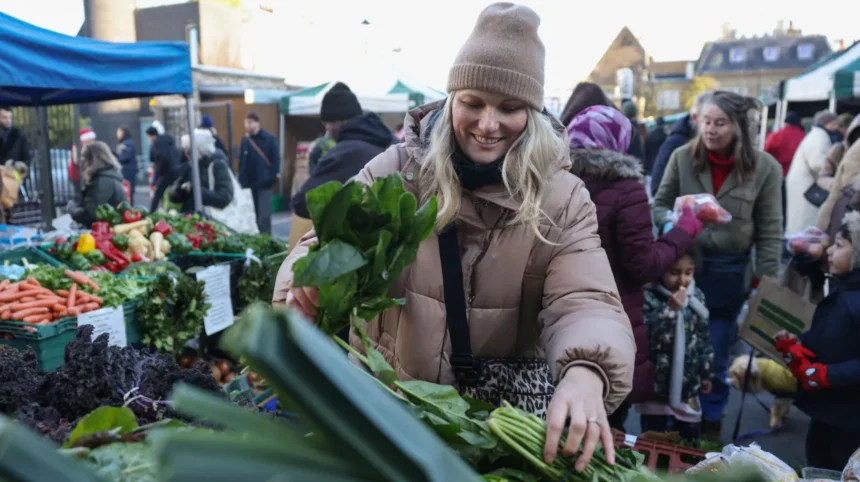
Farmers markets in West London are designated physical trading venues where regional agricultural producers sell food products directly to urban consumers. These markets operate under strict producer-only rules that mandate stallholders to cultivate, catch, brew, or bake all items sold.
- When did farmers markets develop in West London?
- How are West London farmers markets structured and governed?
- Where are the primary farmers markets located in West London?
- How do direct-to-consumer food supply chains function at these markets?
- What economic impact do farmers markets have on regional agriculture?
- What environmental and seasonal dynamics govern market offerings?
- How do farmers markets contribute to urban nutrition and community integrity?
- What future trends will shape West London farmers markets?
Farmers markets in West London serve as localized agricultural distribution nodes within urban boroughs. Unlike standard commercial high-street retail markets, these venues eliminate secondary wholesalers and brokers. The primary governing operational standard requires that every vendor operates as the primary source of the raw produce or processed food.
Regulatory bodies like London Farmers Markets (LFM) establish geographical boundaries for vendor eligibility. Produce sold in West London typically originates from farms located within a 100-mile radius of the M25 orbital motorway. This catchment zone includes agricultural zones across Kent, Essex, Sussex, Berkshire, Hampshire, and Oxfordshire.
These venues feature specific product categories:
- Fresh primary produce (uncooked vegetables, tree fruit, salad greens)
- Butchered animal meats (grass-fed beef, pastured pork, lamb, venison)
- Wild-caught day-boat seafood (coastal English Channel fish, shellfish)
- Dairy products (unpasteurized milk, single-herd cheeses, cultured butter)
- Value-added food items (sourdough breads, cold-pressed preserves, raw honey)
Urban farmers markets operate on recurring weekly schedules. They convert public spaces, schoolyards, and outdoor venues into temporary commercial food hubs. The core purpose is shorten the supply chain between countryside producers and city residents.
When did farmers markets develop in West London?
Modern farmers markets in West London developed in September 1999 following the establishment of the Notting Hill Farmers’ Market. This regulatory direct-sales model was introduced to mitigate economic pressures faced by small-scale British farmers during agricultural income declines.
The historical evolution of West London food distribution shifted from traditional municipal markets to corporate supermarket supply chains in the 20th century. By the late 1990s, primary food producers in the United Kingdom faced falling farmgate prices due to supermarket consolidated purchasing power.
London Farmers Markets (LFM) was founded in 1999 by Nina Weissenberg to create an alternative retail framework. The organisation established strict operating guidelines based on the US Certified Farmers’ Market system. The first formal modern venue in West London opened at Fox Primary School in Notting Hill in September 1999.
The modern expansion unfolded over three distinct operational phases:
- Phase 1: Initial Urban Integration (1999–2004): Establishment of flagship sites including Notting Hill (1999) and Wimbledon Park, creating dedicated direct-to-consumer networks.
- Phase 2: Suburban Growth (2005–2012): Introduction of neighborhood markets in residential centers such as Ealing (Leeland Road), Kensington, and West Hampstead.
- Phase 3: Independent and Community Expansion (2013–Present): Growth of independent, community-driven ventures such as The Food Market Chiswick at Grove Park Farm House.
The agricultural crises of the early 2000s, including the 2001 Foot-and-Mouth outbreak, accelerated producer participation. Direct retail enabled smallholders to maintain financial viability by capturing 100 percent of the consumer purchase price, compared to less than 30 percent through wholesale grocery arrangements.
How are West London farmers markets structured and governed?
Farmers markets in West London are governed through strict organizational criteria enforced by market operators and local borough councils. Operators implement single-origin rules, geographical radius restrictions, hygiene compliance, and environmental health monitoring across all participating vendors.
The operational structure of direct agricultural retail relies on a dual-tier administration system involving private or non-profit market operators and local authority Trading Standards officers.
Market Operator Oversight
Market organizers control vendor selection through formal vetting procedures. Organizers mandate that stallholders submit detailed production documentation before gaining access to pitches.
Key rules enforced by operators:
- The Producer-Only Rule: Reselling wholesale items purchased from commercial distribution centers (such as New Covent Garden Market) is banned.
- Geographical Sourcing Radius: Produce must be grown within a defined regional distance, typically 100 miles from the outer boundary of London.
- Staffing Mandates: Stalls must be managed directly by the producer, family members, or farm employees involved in production.
- Third-Party Certification: Organic producers must provide certification documents from approved bodies such as the Soil Association or Biodynamic Association.
Statutory Governance
Local authority environmental health departments enforce statutory food safety laws across all market locations. Borough inspections verify temperature control for high-risk items like meat, unpasteurized dairy, and prepared seafood. Stallholders must maintain full product traceability under UK Food Safety Act regulations.
Where are the primary farmers markets located in West London?
The primary farmers markets in West London are located in key residential boroughs, including Notting Hill, hounslow/chiswick/">Chiswick, Ealing, Kensington, and Earl’s Court. These markets operate outdoors on fixed weekend morning schedules.
West London features a network of weekly markets. Each site accommodates between 15 and 50 specialist producers depending on footprint size.
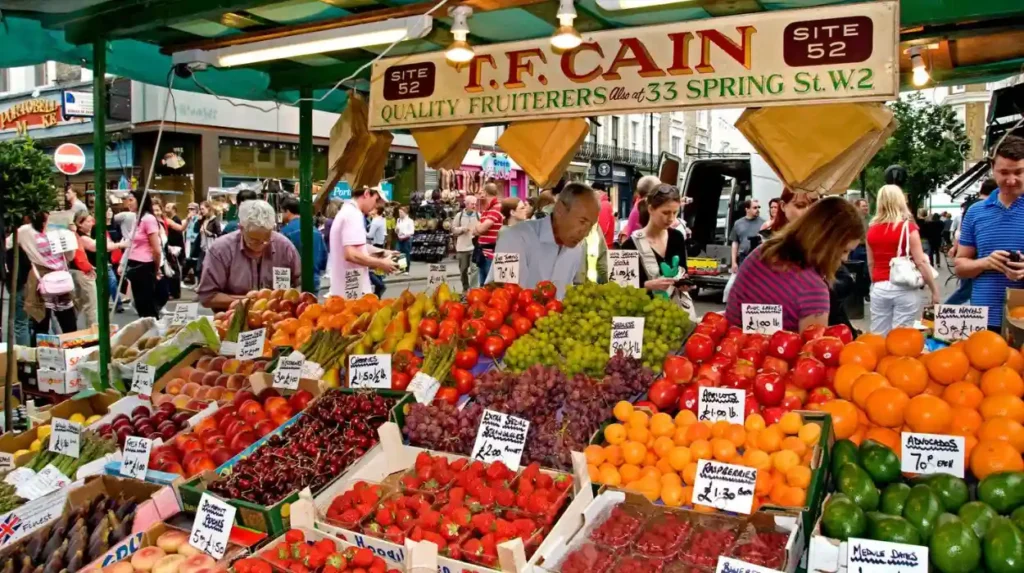
Notting Hill Farmers’ Market
Operating continuously since September 1999, this market occupies the grounds of Fox Primary School off Kensington Church Street. It hosts approximately 30 to 40 stalls every Saturday. Vendors supply raw unpasteurized milk from Sussex, biodynamic fruit from East Anglia, and line-caught fish from English South Coast ports.
The Food Market Chiswick
Located at Market Drive near the River Thames, Chiswick operates as an independent, community-directed market. The venue features over 20 primary producers. Proceeds from pitch fees fund local park maintenance and green space projects at Grove Park Farm House.
Ealing Farmers’ Market
Situated on Leeland Road, this market serves the London Borough of Ealing every Saturday. It operates as an established food hub for West London residential communities, emphasizing organic staple produce and free-range livestock.
How do direct-to-consumer food supply chains function at these markets?
Direct-to-consumer food supply chains function by eliminating intermediary brokers, cold-storage warehouses, and extended wholesale transit steps. Producers harvest food items within 24 to 48 hours of market display, transporting goods straight from farms to urban retail points.
The logistics model of West London farmers markets contrasts with mainstream supermarket supply networks. Supermarket food routes rely on central consolidation centers, regional distribution facilities, and long-range logistics corridors. That process typically extends the time between farm harvesting and retail purchase to 5–12 days.
Harvest Timing and Transit Protocols
Producers participating in markets like Notting Hill or Chiswick begin logistics cycles late on Friday or in the early morning hours of Saturday and Sunday.
- Harvesting: Crops are harvested between 12 and 36 hours before sale.
- Temperature Control: Meat, seafood, and dairy products are loaded directly into mobile refrigerated units at the farm site.
- Transit: Vehicles travel between 30 and 90 miles via main arterial roadways (A40, M4, M3) directly into West London boroughs.
- On-Site Trading: Stalls are assembled between 7:00 AM and 9:00 AM, with trading completing by 2:00 PM.
This direct supply structure preserves volatile nutrients, reduces spoilage losses, and eliminates unnecessary packaging materials.
What economic impact do farmers markets have on regional agriculture?
Farmers markets generate high financial returns for regional producers by providing direct access to urban capital. Direct sales allow farmers to capture the entire retail margin, stabilizing small family farms and supporting rural employment.
Standard industrial distribution routes leave primary food producers with a small fraction of the final purchase price. Supermarket purchasing terms often force farmers to absorb processing, packaging, slotting, and transit costs.
Economic Factors for Producers
- Margin Capture: Farmers receive 100 percent of the gross checkout value, compared to 20–30 percent in supermarket supply networks.
- Price Stability: Producers establish fixed prices based on actual operational costs rather than fluctuating global commodity benchmarks.
- Crop Utilization: Direct trading enables the sale of irregular, non-standard, or mis-shapen produce that retail chains typically reject.
- Cash Flow Regularity: Weekly market schedules deliver reliable cash flow, reducing dependence on high-interest agricultural credit lines.
Rural Community Spillovers
Capital spent at West London farmers markets transfers directly into rural economies. This revenue supports agricultural employment, land stewardship, and heritage crop conservation across the Home Counties.
What environmental and seasonal dynamics govern market offerings?
West London farmers markets operate around natural British agricultural seasons, changing product stock throughout the year. Stallholders sell items grown in season, aligning retail availability with natural regional harvest cycles.
Unlike supermarket supply systems that import non-seasonal produce via long-distance air freight, farmers markets feature crops native to the current UK growing period.
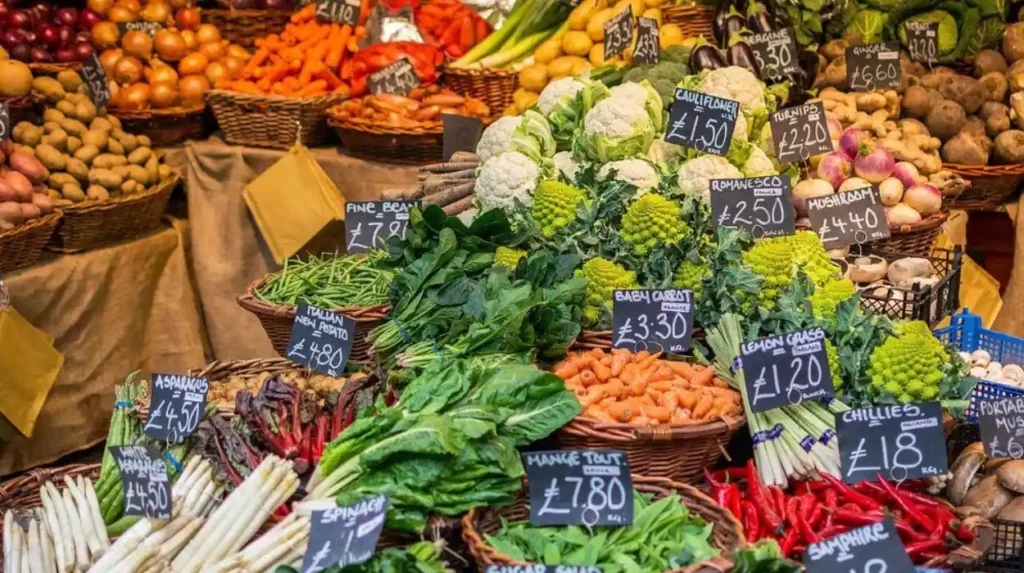
Seasonal Produce Availability
- Spring (March–May): Wild garlic, spears of Kentish asparagus, early lettuce, radishes, and spring lamb.
- Summer (June–August): Soft berries (strawberries, raspberries), sweet cherries, heritage tomatoes, courgettes, and stone fruit.
- Autumn (September–November): Maincrop top fruit (Cox and Bramley apples, Conference pears), squashes, pumpkins, wild mushrooms, and fresh game.
- Winter (December–February): Root crops (parsnips, carrots, swedes), brassicas (kale, Brussels sprouts, Savoy cabbage), stored apples, and venison.
Environmental Impact Reduction
Direct agricultural trade lowers the ecological impact of urban food distribution.
- Reduced Food Miles: Transport distances decline from thousands of international miles to under 100 miles.
- Minimal Packaging: Produce is sold loose or in recyclable paper packaging, lowering single-use plastic waste.
- Low Carbon Storage: Food skips energy-intensive long-term refrigeration, reducing overall supply chain energy demands.
Explore more Area Guide
Best River Walks Along Thames and Canals West London 2026
Best Pubs in West London: Historic, Riverside, and Food-Led Picks
How do farmers markets contribute to urban nutrition and community integrity?
Farmers markets improve urban nutrition by providing fresh, nutrient-dense whole foods to city neighborhoods. These venues also serve as local community hubs that encourage social interaction and reconnect residents with food sources.
Nutritional Value
The short time between harvest and retail helps preserve delicate micro-nutrients, including Vitamin C, folate, and volatile antioxidants, which degrade during long shipping and shelf storage.
- Minimal Chemical Processing: Smaller holdings rely less on post-harvest synthetic waxes, fungicides, and preservative gas treatments.
- Whole Food Focus: Markets prioritize raw agricultural ingredients over ultra-processed packaged foods.
- Varietal Diversity: Smallholders grow heritage varieties selected for flavor and nutrition rather than shipping durability.
Community Integration
Farmers markets revitalize public spaces like outdoor squares, parking sites, and schoolyards. They create social environments where urban residents interact directly with rural food growers. This direct connection builds transparency, educates consumers about seasonal food cycles, and supports community engagement across West London boroughs.
What future trends will shape West London farmers markets?
Future trends shaping West London farmers markets include digital payment integration, climate-resilient farming practices, expanded urban micro-logistics, and evolving land-use policies.
Climate-Resilient Agricultural Systems
Shifting weather patterns across South East England affect crop yields and harvest timing. Regional farms supply markets using sustainable techniques:
- Soil Health: Transitioning to low-till methods and organic composting to boost soil water retention.
- Water Conservation: Installing drip irrigation systems and rainwater collection infrastructure.
- Crop Innovation: Planting heat-tolerant vegetable varieties to maintain stable yields during hot summer months.
Tech and Logistics Integration
While keeping physical direct sales at their core, markets incorporate modern operations:
- Contactless Transactions: Complete adoption of digital card and mobile payment systems across all stalls.
- Pre-Order Platforms: Digital click-and-collect systems that allow consumers to reserve products before attending the market.
- Low-Emission Logistics: Increasing use of electric transport vans for moving goods from regional farms into London’s Ultra Low Emission Zone (ULEZ).
Strategic Policy Alignments
Borough councils across West London view farmers markets as key elements of sustainable urban food strategies. These trading hubs lower food supply emissions, support rural food security, and ensure West London residents retain access to fresh regional produce.
What defines a official farmers market in West London?
Official farmers markets in West London operate under strict producer-only rules that require vendors to grow, catch, rear, or bake all items sold directly. Commercial wholesalers and third-party resellers are explicitly banned. Furthermore, primary agricultural produce must originate from farms within a defined 100-mile radius of the M25 motorway.