West London has a substantial theatre network covering historic Victorian playhouses, producing theatres, opera venues, family-focused performance spaces, large entertainment venues and modern cultural destinations. Important examples include the Lyric fulham/hammersmith/">Hammersmith Theatre, Bush Theatre, Richmond Theatre, Opera Holland Park, Rose Theatre Kingston, Troubadour brent/wembley/">Wembley Park Theatre and Watermans in hounslow/brentford/">Brentford.
- What are the main theatres in West London?
- How did theatre develop in West London?
- Why is Lyric Hammersmith Theatre important to West London?
- What makes Bush Theatre different from other West London theatres?
- What can visitors see at Richmond Theatre?
- Which West London theatres focus on opera and outdoor performance?
- Where can families find theatre in West London?
- What is the role of Rose Theatre Kingston in West London?
- What types of theatre venues exist across West London?
- How does theatre contribute to West London’s cultural economy?
- How accessible are theatres in West London?
- How should visitors choose a theatre in West London?
- What should visitors know about theatre heritage in West London?
- How is West London’s theatre scene changing?
- Why are theatres in West London important for visitors and residents?
The area has a distinctive position within London’s performing-arts landscape. Hammersmith provides major producing theatres and entertainment venues. Shepherd’s Bush is recognised for new writing and community-focused theatre. Richmond retains a major Victorian theatre designed by Frank Matcham. Holland Park provides a seasonal outdoor opera setting. Kingston contributes a large modern producing theatre. Wembley provides large-scale contemporary entertainment.
The term theatre describes a venue or organisation where live dramatic, musical, operatic, dance or performance productions are presented to an audience. A theatre can also function as a producing organisation, education centre, rehearsal facility, community space or cultural charity.
West London therefore offers more than one type of theatrical experience. Its venues operate at different scales and serve different audiences, from intimate studio productions to large musicals and opera.
What are the main theatres in West London?
The main theatres in West London include Lyric Hammersmith, Bush Theatre, Richmond Theatre, Rose Theatre Kingston, Opera Holland Park, Troubadour Wembley Park Theatre and Watermans. Each venue has a distinct programme covering drama, comedy, opera, musicals, family entertainment, dance and new writing.
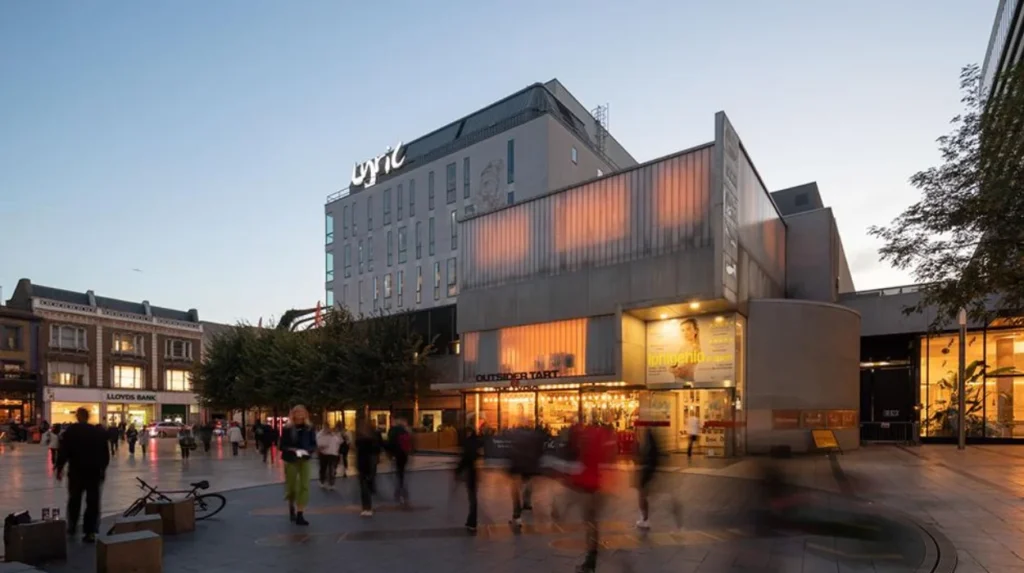
The Lyric Hammersmith Theatre is one of the area’s most significant producing theatres. It has operated at the heart of Hammersmith for more than 130 years and produces contemporary theatre alongside work for young people and the local community. The theatre’s history dates to 1895.
The Bush Theatre is particularly associated with new plays and playwright development. It began in 1972 in a small room above a pub on Shepherd’s Bush Green and has since produced more than 500 premieres.
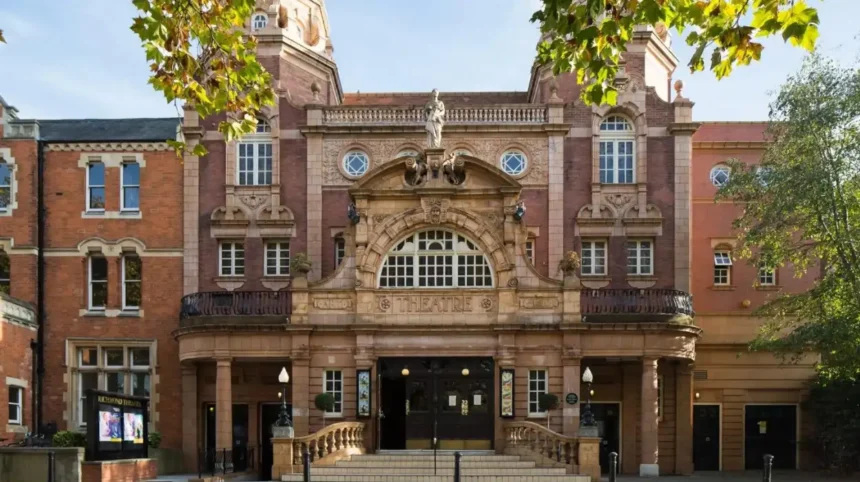
Richmond Theatre is one of West London’s major historic venues. Designed by Frank Matcham, it opened in 1899 and is Grade II* listed by Historic England.
The Rose Theatre opened in 2008 after decades of local campaigning and planning. It has developed into an important producing and touring theatre for southwest London.
Other important venues include Opera Holland Park, Troubadour Wembley Park Theatre and Watermans in Brentford. These venues demonstrate the geographic and artistic variety of West London’s theatre sector.
How did theatre develop in West London?
Theatre in West London developed through Victorian playhouses, early entertainment halls, modern producing organisations and community arts centres. Richmond Theatre opened in 1899, Lyric Hammersmith began in 1895, Bush Theatre started in 1972, and newer venues expanded the area’s theatrical network.
The late nineteenth century was particularly important for West London’s theatre architecture. Rapid urban growth created demand for permanent entertainment venues. Theatre architects developed larger auditoriums, improved sightlines, elaborate interiors and increasingly sophisticated stage facilities.
The Lyric Hammersmith represents this Victorian development. The original theatre was designed by Frank Matcham and opened in 1895. Matcham became one of Britain’s most important theatre architects, with work across London and other British cities.
The original Lyric building faced demolition during redevelopment proposals in the twentieth century. Following public opposition, important Matcham plasterwork was preserved. The auditorium was reconstructed within a new building and reopened in 1979. The reconstructed auditorium retained the essential architectural character of the 1895 theatre.
Richmond Theatre represents another major stage in West London’s theatrical history. It opened on 18 September 1899 with Shakespeare’s As You Like It. Its architect was Frank Matcham, whose work became strongly associated with late-Victorian theatre design.
The twentieth century brought different performance models. Variety theatre, cinema, touring productions and modern drama became increasingly important. New organisations later developed around new writing, community participation, youth work and experimental performance.
Bush Theatre illustrates this transformation. It began above a pub in 1972 before moving into the former Passmore Edwards Public Library on Uxbridge Road. Its current building contains the Holloway Theatre and Studio alongside creative and community facilities.
Why is Lyric Hammersmith Theatre important to West London?
Lyric Hammersmith Theatre is important because it combines a 1895 Frank Matcham heritage with modern producing theatre, youth development and community programmes. Its reconstructed auditorium preserves historic design while its organisation continues commissioning, producing and developing contemporary artists in Hammersmith.
The Lyric has been closely connected with important British theatre practitioners throughout its history. Its archive records productions and careers involving writers, directors and performers who later achieved national prominence. Harold Pinter, Michael Frayn and A. A. Milne are among writers associated with productions at the venue.
The theatre also has an important relationship with emerging talent. Its organisational mission includes developing the next generation of artists and giving young people opportunities to participate in theatre.
Its architecture is equally significant. The original Matcham auditorium was incorporated into the 1979 building after the original theatre was demolished. This created an unusual combination of a Victorian auditorium within a modern town-centre structure. The Theatre Trust identifies the reconstructed auditorium as retaining the essential character of Matcham’s original design.
The Lyric therefore represents both heritage preservation and contemporary theatre production. Its location in central Hammersmith also makes it accessible to audiences travelling from across West London.
What makes Bush Theatre different from other West London theatres?
Bush Theatre specialises in new writing and playwright development rather than relying mainly on established commercial productions. Founded in 1972, it has produced more than 500 premieres and operates two performance spaces within its Shepherd’s Bush building.
The Bush Theatre has a clearly defined artistic identity. Its stated mission is to discover, nurture and produce new playwrights from diverse backgrounds. It focuses on contemporary stories and new voices.
Its history began above a pub on the corner of Shepherd’s Bush Green in 1972. The organisation later moved to its current location at 7 Uxbridge Road, occupying the former Passmore Edwards Public Library.
The building contains two performance spaces. The Holloway Theatre functions as the main space, while the Studio provides a smaller performance environment. The venue also includes a script library, bar, café, terrace and rehearsal facilities.
The Bush has also played an important role in developing plays that later gained wider recognition. Beautiful Thing, written by Jonathan Harvey, premiered at the Bush in 1993 before transferring to the West End and later becoming a feature film.
This model makes the Bush particularly relevant to visitors interested in contemporary British playwriting rather than only large-scale commercial theatre.
What can visitors see at Richmond Theatre?
Richmond Theatre presents drama, musicals, opera, dance, comedy and family entertainment throughout its programme. Its Grade II listed Victorian auditorium also provides an important architectural experience, making the venue relevant to both theatre audiences and heritage visitors.*
Richmond Theatre stands beside Richmond Green in the London Borough of Richmond upon Thames. Historic England lists the building at Grade II*. The listing identifies its 1899 construction by Frank Matcham and describes its red-brick and buff-terracotta exterior.
The venue opened as the Richmond Theatre and Opera House. Its inaugural public performance was Shakespeare’s As You Like It. The theatre subsequently experienced changes of name and programming before returning to the Richmond Theatre name.
Its programme demonstrates the flexibility of a traditional touring theatre. Modern seasons include drama, musical theatre, comedy, family shows and other live performances. The venue describes its programme as including pre- and post-West End drama, major musicals, opera, dance and family entertainment.
The building itself remains an important example of Victorian theatre architecture. Original features include mahogany panelling, the main staircase, marble balustrades and historic tiled flooring. Later restoration work also introduced additional decorative elements.
Visitors therefore experience both live performance and a surviving piece of London’s late-Victorian theatre heritage.
Which West London theatres focus on opera and outdoor performance?
Opera Holland Park is West London’s leading specialist outdoor opera organisation. It stages productions in Holland Park during the summer season and combines professional opera with community engagement, education and artistic development through an independent charitable organisation.
Opera Holland Park has a different operating model from conventional indoor theatres. Its performances take place in a purpose-built seasonal structure within the historic setting of Holland Park.
The organisation’s history connects to Holland House, which was built in 1605 by Sir Walter Cope. Holland House later became a major political, literary and social centre. It suffered extensive damage during bombing in 1940.
London County Council acquired Holland Park and Holland House in 1952. The site later became a public resource. Opera Holland Park was founded in 1996, with its first production being Verdi’s Un ballo in maschera.
A new 1,000-seat auditorium and canopy were acquired in 2007 as the organisation expanded its production capacity. Opera Holland Park later became an independent charity.
The company presents established operas alongside less frequently performed works. Its repertoire has included composers such as Mozart, Donizetti, Bizet, Verdi, Tchaikovsky and Puccini, alongside Italian rarities.
Its community programme also extends beyond the main stage. The organisation delivers outreach work in schools, care homes, hospices and other community settings.
Where can families find theatre in West London?
Families can find theatre across West London through venues such as Lyric Hammersmith, Richmond Theatre, Rose Theatre Kingston and Troubadour Wembley Park Theatre. Their programmes include family drama, musicals, pantomime, children’s productions and large-scale entertainment.
Family theatre is an established part of the West London cultural economy. Major venues programme productions specifically for children and families alongside adult drama and comedy.
Lyric Hammersmith has a long-established relationship with family audiences. Pantomime has formed part of the theatre’s programme since its early history, with the first recorded Lyric pantomime being Cinderella in 1897.
Richmond Theatre also programmes family entertainment alongside its adult productions. Its wider programme includes family shows, musical theatre and touring productions.
Rose Theatre Kingston provides another significant family option. The theatre produces work for adult and family audiences and combines its own productions with touring theatre, comedy and music.
Troubadour Wembley Park Theatre operates on a larger entertainment scale. Its 2026 programme includes Dinosaur World Live, I’m Every Woman – The Chaka Khan Musical and High School Musical, demonstrating the venue’s focus on family entertainment and major musical productions.
Families should check the individual venue’s age guidance, running time, accessibility information and performance schedule before attending.
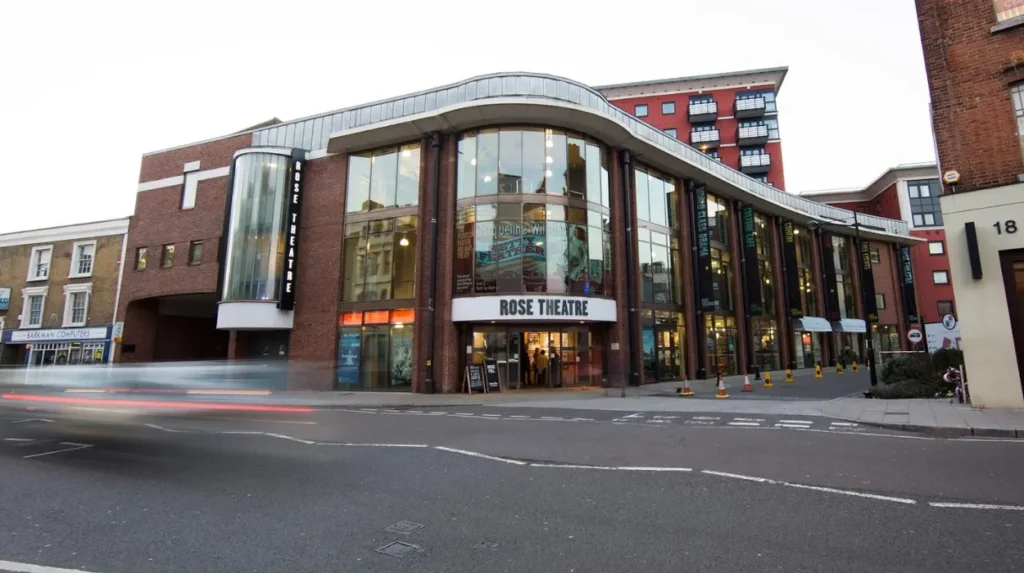
What is the role of Rose Theatre Kingston in West London?
Rose Theatre Kingston is a major modern producing theatre serving southwest London. Opened in 2008 after decades of community campaigning and planning, it presents original productions alongside touring drama, comedy, music and family entertainment.
Rose Theatre Kingston opened in 2008 and quickly became an important cultural venue for Kingston and surrounding communities. Its development followed decades of local campaigning and planning.
The organisation describes itself as one of the largest producing theatres in London. Its programme combines Rose productions with visiting theatre, comedy and music.
The venue also operates Rose Youth Theatre. Since 2008, the youth programme has provided acting and theatre education for children and young people. Its academy covers school years 1 to 13 and does not require an audition.
This educational role is important because a modern producing theatre operates beyond ticketed performances. Training, workshops, youth theatre and community engagement create additional routes into theatre.
Rose Theatre’s position in Kingston also expands the geographical distribution of major theatre venues beyond central London. Visitors in southwest London therefore have access to substantial producing theatre without travelling into the West End.
What types of theatre venues exist across West London?
West London contains producing theatres, touring theatres, opera venues, family venues, studio theatres and multipurpose arts centres. Examples include Lyric Hammersmith for producing theatre, Richmond Theatre for touring work, Opera Holland Park for opera and Watermans for multidisciplinary performance.
A producing theatre develops and stages its own productions. Lyric Hammersmith, Bush Theatre and Rose Theatre Kingston all have strong producing functions.
A touring theatre presents productions created elsewhere. Richmond Theatre operates within this broader model while also presenting a wide range of theatrical and entertainment programmes.
A studio theatre is a smaller performance space designed for intimate productions, experimental work, workshops or emerging artists. Bush Theatre’s Studio provides an example of this format alongside its main Holloway Theatre.
An opera venue focuses primarily on opera. Opera Holland Park provides West London’s major outdoor example.
A multipurpose arts centre combines different cultural activities. Watermans in Brentford has included theatre, cinema, galleries, studios and digital arts within one organisation.
Large entertainment venues provide another category. Troubadour Wembley Park Theatre is a modern cultural destination within Wembley Park and presents large-scale productions and family entertainment.
This diversity means that “West London theatre” is not a single artistic category. It describes a network of venues with different capacities, funding models, artistic missions and audience groups.
How does theatre contribute to West London’s cultural economy?
Theatre contributes to West London’s cultural economy through ticket sales, employment, tourism, hospitality, education, creative production and local participation. Venues also support writers, actors, directors, designers, technicians, administrators, freelancers and community organisations.
A theatre requires a broad workforce beyond performers. Productions involve directors, stage managers, technicians, designers, wardrobe teams, front-of-house staff, administrators, marketing teams and hospitality workers.
Producing theatres also commission writers and employ creative teams during development and rehearsal. Bush Theatre’s emphasis on new playwrights demonstrates how a venue contributes to the wider creative pipeline.
Theatre also creates economic activity beyond the venue. Audience members use restaurants, cafés, public transport, taxis, hotels and other local services before and after performances.
Community programmes add another dimension. Lyric Hammersmith identifies community engagement and youth development as central parts of its mission. Opera Holland Park similarly runs outreach and education work across local communities.
Theatre therefore functions as both an entertainment industry and a cultural infrastructure. Its impact extends from individual performances to long-term skills development and local participation.
How accessible are theatres in West London?
West London theatres use different transport networks and accessibility arrangements, so visitors should check each venue individually. Tube, rail, bus and walking routes connect major venues, while theatres publish specific information covering step-free access, seating and assistance.
West London has strong public transport connections. Hammersmith is served by several Underground routes, while Shepherd’s Bush has both Underground and rail connections. Richmond is served by Underground and National Rail services.
Bush Theatre provides a clear example of transport accessibility. Shepherd’s Bush Market station is approximately 40 metres from the theatre, while Shepherd’s Bush station is approximately 480 metres away.
Accessibility inside a theatre is a separate issue from transport access. Visitors should check wheelchair spaces, accessible toilets, lifts, captioning, audio description, British Sign Language interpretation and companion arrangements directly with the venue.
Bush Theatre states that its building is fully accessible and provides information about its different spaces and facilities.
Large venues can have different seating configurations for different productions. A venue’s standard auditorium accessibility information therefore remains important, particularly when attending a temporary production or unusual staging arrangement.
How should visitors choose a theatre in West London?
Visitors should choose a West London theatre according to location, production type, venue size, accessibility, performance date and audience needs. Lyric suits contemporary producing theatre, Bush suits new writing, Richmond suits heritage and touring productions, and Opera Holland Park suits opera.
Location is the first practical consideration. Hammersmith and Shepherd’s Bush provide dense theatre and entertainment options in west-central London. Richmond and Kingston serve southwest London. Wembley provides large-scale entertainment in northwest London.
Production type is equally important. Visitors seeking new plays should examine Bush Theatre and Lyric Hammersmith. Those interested in Victorian architecture should consider Richmond Theatre. Opera audiences should examine Opera Holland Park. Families have options across Lyric, Richmond, Rose Theatre Kingston and Troubadour Wembley Park.
Venue size also affects the experience. Smaller studio spaces create different viewing conditions from large commercial auditoriums. Bush Theatre’s two spaces demonstrate this difference within a single building.
Ticket availability and pricing change by production. Popular touring shows, family productions and West End transfers often operate under different pricing structures from locally produced drama.
Accessibility should be checked before booking rather than after arrival. Venue-specific policies provide the most accurate information for individual performances.
What should visitors know about theatre heritage in West London?
West London’s theatre heritage includes Victorian architecture, historic productions, preserved interiors and long-running cultural organisations. Richmond Theatre and Lyric Hammersmith provide especially important examples, while Bush Theatre demonstrates the area’s modern contribution to British new writing.
Theatre heritage is particularly visible in Richmond and Hammersmith. Richmond Theatre remains a Grade II* listed building designed by Frank Matcham in 1899.
The Lyric provides a different heritage model. Its original auditorium was dismantled and reconstructed within a modern building after the original theatre faced demolition. This preserved significant elements of Matcham’s work while allowing the organisation to continue operating in a redeveloped town centre.
Theatre heritage also includes archives and artistic history. Lyric’s records connect the venue with writers and performers who became influential in British theatre.
Richmond’s heritage extends beyond its façade. Original interior elements survive, including historic panelling, staircase features and tiled flooring.
Bush Theatre represents a different form of cultural heritage. Its history is connected to new playwrights, contemporary British stories and more than five decades of producing new work.
These different forms of heritage demonstrate why West London’s theatre landscape remains culturally significant.
Explore More Area Guide
Luxury Shopping West London: Knightsbridge & Chelsea 2026
Best Charity Shops in West London 2026
How is West London’s theatre scene changing?
West London’s theatre scene is developing through new writing, youth participation, large-scale touring productions, multidisciplinary arts and modern venue investment. Existing historic theatres continue operating alongside contemporary spaces, creating a mixed cultural network across Hammersmith, Shepherd’s Bush, Richmond, Kingston and Wembley.
The most significant long-term change is the coexistence of heritage venues and modern cultural destinations.
Bush Theatre combines a historic library building with contemporary performance spaces and writer-development facilities. Its redevelopment created additional space for artists while improving accessibility and sustainability.
Rose Theatre represents another modern model. Since 2008 it has combined producing theatre, touring productions, comedy, music and youth development.
Wembley Park demonstrates the growth of large-scale contemporary entertainment. Troubadour Wembley Park Theatre occupies a modern cultural venue within the former Fountain Studios site and continues to host major productions.
The future relevance of West London’s theatres also depends on audience development. Youth programmes, community projects, education and accessible ticketing create routes for new audiences to participate in theatre.
This combination of historic preservation, new writing, education and large-scale entertainment gives West London a resilient and diverse theatre infrastructure.
Why are theatres in West London important for visitors and residents?
Theatres in West London provide access to drama, comedy, musicals, opera, family entertainment and new writing while preserving important architectural heritage. Their programmes support local communities, emerging artists and cultural participation across several distinct London neighbourhoods.
For residents, theatres provide local access to professional performance and cultural education. Programmes extend beyond evening shows to include youth theatre, workshops, community productions and artist development.
For visitors, theatres provide a way to experience West London’s individual neighbourhoods. A performance at the Lyric connects with Hammersmith’s cultural centre. A Bush Theatre visit connects with Shepherd’s Bush. Richmond Theatre places live performance beside Richmond Green. Opera Holland Park connects theatre with a historic park setting.
The network also demonstrates London’s cultural diversity outside the traditional West End. West London venues produce original work, host touring productions and maintain specialised artistic programmes.
The historical record reinforces this importance. Richmond Theatre has operated since 1899, while the Lyric’s theatrical history reaches back to 1895. Bush Theatre has produced more than 500 premieres since its foundation in 1972.
West London’s theatres therefore combine three major functions: cultural production, heritage preservation and public participation. This combination makes the area an important part of London’s wider performing-arts infrastructure.
For anyone researching theatres in West London, the strongest starting points are the Lyric Hammersmith for producing theatre, Bush Theatre for new writing, Richmond Theatre for Victorian heritage and touring productions, Opera Holland Park for outdoor opera, Rose Theatre Kingston for modern producing theatre, and Troubadour Wembley Park for large-scale contemporary entertainment.
Current programmes, dates, accessibility arrangements and ticket conditions should always be confirmed directly with the individual venue before visiting.
What are the best theatres in West London?
Some of the main theatres in West London include Lyric Hammersmith Theatre, Bush Theatre, Richmond Theatre, Opera Holland Park, Rose Theatre Kingston and Troubadour Wembley Park Theatre. Each venue offers different programmes, including drama, comedy, opera, musicals, family shows and new writing.