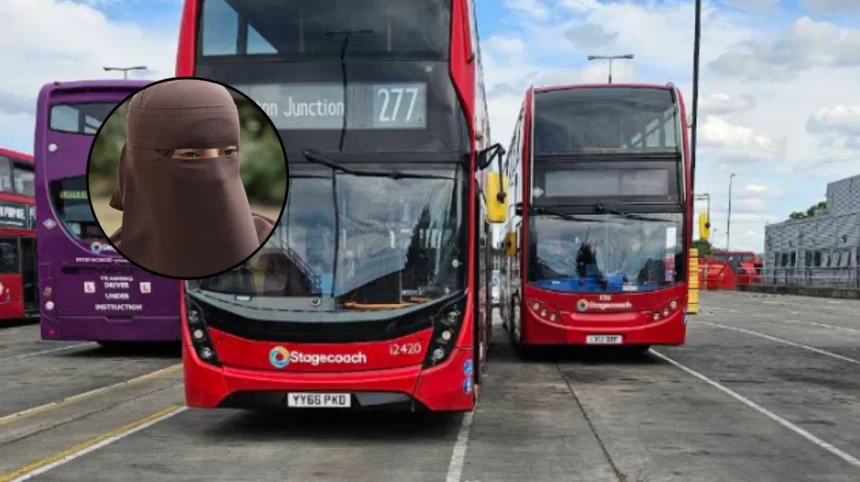
Key Points
- Incident Details: A 21-year-old Muslim woman was subjected to aggressive verbal abuse, Islamophobic slurs, and death threats while travelling on public buses in west London on 31 July.
- Targeting Based on Attire: The victim reported that she was targeted specifically because she was wearing a face veil (niqab).
- Escalation to Physical Violence: The verbal harassment escalated into a physical altercation on the second bus when a male bystander attempted to intervene to protect the victim.
- Documented Evidence: Part of the confrontation was recorded on video by the victim, showing the assailant shouting abusive remarks and threatening her.
- Wider Pattern: The victim stated that severe harassment, including being spat at, barged into, and pushed, has become a daily reality while navigating the capital.
West London (West London News) August 18, 2026 – A 21-year-old Muslim woman was subjected to severe verbal abuse and explicit death threats on public buses in west London after being targeted for wearing a niqab, in an incident that eventually devolved into a physical altercation when a bystander intervened.
What Happened During the London Bus Incident?
The victim, identified as Salsabil, was travelling home from central London on 31 July when she experienced consecutive episodes of aggressive harassment across two different public buses. According to accounts of the event, the hostility began when an unidentified woman started directing targeted verbal abuse at Salsabil due to her religious attire.
The situation escalated significantly on the second bus journey, where the harasser continued to direct threatening language towards Salsabil. Video footage captured during the encounter shows the assailant shouting aggressively and making explicit threats against the victim’s life.
As the verbal assault persisted, a male passenger on the bus attempted to step in and de-escalate the situation. However, the intervention caused the encounter to deteriorate further, leading to a physical fight between the bystander and the aggressor on board the vehicle.
How Prevalent Is Everyday Harassment Against Muslim Women in London?
Following the incident, Salsabil spoke out about the broader context of her experiences as a visibly Muslim woman living in and navigating the UK capital. She stated that hostility of this nature is not an isolated occurrence, but rather a persistent factor in her daily routine.
Describing the frequency of the abuse she encounters, Salsabil stated:
“Spitting, barging, pushing. It happens to me every single day.”
Her account highlights ongoing concerns regarding public safety, anti-Muslim hatred, and the street-level harassment faced by women wearing traditional religious garments in urban transit systems.
Explore More Local West London News
Seven-Bedroom HMO Granted Lawful Status in Canons Park, 2026
Wandsworth Council Rejects Hammersmith Bridge Repair Funding Bid: West London 2026
Background of Anti-Muslim Harassment and Transit Safety in the Capital
The incident on 31 July fits into a wider framework of documented anti-Muslim incidents and hate crimes reported across the United Kingdom’s public transport networks.
Community safety monitoring organisations and transport authorities have routinely tracked hate crime trends, noting that visibly Muslim individuals—particularly women wearing the hijab or niqab—are disproportionately targeted for verbal and physical abuse in public spaces.
Efforts by Transport for London (TfL) and the British Transport Police to curb hate crime on buses and trains have included targeted reporting campaigns, increased CCTV coverage, and staff training to handle hostile situations.
Despite these measures, community advocacy groups continue to report that many victims experience under-reporting due to the frequency of minor assaults and a lack of immediate intervention during live incidents.
How Will This Development Affect Muslim Communities and Public Transport Users?
This incident is likely to heighten concerns over personal safety and public security among visibly Muslim residents, particularly women who choose to wear the niqab or hijab in metropolitan areas.
The documented occurrence of death threats and physical escalation on daylight bus routes may lead to increased anxiety and heightened vigilance among daily commuters who share similar demographics.
For transport operations and law enforcement agencies, the public dissemination of the footage could intensify scrutiny regarding response protocols, intervention guidelines for bystanders, and the enforcement of anti-hate crime measures across public transit systems.
Furthermore, the event may prompt advocacy organisations to renew calls for stronger policy measures and community-based safety strategies to address everyday harassment on city streets and transport links.