Key Points
- Harrow Council has formally granted a Certificate of Lawful Development for an existing seven-bedroom House in Multiple Occupation (HMO) located at 270 Whitchurch Lane in Canons Park.
- The local planning authority issued the official approval decision on 11 August.
- The application did not request permission to establish a brand-new HMO facility, but rather sought formal legal recognition of the building’s long-established operational status.
- Submitted evidence demonstrated that the residential address has functioned continuously as a seven-bedroom HMO housing up to seven individuals since approximately 2003.
- Planning documentation provided to the council to substantiate the claim included tenancy agreements, statutory declarations, floor plans, and a comprehensive Design and Access Statement.
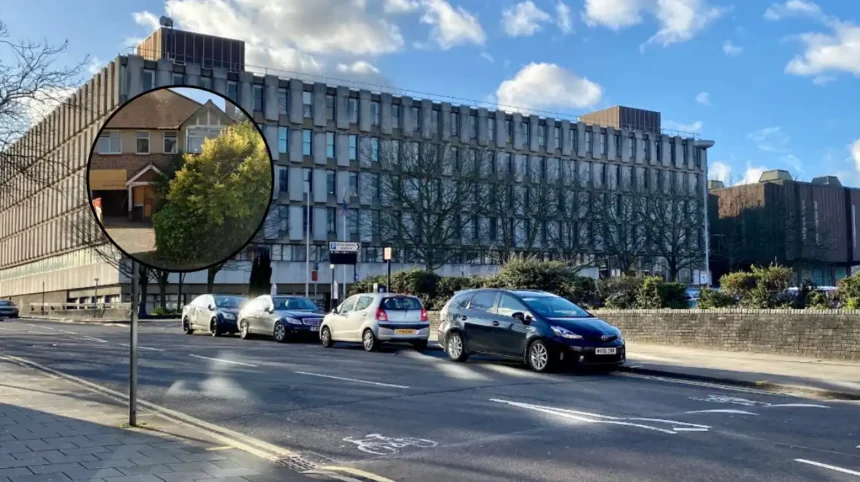
Harrow (West London News) August 17, 2026 – Harrow Council officially declared on 11 August 2026 that a long-standing seven-bedroom House in Multiple Occupation (HMO) situated at 270 Whitchurch Lane, Canons Park, is now legally recognised following extensive review of historic operational evidence. The decision resolves the planning status of the address, granting a Certificate of Lawful Development for its existing use to accommodate up to seven individual residents.
- Key Points
- Why was a Certificate of Lawful Development granted for 270 Whitchurch Lane?
- What evidence was submitted to Harrow Council to prove continuous HMO use?
- Background of the particular development
- Prediction: How this development can affect local residents, private renters, and property owners in Harrow
Why was a Certificate of Lawful Development granted for 270 Whitchurch Lane?
The granting of the Certificate of Lawful Development confirms that the residential property has met the statutory timeframes required under UK planning law to establish immunity from enforcement action. Rather than submitting a prospective application to convert or construct a new shared residential facility, the applicant requested the local planning authority to formally evaluate and certify the existing usage patterns of the site.
Under United Kingdom planning legislation, if a building or land has been utilised for a specific purpose continuously without planning permission for a required statutory period, the owner can apply for a Certificate of Lawfulness. In this instance, council documentation confirms that the applicant successfully demonstrated uninterrupted use as a seven-bedroom HMO occupied by up to seven residents over a multi-year period stretching back over two decades.
What evidence was submitted to Harrow Council to prove continuous HMO use?
To satisfy the stringent legal criteria set by Harrow Council’s planning department, a substantial dossier of documentary proof was submitted alongside the formal application. The planning documents demonstrate that the property at 270 Whitchurch Lane had been actively functioning as an HMO accommodating multiple tenants since around 2003.
The evidentiary submission comprised:
- Historic and contemporary tenancy agreements establishing continuous multi-occupancy.
- Sworn statutory declarations from relevant individuals attesting to the timeline and nature of occupancy.
- Detailed architectural floor plans illustrating the layout and internal living arrangements for seven individual bedrooms.
- A Design and Access Statement outlining the site’s history, spatial configuration, and operational background.
Following a thorough evaluation of these submitted materials, officers at Harrow Council determined that the balance of probability supported the applicant’s assertions regarding historic duration, leading to the formal issuance of the lawful development certificate on 11 August.
Background of the particular development
Houses in Multiple Occupation (HMOs) represent a crucial and frequently debated segment of the UK residential property sector. An HMO is generally defined as a property rented out by at least three people who are not from one ‘household’ (for example, a family) but share facilities such as a bathroom, toilet, or kitchen.
Over recent decades, local authorities across Greater London, including Harrow Council, have tightened regulations surrounding HMO creation to manage housing density, parking availability, residential amenity, and living standards. Under standard planning processes, converting a single-family dwelling (Class C3) into a larger HMO (Sui Generis, accommodating more than six un-related individuals) typically requires explicit planning permission.
However, UK planning law provides a legal route known as a Certificate of Lawful Existing Use or Development (CLEUD) under Section 191 of the Town and Country Planning Act 1990. If an applicant can prove on the balance of probabilities that an unauthorized use has continued without interruption for ten years or more without formal council enforcement intervention, the use becomes immune from enforcement and is legally recognized as lawful. The 270 Whitchurch Lane case relied directly on this established legal mechanism, leveraging tenancy records going back to 2003 to secure lawful status without needing a retrospective application for conventional planning consent.
Explore More Harrow News
Harrow Teen Lands Role in Wembley Arena Diwali Production Harrow 2026
Harrow Council Launches Switch Together Solar Scheme in Harrow 2026
Prediction: How this development can affect local residents, private renters, and property owners in Harrow
The formal legalisation of the seven-bedroom HMO at 270 Whitchurch Lane carries notable implications for several key stakeholder groups across the London Borough of Harrow:
Impact on local residents and the immediate community
For neighbouring residents along Whitchurch Lane and the wider Canons Park area, the council’s decision cements the permanent high-density residential status of the address. Nearby home owners monitoring parking, waste management, and local infrastructure will see no immediate structural changes, as the building was already operating as an HMO. However, the legal certainty granted to the property removes the possibility of future council enforcement action to reduce occupant numbers or revert the building to a single-family dwelling.
Impact on private tenants and the local housing market
For single professionals and private renters in Harrow seeking flexible, lower-cost accommodation, the decision safeguards seven affordable rental spaces within the local market. Given current urban housing shortages and high rental costs across Greater London, the legal retention of existing HMO rooms maintains available capacity without requiring new construction or invasive site redevelopment.
Impact on local landlords and property investors
For local property developers and landlords across the borough, this outcome provides a clear reference point regarding the weight given to historic documentary evidence in CLEUD applications. Property owners with long-standing, unpermitted HMO conversions may be encouraged to gather statutory declarations, old tenancy contracts, and historic floor plans to regularise their properties’ legal standing under Section 191 rules, potentially leading to a slight increase in similar lawful development applications across Harrow Council’s planning portal.