Key Points
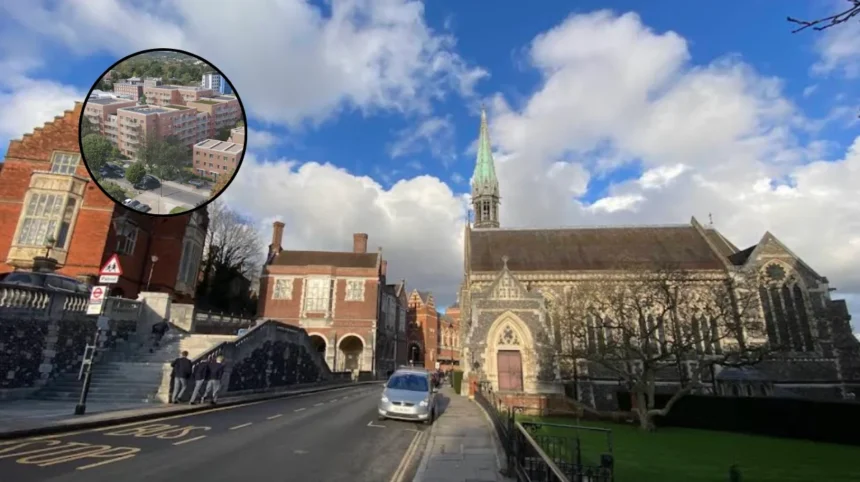
- Harrow Council has approved John Lyon School’s plan to convert Le Beau House, a former police station and later staff office space, into classrooms for up to 67 sixth-form students.
- The project will raise the school’s total capacity from 600 to 667 students.
- The school said the move is needed for its future sustainability and to respond to changing student needs.
- Critics raised concerns about traffic, noise during school-run times, and the possible impact on neighbouring homes.
- Opponents also argued that pupils in the new classrooms could overlook nearby properties.
- The school linked the proposal to the introduction of VAT on tuition fees, saying the tax change has affected its planning.
Harrow (West London News) July 2, 2026 – Harrow Council has approved a plan to convert Le Beau House into classrooms for up to 67 sixth-form students, despite objections over traffic, noise and privacy concerns.
What was approved at John Lyon School?
The council gave the green light for the independent school on Harrow-on-the-Hill to turn the former police station, known as Le Beau House, into classroom space. The building had more recently been used as an office for school staff before the latest proposal was considered. The conversion will allow the school to expand its sixth-form provision while keeping the site within its existing footprint.
The school’s total student capacity will rise from 600 to 667 if the plan is fully implemented. The application was presented as part of the school’s longer-term operational planning rather than a standalone expansion for the wider campus.
Why did the school say the plan was needed?
John Lyon School said the development was essential to its “future sustainability” because student needs have changed. The school also pointed to the introduction of VAT on tuition fees as an important factor in its reasoning. In its view, the extra classroom space would help it adapt to financial and educational pressures while maintaining provision for older pupils.
That argument framed the application as a response to wider changes in the independent education sector. The school’s position was that without adjusting how it uses existing buildings, it could find it harder to meet demand and remain viable in the long term.
What concerns were raised?
Objectors warned that the extra students could increase traffic in the surrounding area, especially at drop-off and pick-up times. They argued that more movement on local roads could create “chaos” during the school run, particularly where streets are already busy or narrow. Noise was also raised as a concern, with opponents saying the greater number of pupils would affect residents nearby.
Privacy was another issue raised during the planning process. Critics said the classrooms could allow pupils to see into adjacent homes, which they believed would reduce residents’ sense of privacy. These objections focused on the relationship between the school’s expansion and the daily life of people living close to the site.
How did the council justify approval?
The council concluded that the proposal should be allowed to proceed despite the objections. Its decision suggests that planners accepted the school’s case that the building could be repurposed for educational use and that the wider benefits outweighed the concerns raised by neighbours. The approval also indicates that the council believed the site could absorb the change without causing unacceptable harm.
The decision reflects a common planning balance in urban and suburban areas, where authorities often weigh school needs against residential impacts. In this case, the council appears to have decided that the change in use was manageable within the local context.
What does the VAT issue mean?
The school linked its planning case to the introduction of VAT on tuition fees, saying the tax change has altered the sector’s financial environment. For independent schools, such policy shifts can affect budgeting, admissions planning and decisions about how to use existing space. In this case, the school presented the new classroom proposal as part of its response to those pressures.
The council’s approval shows that the VAT issue was part of the broader context, even if it was not the only factor considered. The school’s argument was not simply about growth, but about adapting its infrastructure to remain stable in a changing policy climate.
Explore More Harrow News
Harrow: 319 Station Rd to Gain 5-Storey Flats Over Aumkar
Harrow Tamil Community’s 16th Thai Pongal Festival at Arts Centre
Background of the development
John Lyon School is an independent school in Harrow-on-the-Hill, in north-west London, and Le Beau House has previously served different functions before being proposed for classroom use. The building’s former life as a police station, and later as office space for staff, made it a candidate for conversion rather than a completely new build.
Planning decisions like this often come under scrutiny because they affect both education provision and neighbourhood life. In school settings, proposals can trigger debate over traffic, noise, privacy and how intensively a site should be used. The Harrow case follows that pattern, with the school arguing for sustainability and residents focusing on local disruption.
Prediction for affected residents and pupils
For nearby residents, the most immediate effect is likely to be a modest rise in daily movement around the school, particularly at peak arrival and departure times. If the extra sixth-form places are filled, local roads may experience more pressure, and concerns about noise and overlooking may remain part of the community discussion.
For pupils, the approved plan should provide additional classroom space without requiring a move to a separate site. That could help the school manage sixth-form demand more efficiently, while also allowing it to adapt to the financial and structural changes it has cited.