Key Points
- Hammersmith and Fulham Council says there is “no financial option available” to fund the full restoration needed to reopen Hammersmith Bridge to cars.
- The council report says the estimated cost of a full restoration is about £300m.
- The bridge has been closed to motor vehicles since April 2019 after cracks were found in the cast-iron pedestals.
- The bridge reopened to pedestrians and cyclists in 2025, but the council now says it is no longer pursuing the return of cars.
- The council is instead backing a phased repair approach and has submitted a pre-application bid of up to £128m to the Structures Fund.
- The report warns that without significant investment the bridge could face another full closure on safety grounds.
- The council says it has spent about £54m on the bridge since its full closure and says it is owed further money by the Department for Transport and Transport for London.
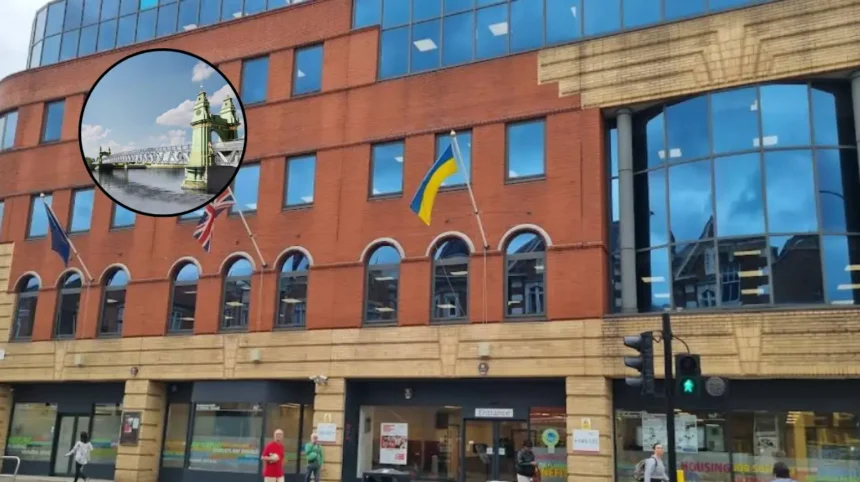
Hammersmith and Fulham Council (West London News) July 2, 2026, has moved away from plans to reopen fulham/hammersmith/">Hammersmith Bridge to cars, with a report saying the estimated £300m cost of a full restoration cannot be met.
Why is Hammersmith Bridge no longer expected to reopen to cars?
The council’s report says there is “no financial option available” to cover the full restoration required for vehicle traffic to return to Hammersmith Bridge. The bridge, a 139-year-old Grade-II listed landmark over the River Thames, has been shut to motor vehicles since April 2019 after cracks were discovered in its cast-iron pedestals.
The report says the council has concluded that a full restoration is no longer a realistic route under current funding conditions. It also says the bridge is no longer considered to be at immediate risk of collapse, although it warns that without significant investment it could close fully again on safety grounds.
What does the council now plan to do?
The council is now focusing on a phased repair strategy rather than a full restoration for cars and buses. The report says the Structures Fund is the only available funding route at present, and the council has already submitted a pre-application bid for works worth up to £128m.
The council says the funding programme would need to be completed by 31 March 2030, which it says makes full restoration unachievable within the required timescale. The report also says the council estimates it will need around £1.5m a year from 2026-27 for safety obligations, inspections and maintenance.
How much has already been spent?
Hammersmith and Fulham Council had spent £54m on the bridge as of last October, including £37m on stabilisation and £17m on pre-restoration works. The council also says it cannot fund further bridge works on its own.
The same report says the council believes it is owed £22.9m in total from the Department for Transport and Transport for London under the funding arrangements tied to the bridge project.
What have officials and reports said?
The council report says the Department for Transport has confirmed its preference for the phased repair bid to the Structures Fund. It also says the council no longer sees a viable financial route to restore the bridge fully for all traffic.
The council now plans to focus on repairs that preserve walking and cycling access across the west London crossing. The report recommends safeguarding access for the thousands of pedestrians and cyclists who use the bridge.
How has the bridge been used recently?
Hammersmith Bridge reopened to pedestrians and cyclists in 2025 after repair work, but not to cars. The bridge has remained a key walking and cycling route while the question of vehicle access has remained unresolved.
Earlier council updates said temporary and phased access arrangements had been used while stabilisation and repair work continued. The current report indicates that those arrangements are now being replaced by a more permanent focus on keeping the bridge safe for non-motorised users.
Background of the development
Hammersmith Bridge has been a long-running repair and funding dispute between Hammersmith and Fulham Council, Transport for London and the Department for Transport. The bridge was fully closed to vehicles in April 2019 after structural cracks were found, and the issue has since moved through stabilisation work, temporary reopening measures and repeated arguments over who should pay for the next stage of repairs.
The present dispute centres on whether the bridge should be restored to carry cars and buses again, or whether public money should instead be used to preserve pedestrian and cycling access. The council’s latest position marks a significant shift because it effectively drops the goal of full vehicle reopening in favour of a cheaper repair pathway.
Explore More Hammersmith and Fulham News
West London Microphone Ban Extended – Hammersmith 2026
Adel Kerari Jailed for Hammersmith Tube Robberies
Prediction: what could this mean for local users?
For commuters and residents who had hoped for the return of cars, the council’s position makes that outcome far less likely in the near term. That could mean continued reliance on other crossings and transport routes in south-west London, especially for drivers and bus users who were expecting the bridge to reopen fully.
For pedestrians and cyclists, the likely effect is more stability, because the council is now prioritising repairs that keep that access open. If the phased repair bid succeeds, the bridge may remain available for walking and cycling while the wider restoration debate continues in the background.