Key Points
- Funding Refusal: Wandsworth Council has formally declined to support a £128 million funding bid submitted by Hammersmith and Fulham Council for essential repairs to Hammersmith Bridge.
- Vehicle Reopening Shelved: Plans to fully restore and reopen the Grade II* listed crossing to motor vehicles have been shelved due to a lack of available financial options.
- Government Recommendation: The Department for Transport advised a “phased repair” approach to maintain access for pedestrians, cyclists, and river traffic, rather than full restoration.
- Prohibitive Costs: Full restoration of the bridge was estimated at £300 million, with local officials noting that achieving full vehicle access would essentially require building a brand-new bridge.
- Cross-Party Opposition: Wandsworth Council’s Conservative administration cited dissatisfaction among local residents and businesses regarding the abandoned plans for motor traffic as the main reason for rejecting the bid.
Hammersmith Bridge (West London News) August 17, 2026 – Wandsworth Council has officially refused to support a critical £128 million funding application aimed at keeping fulham/hammersmith/">Hammersmith Bridge accessible for pedestrians, cyclists, and river traffic. The decision follows confirmation that long-standing plans to fully reopen the Victorian crossing to motor vehicles have been shelved. The refusal from Wandsworth Council was communicated directly to Hammersmith and Fulham Council officials, citing that the current proposal fails to satisfy the demands of local residents and commercial operations who continue to advocate for a full restoration of vehicular transport across the Thames.
- Key Points
- Why did Wandsworth Council refuse to back the Hammersmith Bridge repair bid?
- Why were plans to fully reopen Hammersmith Bridge to motor vehicles abandoned?
- Background of the particular development
- Prediction: How will this development affect local residents, businesses, and transport networks?
Why did Wandsworth Council refuse to back the Hammersmith Bridge repair bid?
Wandsworth Council’s Conservative administration confirmed its stance in a formal letter sent to officials at the Labour-run Hammersmith and Fulham Council. The central rationale provided by Wandsworth Council was that the proposed £128 million application—destined for the Central Government’s £1 billion Structures Fund—falls significantly short of community expectations.
Local business representatives and residents across south-west London have consistently called for a comprehensive resolution that includes the return of motor traffic, bus routes, and emergency services. Wandsworth Council concluded that supporting a bid limited strictly to non-vehicular access would compromise long-term transport solutions for the surrounding boroughs.
Why were plans to fully reopen Hammersmith Bridge to motor vehicles abandoned?
Hammersmith and Fulham Council, which owns and maintains the Grade II* listed structure, originally sought to secure £300 million to complete a full mechanical and structural restoration. However, an internal report produced by council officers revealed that the Department for Transport (DfT) recommended applying instead for a phased repair strategy.
The DfT advised that funding would be more realistically allocated toward keeping the bridge permanently open for micro-mobility, pedestrians, and river traffic while long-term financial constraints persist. In July, Hammersmith and Fulham Council announced that no viable financial mechanism existed to deliver a complete restoration, noting that enabling full vehicular weight loads would essentially require constructing an entirely new bridge structure from scratch.
Background of the particular development
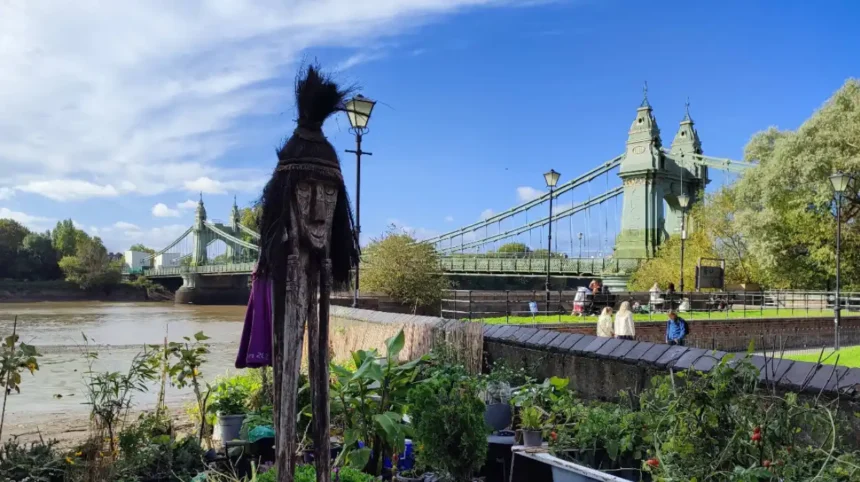
Hammersmith Bridge, designed by renowned civil engineer Sir Joseph Bazalgette and opened in 1887, is one of the world’s oldest mechanical suspension bridges. Due to its historic design and cast-iron structure, it has long been vulnerable to structural degradation under modern traffic loads.
In April 2019, micro-fractures were detected in the cast-iron pedestals supporting the bridge, forcing Hammersmith and Fulham Council to close the crossing to all vehicular traffic on safety grounds. The situation escalated in August 2020 when worsening thermal expansion during a heatwave led to a complete closure, temporarily halting pedestrian, cycle, and river transit beneath the span.
While temporary stabilization works eventually permitted the controlled return of pedestrians, cyclists, and river transport, the question of funding a permanent solution has triggered years of political disagreement between local authorities, Transport for London (TfL), and the Department for Transport over how the financial burden should be shared.
Prediction: How will this development affect local residents, businesses, and transport networks?
The refusal of Wandsworth Council to endorse the £128 million bid creates further political and financial deadlock, directly impacting several key groups across London:
- Pedestrians and Cyclists: The ongoing uncertainty over repair funding puts the long-term stabilization of the bridge at risk. If funding applications continue to fail due to lack of cross-borough consensus, essential maintenance could be delayed, raising the possibility of future precautionary closures.
- Local Businesses and Commerce: Commercial operations in Hammersmith, Barnes, and Wandsworth will continue to face economic disruptions caused by severed direct road access. Delivery routes, taxis, and localized trade remain diverted, maintaining higher operational costs for area merchants.
- South-West London Commuters: Motorists and public transport users relying on bus routes will face continued congestion on alternative crossings, including Chiswick Bridge and Putney Bridge. The permanent absence of vehicular access at Hammersmith prolongs longer journey times and elevated traffic density across surrounding residential streets.