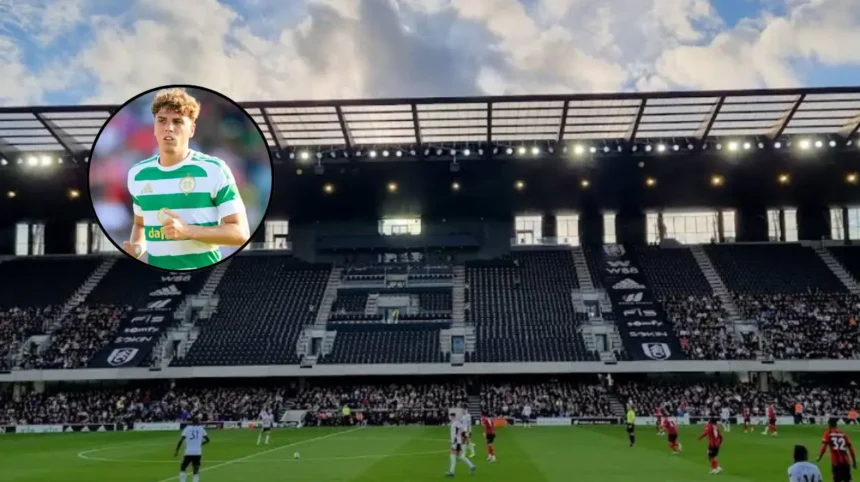
Key Points
- Record Transfer: West Ham United have completed the signing of Belgian midfielder Arne Engels from Celtic for £22 million, establishing a new transfer fee record for an EFL Championship club.
- Fulham’s Shift in Focus: Long-term admirers Fulham decided against pursuing the 22-year-old following the appointment of new head coach Álvaro Arbeloa, opting instead to target Cesar Palacios, Gonzalo Garcia, and Shea Charles.
- Financial Firepower: Relegated on the final day of last season after Tottenham Hotspur defeated Everton, West Ham funded the record transaction through heavy windfall proceeds from selling Crysencio Summerville and Matheus Fernandes.
- Player and Management Commitment: The Belgian international agreed to lower-tier football after being persuaded by the ambition of head coach Nuno Espírito Santo and team talisman Jarrod Bowen remaining at the London Stadium.
- Midfield Restructuring at Craven Cottage: Fulham recently lost Sasa Lukic to newly-promoted Ipswich Town for £9 million, leaving tactical options to be weighed up between new signing Shea Charles, Sander Berge, Harrison Reed, Alex Iwobi, and prospective No. 10 candidates Emile Smith Rowe, Josh King, and Cesar Palacios.
Fulham FC (West London News) August 17, 2026 — West Ham United have shattered the EFL Championship transfer record by completing the £22 million acquisition of Belgian international midfielder Arne Engels from Celtic. As reported by transfer reporter Peter O’Rourke of Football Insider, the East London club beat long-standing interest from Premier League side Fulham to finalise the multi-year deal. The transfer represents an unprecedented statement of intent for a club relegated to the second division on the final afternoon of last season following Tottenham Hotspur’s decisive victory over Everton.
- Key Points
- Why did Fulham step away from their long-term pursuit of the Celtic midfielder?
- How does the transfer impact Fulham’s midfield composition and tactical options?
- Background of the particular development after the news
- Prediction: How this development can affect both clubs and their respective fanbases
The financial muscle required to execute the deal was generated through substantial player sales earlier in the window. As detailed by chief football writer Sam Wallace of The Telegraph, West Ham accrued significant capital through the high-value departures of Crysencio Summerville and Matheus Fernandes. Those receipts provided manager Nuno Espírito Santo with Premier League-level funding to reshape his playing squad despite dropping out of the top flight.
Beyond the transfer figure itself, West Ham’s ability to convince a high-profile international player to drop into the second tier stemmed from executive ambition and squad stability. As reported by Dharmesh Sheth of Sky Sports News, head coach Nuno Espírito Santo and star winger Jarrod Bowen both committed their futures to the London Stadium, assuring Engels that the club’s duration in the Championship is intended to be a brief, single-season campaign.
Why did Fulham step away from their long-term pursuit of the Celtic midfielder?
Fulham had monitored Engels throughout his successful spell at Celtic, where he won back-to-back Scottish Premiership titles and recorded 39 goal involvements in 100 competitive appearances. However, as noted by football journalist Nizaar Kinsella of BBC Sport, internal transfer priorities at Craven Cottage shifted dramatically following the appointment of former Real Madrid defender Álvaro Arbeloa as head coach.
Upon taking charge, Arbeloa re-evaluated the squad’s tactical requirements and requested alternative profiles for the modernised Fulham midfield. According to reporting by Alex Howell of BBC Sport, the Craven Cottage hierarchy pivoted their recruitment strategy towards securing Spanish prospects Cesar Palacios and Gonzalo Garcia, while simultaneously advancing negotiations for Manchester City youth product Shea Charles. Consequently, Engels faded from Fulham’s active recruitment shortlist, opening a clear path for West Ham to negotiate directly with Celtic.
How does the transfer impact Fulham’s midfield composition and tactical options?
The decision to forgo Engels comes at a time of notable structural adjustment in Fulham’s central unit. As reported by West London Sport, Fulham sanctioned the £9 million sale of Serbian international Sasa Lukic to newly-promoted Ipswich Town, creating a direct void in central midfield.
To offset Lukic’s departure, Fulham brought in Shea Charles, who will compete with established squad members for central positioning. As observed by Fulham analyst Peter Rutzler of The Athletic, Arbeloa currently retains experienced options in Sander Berge — despite ongoing transfer links with Manchester United — along with workhorse Harrison Reed and versatile playmaker Alex Iwobi, who has frequently been deployed in a deeper double-pivot role.
Further forward, competition for the creative attacking midfield position remains dense. As detailed by standard sport reporter Dom Smith of the Evening Standard, prospective signing Cesar Palacios, Emile Smith Rowe, and youngster Josh King are set to compete for the primary No. 10 role. Palacios also offers tactical versatility across both flanks or deeper in the engine room. Fulham’s subsequent transfer strategy will depend heavily on how Arbeloa decides to integrate Palacios into his dynamic system.
Background of the particular development after the news
The structural changes at both West Ham United and Fulham highlight contrasting strategic paths following a tumultuous close to the previous season. West Ham’s relegation marked the end of a continuous decade-long tenure in the Premier League, forcing the board to take immediate measures to preserve squad quality and financial equity. By retaining key figures such as Jarrod Bowen and reinvesting the £50 million-plus generated from the sales of Summerville and Fernandes, the East London side chosen an aggressive expenditure model to secure immediate promotion back to the top division.
Fulham, meanwhile, entered a period of technical transition following the end of Marco Silva’s managerial reign. The appointment of Álvaro Arbeloa represented a deliberate shift towards a modern, possession-oriented tactical structure influenced by Spanish tactical methods. This managerial appointment directly altered Fulham’s player-scouting profile, moving the club away from physical box-to-box profiles like Arne Engels and towards technical, multi-positional talents capable of operating in tight spaces, such as Cesar Palacios and Gonzalo Garcia.
Explore More Fulham FC News
Olly Sanderson Snatches Late Stevenage Draw At Burton Albion 2026
Fulham Beat VfB Stuttgart 1-0 at Craven Cottage 2026
Prediction: How this development can affect both clubs and their respective fanbases
This landmark transaction creates clear operational consequences for both West Ham United and Fulham, setting up specific performance expectations for the upcoming season.
- For West Ham United and their supporters: The arrival of a £22 million international midfielder creates an immediate expectation of complete dominance in the Championship. Fans will expect Engels to instantly anchor the midfield, dictate tempo, and deliver set-piece consistency. However, committing such a high fee puts immense pressure on Nuno Espírito Santo; anything short of automatic promotion will be viewed as a major failure relative to the squad’s high cost.
- For Fulham and their supporters: Stepping aside from Engels allows Fulham to maintain direct financial discipline while tailoring their squad specifically to Álvaro Arbeloa’s tactical vision. If new additions like Shea Charles and Cesar Palacios adapt quickly and elevate the team’s passing efficiency, the decision to avoid a bidding war for Engels will be seen as smart squad planning. Conversely, if Fulham encounter injuries or lack physical presence in midfield during the grueling Premier League campaign, supporters may look back at the missed acquisition of Engels as a lost opportunity to reinforce their squad strength.