West London has a substantial literary heritage shaped by poets, novelists, essayists, publishers, artists, intellectual circles and historic houses. Its literary attractions extend across hounslow/chiswick/">Chiswick, Twickenham, Richmond, Kensington, Chelsea, fulham/hammersmith/">Hammersmith and surrounding districts. Historic buildings, gardens, museums, libraries and cultural venues preserve connections with writers including Alexander Pope, Horace Walpole, William Hogarth, Charles Dickens and other influential figures.
- Why is West London important for literary history?
- Which literary attractions in Chiswick are most important?
- Where can visitors explore Alexander Pope’s literary heritage in West London?
- Why is Strawberry Hill House a major literary attraction in West London?
- What literary connections can visitors find in Richmond?
- What role does Kensington and Chelsea play in West London’s literary heritage?
- How do West London’s literary attractions preserve historical evidence?
- Which West London literary attractions work best as a heritage route?
- How can visitors experience West London’s literary heritage today?
- Why do West London’s literary attractions remain relevant for future visitors?
The area is especially important for understanding 18th-century literary culture. Chiswick and Twickenham formed a significant cultural network around the Thames, while Kensington and Chelsea developed literary and artistic salons, houses and institutions. Richmond later became strongly associated with Charles Dickens and other writers.
Why is West London important for literary history?
West London is important for literary history because its historic houses, gardens and cultural districts preserve connections with major writers, poets and intellectual circles from the 17th to 20th centuries, including Alexander Pope, Horace Walpole, William Hogarth and Charles Dickens.
West London developed as a cultural landscape because wealthy estates, riverside residences and accessible suburban communities attracted influential figures. The River Thames connected areas such as Chiswick, Twickenham and Richmond and supported a network of residences, gardens and social gatherings.
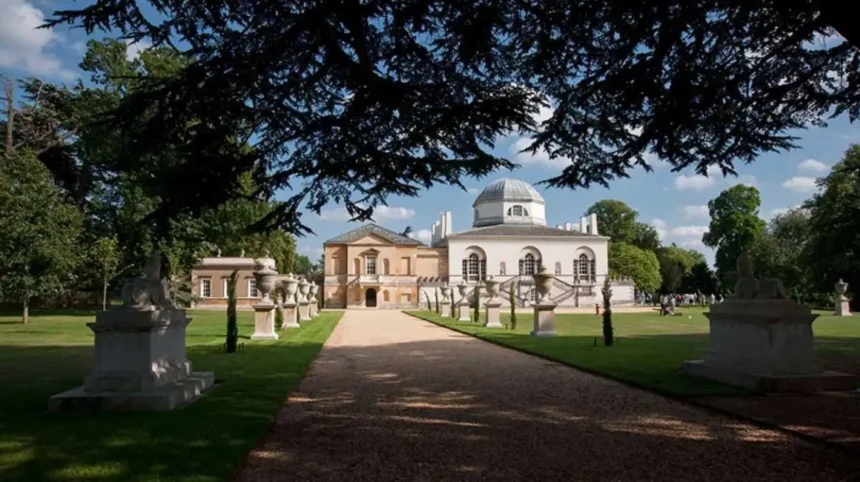
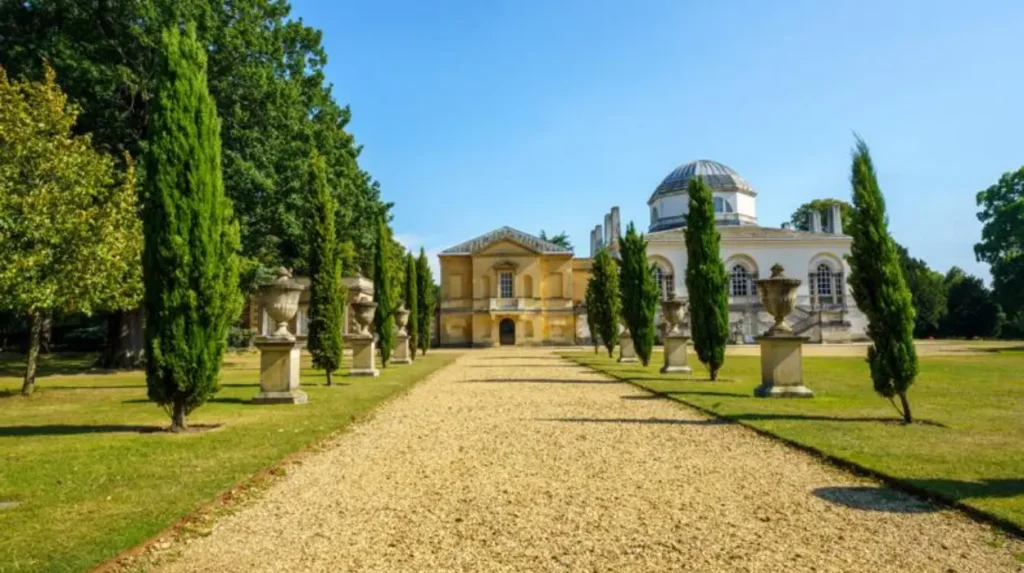
The 18th century was particularly significant. Chiswick House became associated with Richard Boyle, 3rd Earl of Burlington, an influential patron of the arts. His circle included Alexander Pope, William Kent and other leading cultural figures. Chiswick House therefore represents more than an architectural monument. It documents the social environment in which literature, architecture, landscape design and collecting interacted.
Twickenham became another important literary centre. Alexander Pope lived in the area, while Horace Walpole established Strawberry Hill nearby. Their residences demonstrate how writers used West London’s semi-rural environment as a setting for intellectual work, correspondence, gardening and social networks.
Richmond developed a different literary identity. Its connections with Charles Dickens, George Eliot and Virginia Woolf form part of the borough’s documented cultural heritage. Richmond’s cultural planning records specifically identify literary connections with these writers and describe continuing literary activity through public events, reading festivals and creative-writing programmes.
Kensington and Chelsea also contributed to London’s literary culture through historic houses and intellectual gatherings. Holland House became an important literary and political centre during the 19th century, attracting writers including Lord Byron, Charles Dickens, Sir Walter Scott, Thomas Babington Macaulay and Benjamin Disraeli.
This combination of preserved buildings, historic landscapes and cultural institutions makes West London suitable for literary heritage visits.
Which literary attractions in Chiswick are most important?
Chiswick’s most important literary and cultural attractions include Hogarth’s House, Chiswick House and Gardens, St Nicholas Churchyard and locations connected with Alexander Pope and the 18th-century intellectual circle surrounding Lord Burlington.
Hogarth’s House
Hogarth’s House is one of the clearest literary-adjacent heritage sites in West London. It was the Chiswick home of William Hogarth, the influential 18th-century English artist, printmaker and satirist.
Hogarth bought the property in 1749. Chiswick House and Gardens records describe it as a small country retreat that later became the couple’s permanent home. Hogarth developed a studio above the former coach house and spent substantial periods at the property until his death in 1764.
Hogarth’s importance to literary heritage comes from his narrative art. Works such as A Harlot’s Progress, A Rake’s Progress and Marriage A-la-Mode use sequential images to construct stories around social behaviour, morality and contemporary life.
His work therefore sits between visual art, satire and narrative culture. Visitors can examine original prints and engravings and understand the social subjects that shaped 18th-century London satire.
The house is also significant because it provides a physical connection to Hogarth’s personal life. Hounslow Council identifies it as the former home of William Hogarth and confirms its continuing public role as a historic house.
St Nicholas Churchyard
St Nicholas Church in Chiswick provides another connection to Hogarth. His family tomb is located in the churchyard. A local heritage record also identifies the Hogarth statue on Chiswick High Road and confirms that Hogarth was buried at St Nicholas Churchyard.
The churchyard forms a useful extension to a visit to Hogarth’s House because the two sites connect the artist’s domestic life with his final resting place.
Chiswick House and Gardens
Chiswick House is a Grade I listed 18th-century villa designed between 1720 and 1732 by Richard Boyle, 3rd Earl of Burlington, with William Kent. The house represents one of Britain’s significant early examples of neoclassical architecture.
Its literary significance comes from Burlington’s intellectual circle. Alexander Pope was among the people associated with Burlington, while Jonathan Swift, John Gay and David Garrick also belonged to the wider cultural network around Chiswick House.
The site therefore illustrates the relationship between literature and aristocratic cultural patronage. Writers, artists, architects and musicians interacted within the same social networks.
The house’s gardens also matter. They demonstrate how landscape design became part of 18th-century cultural life. Visitors can connect literary history with architecture, garden design, collecting and intellectual exchange.
Where can visitors explore Alexander Pope’s literary heritage in West London?
Alexander Pope’s literary heritage is concentrated around Twickenham, Marble Hill and Pope’s Grotto, where his residence, garden interests and relationships with Henrietta Howard and other 18th-century cultural figures shaped the local literary landscape.
Alexander Pope was an English poet, translator and satirist who lived from 1688 to 1744. He is one of the most important English poets of the early 18th century.
Pope’s connection with Twickenham was particularly strong. He established his home and garden near the Thames and became part of the cultural network surrounding neighbouring estates.
Pope’s Grotto
Pope’s Grotto is one of the most important surviving physical sites associated with Alexander Pope. The grotto formed part of the poet’s riverside property at Twickenham.
The original villa itself no longer survives, but the grotto remains as an important heritage site. The Pope’s Grotto Preservation Trust continues to interpret and conserve the site, including guided tours and educational activities.
The grotto is especially important because it demonstrates Pope’s interest in landscape design. The site was connected to his garden and to the wider Thames landscape.
Pope’s literary heritage is therefore not limited to books and manuscripts. His West London environment reveals how gardens, architecture and poetry interacted during the 18th century.
Marble Hill House
Marble Hill House in Twickenham provides another major Pope connection. The house was built between 1724 and 1729 for Henrietta Howard, Countess of Suffolk, a prominent court figure and cultural patron.
English Heritage records that Henrietta Howard’s cultural circle included Alexander Pope, John Gay and Horace Walpole. The gardens were developed with advice from Pope and landscape designer Charles Bridgeman.
Historic England records that Pope visited the site with Bridgeman in 1724 and was involved in aspects of the garden’s development.
This makes Marble Hill important for understanding the social geography of 18th-century literature. Pope was not isolated from other intellectual figures. He operated within a network of patrons, writers, designers and political personalities.
Marble Hill therefore complements Pope’s Grotto. One site represents the poet’s own landscape, while the other demonstrates his connection with the cultural network around Henrietta Howard.
Why is Strawberry Hill House a major literary attraction in West London?
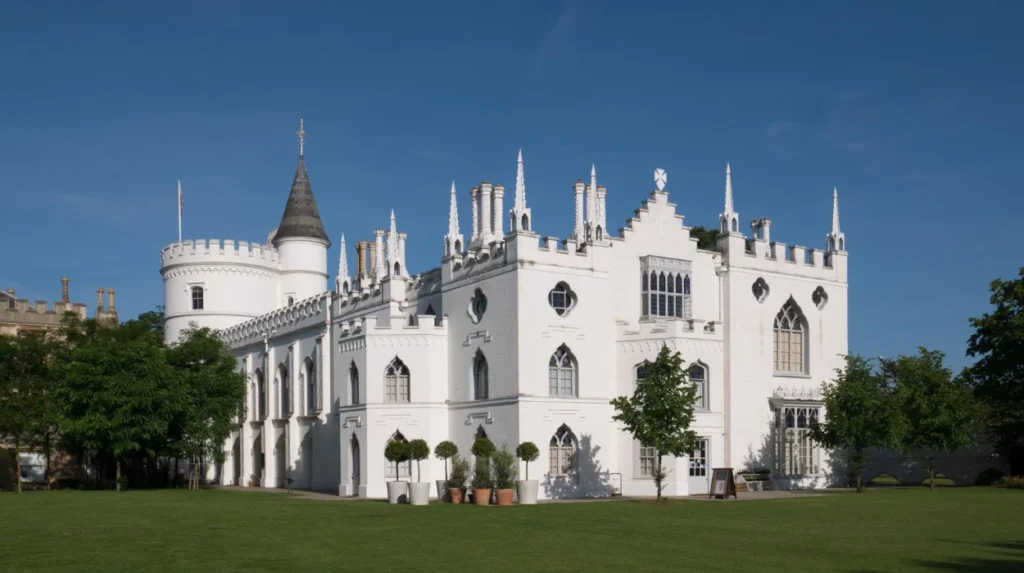
Strawberry Hill House is a major literary attraction because Horace Walpole created his Gothic Revival villa in Twickenham, established a private printing press there, and published The Castle of Otranto, an important early Gothic novel.
Horace Walpole lived from 1717 to 1797 and was an author, politician, collector and cultural commentator. He settled at Strawberry Hill in 1747 and transformed the property into an elaborate Gothic Revival residence.
The house became closely associated with Walpole’s literary identity.
Walpole established a printing press at Strawberry Hill in 1757. The press allowed him to produce texts within his own cultural environment. His most famous literary work, The Castle of Otranto, was first published in 1764. The novel is widely recognised as a foundational work of Gothic fiction.
The house itself reinforces this literary connection. Its Gothic architecture, decorative interiors, collections and garden were deliberately designed as part of Walpole’s cultural world.
Strawberry Hill House describes itself as an international centre for the preservation and appreciation of the Gothic imagination across literature, architecture, landscape, collecting and design.
The attraction has also remained open to visitors for more than 250 years. Its continued conservation demonstrates the long-term importance of literary houses as heritage institutions.
For visitors interested in literary history, Strawberry Hill offers a direct connection between an author’s residence, publishing activity and the architectural environment associated with his work.
What literary connections can visitors find in Richmond?
Richmond’s literary heritage includes documented connections with Charles Dickens, George Eliot, Virginia Woolf and Alexander Pope, supported by historic locations, local collections, cultural programmes and the wider literary landscape around the River Thames.
Richmond developed as a destination for writers because of its riverside environment, historic houses, parks, hotels and proximity to central London.
Charles Dickens and Richmond
Charles Dickens was one of Britain’s most influential Victorian novelists. His connection with Richmond forms part of the borough’s documented literary heritage.
Richmond’s Star and Garter Hotel was associated with Dickens and other Victorian literary figures. Local historical records state that Dickens used the hotel to celebrate literary occasions, including a dinner in June 1850 marking the publication of David Copperfield. The gathering included figures such as William Makepeace Thackeray, Alfred Tennyson and John Forster.
The hotel also entered literary culture directly. George Bernard Shaw used the Star and Garter as a setting in The Doctor’s Dilemma.
Although the historic hotel building is no longer functioning as its original hotel, its documented history remains relevant to Richmond’s literary geography.
Richmond’s wider literary tradition
Richmond upon Thames Council identifies literary connections with Alexander Pope, George Eliot, Charles Dickens and Virginia Woolf. The borough has also supported literary events, author talks, poetry programmes and creative-writing activity.
This establishes Richmond as more than a destination based on one writer. Its heritage includes several periods of English literary culture.
The Thames is also an important geographical element. Richmond’s riverside environment connects the district with Twickenham, Marble Hill and other literary sites further west.
What role does Kensington and Chelsea play in West London’s literary heritage?
Kensington and Chelsea contributes to West London’s literary heritage through historic houses, literary salons, cultural institutions and connections with writers including Lord Byron, Charles Dickens, Sir Walter Scott, Disraeli and Macaulay.
Kensington and Chelsea has a particularly strong connection with the cultural life of 18th- and 19th-century London.
Holland House
Holland House was built in 1605 for Sir Walter Cope. It later became associated with the Holland family and developed into a major political and literary centre.
The 3rd Lord Holland transformed the house into a significant social environment. The Royal Borough of Kensington and Chelsea records visits by Lord Byron, Thomas Babington Macaulay, Benjamin Disraeli, Charles Dickens and Sir Walter Scott.
The building suffered severe damage during bombing in September 1940. Much of the original structure was destroyed, but surviving remains form part of Holland Park.
Holland House is therefore important for literary history because it demonstrates the role of private estates as intellectual meeting places. Literary culture developed through conversations, correspondence, political relationships and social gatherings as well as through published books.
Kensington’s cultural environment
Kensington’s historic environment contains numerous museums, libraries, theatres and heritage buildings. The borough has five square miles of land, with approximately 70 percent designated as conservation areas according to the council.
Although not every cultural attraction has a direct literary connection, this historic built environment provides context for understanding West London’s intellectual history.
How do West London’s literary attractions preserve historical evidence?
West London’s literary attractions preserve historical evidence through original buildings, collections, archives, gardens, artworks, manuscripts, portraits, printed works and documented associations that connect physical places with writers and intellectual communities.
Literary heritage sites use several forms of evidence.
Historic buildings provide architectural evidence. Strawberry Hill House demonstrates Walpole’s Gothic Revival design and his collecting interests. Hogarth’s House preserves the domestic environment associated with William Hogarth.
Collections provide documentary evidence. Hogarth’s House contains prints and engravings connected with the artist’s work. Chiswick House preserves paintings and objects associated with its cultural history.
Gardens also provide historical evidence. Marble Hill’s landscape reflects the work of Charles Bridgeman and Alexander Pope. Historic England identifies Pope’s involvement in the development of the grounds during the 1720s.
Archives provide another layer. Chiswick House’s archival research has expanded the interpretation of people connected with the estate, including previously overlooked histories of Black residents during the 18th century. The Black Chiswick through History programme has used archival records, research and creative interpretation to examine these stories.
This approach is important because literary heritage is not limited to famous authors. It also includes publishers, patrons, residents, workers, correspondents and communities that shaped the environment in which literary culture developed.
Which West London literary attractions work best as a heritage route?
A West London literary heritage route can connect Chiswick, Twickenham and Richmond through historic houses, gardens and riverside locations, creating a chronological journey from 18th-century literary culture to Victorian and modern literary heritage.
A practical route begins in Chiswick with Hogarth’s House. This establishes an early connection with 18th-century narrative art and satire.
The next stop is Chiswick House and Gardens. The site introduces the cultural circle of Lord Burlington and its connections with Alexander Pope, Jonathan Swift, John Gay and David Garrick.
The route then continues west towards Twickenham. Strawberry Hill House introduces Horace Walpole and the development of Gothic literature.
Marble Hill House adds the literary circle of Henrietta Howard and Alexander Pope. Pope’s Grotto provides the strongest surviving physical connection with Pope himself.
The route can continue towards Richmond. Richmond’s literary heritage introduces Charles Dickens and the wider Victorian literary network documented through the Star and Garter and other local historical sources.
This sequence is useful because it follows both geography and chronology. Chiswick represents an important part of early 18th-century cultural life. Twickenham preserves major connections with Pope and Walpole. Richmond provides strong 19th-century literary associations.
Visitors can also use local libraries, museums and cultural venues to extend the route beyond historic houses.
Explore More Area Guide
Historic Landmarks in West London: Heritage Guide 2026
Cultural Events in West London: Arts & Festivals 2026
How can visitors experience West London’s literary heritage today?
Visitors can experience West London’s literary heritage through historic-house visits, gardens, guided tours, exhibitions, local archives, literary festivals, public libraries and cultural programmes that connect historical writers with contemporary audiences.
The modern interpretation of literary heritage combines physical visits with research and cultural programming.
Strawberry Hill House continues to operate as a museum and heritage site, with house tours, landscape tours and programmes connected with Horace Walpole and the Gothic tradition.
Pope’s Grotto offers guided experiences focused directly on Alexander Pope and the surviving landscape remains associated with his Twickenham residence.
Orleans House Gallery in Twickenham provides another cultural resource. It holds the Richmond Borough Art Collection, which contains more than 4,400 works, including paintings, prints, watercolours, drawings, objects and photographs. Its collection includes historical representations of Pope’s Villa at Twickenham.
Richmond’s cultural infrastructure also supports literary activity. Council records document public literary events, author programmes, poetry activities, reading festivals and creative-writing opportunities.
Kensington and Chelsea provides another modern cultural layer. Its libraries and museums support creative-writing activities, exhibitions and heritage programming, while historic areas such as Holland Park preserve the physical setting of earlier cultural communities.
These activities demonstrate that West London’s literary heritage remains active rather than purely historical.
Why do West London’s literary attractions remain relevant for future visitors?
West London’s literary attractions remain relevant because conserved houses, landscapes, archives and cultural programmes provide permanent access to literary history while supporting research, education, tourism and contemporary cultural activity across generations.
The long-term value of these attractions comes from their combination of physical authenticity and documented history.
A preserved writer’s house gives visitors information that cannot be obtained from a book alone. The architecture, garden, location and surrounding neighbourhood provide evidence about how writers lived and interacted with society.
The heritage of Chiswick demonstrates this clearly. Hogarth’s House connects a specific residence with one of Britain’s major satirical artists. Chiswick House connects architecture, patronage and literary networks.
Twickenham provides an even stronger concentration of literary associations. Pope’s Grotto, Marble Hill and Strawberry Hill House collectively document different aspects of 18th-century cultural life.
Richmond extends the chronology into the Victorian and modern periods. Its connections with Dickens and other writers demonstrate how literary communities continued to develop along the Thames. Richmond’s current cultural programmes also show that literary activity remains part of the borough’s cultural identity.
The preservation of these sites also supports historical research. Organisations such as English Heritage, local councils, heritage trusts and museums maintain buildings, collections and archival material that allow researchers to reassess established narratives.
Modern heritage programmes increasingly include overlooked communities and previously under-represented stories. Chiswick House’s Black Chiswick through History programme is an example of this broader interpretation of heritage.
For visitors, the result is a literary landscape that extends beyond famous books. West London offers evidence of how writers lived, where intellectual networks developed, how landscapes influenced cultural life and how historic communities shaped London’s literary identity.
West London’s literary attractions therefore form a connected heritage network rather than a single museum or landmark. Hogarth’s House, Chiswick House and Gardens, Strawberry Hill House, Marble Hill House, Pope’s Grotto, Richmond’s Dickens associations and Holland House collectively reveal centuries of literary and cultural development.
For anyone researching literary attractions in West London, these sites provide a strong starting point for understanding the relationship between writers, historic houses, gardens, publishing, social networks and London’s wider cultural history.
What are the best literary attractions in West London?
The best literary attractions include Hogarth’s House, Chiswick House and Gardens, Pope’s Grotto, Marble Hill House, Strawberry Hill House and Richmond’s historic literary locations. These sites connect visitors with writers and cultural figures including Alexander Pope, Horace Walpole, William Hogarth and Charles Dickens.