Key Points
- Name of Victim: The young man who passed away after falling into the Grand Union Canal after entering the area near the Notting Hill Carnival has now been identified as Karnell Kelly.
- Reason for the Incident: The police force in metropolitan areas had tried to stop Kelly when he was seen wearing a mask and approaching the carnival at around 15:20 BST on Monday.
- Running and Canal Entry: Kelly had escaped from the officers and run away on foot through Hormead Road and then got into the Grand Union Canal through Kensal Road.
- Rescue Operation and Death: The officers as well as some bystanders have entered the water and pulled out Kelly from there. He has been rushed to a London hospital and died there at about 16:40 BST.
- Police Investigation: The Independent Office for Police Conduct is investigating the matter and reviewing the body worn video evidence captured during the chase.
West London (West London News) September 5, 2026 – A 25-year-old man who died after entering a west London waterway whilst fleeing from law enforcement officers near the Notting Hill Carnival has been formally identified as Karnell Kelly. The fatal sequence of events commenced at approximately 15:20 BST on Monday, when Metropolitan Police officers deployed near the annual festival attempted to stop Kelly in the vicinity of Harrow Road. According to official statements released by the Metropolitan Police, officers initiated the stop after observing Kelly approaching the carnival perimeter whilst wearing a face covering.
Upon being approached by the police unit, Kelly evaded the officers and initiated a pursuit on foot. The chase proceeded through local streets, with officers pursuing him down Hormead Road as he headed away from the main carnival route.
How did Karnell Kelly enter the Grand Union Canal?
The pursuit concluded along Kensal Road in west London, where Kelly entered the Grand Union Canal. The circumstances surrounding the exact moment he went into the water remain under scrutiny, but official accounts confirm he entered the canal shortly after leaving Hormead Road with officers in close pursuit.
Recognising the emergency as Kelly submerged in the waterway, both Metropolitan Police officers involved in the chase and several members of the public immediately entered the Grand Union Canal in an attempt to retrieve him from the water.
What were the emergency rescue efforts and medical outcomes?
Following the joint rescue efforts by police and bystanders, Kelly was pulled from the Grand Union Canal and received emergency medical assistance at the scene. Paramedics promptly transported him to a central London hospital for intensive emergency intervention.
Despite the immediate multi-agency response and subsequent medical care provided at the facility, Kelly was pronounced dead at approximately 16:40 BST, roughly one hour and twenty minutes after the initial interaction with law enforcement officers near Harrow Road.
What is the status of the official investigation?
As is standard practice following deaths that occur during or shortly after direct contact with police officers, the matter was formally referred to the Independent Office for Police Conduct (IOPC). The oversight body has officially opened an independent investigation to establish the full timeline and circumstances surrounding Kelly’s death.
Investigating officials from the IOPC have confirmed that a key component of their ongoing inquiry involves the collection and thorough review of body-worn video footage obtained from all Metropolitan Police officers who participated in the foot pursuit down Hormead Road and the subsequent rescue attempt at Kensal Road.
Background of the particular development
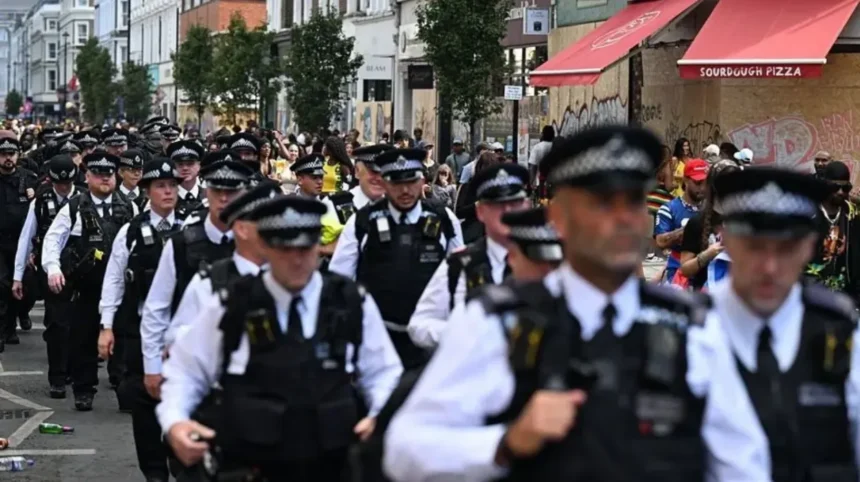
The fatal incident occurred against the backdrop of the annual Notting Hill Carnival, one of Europe’s largest street festivals, which regularly attracts over one million visitors to west London over the August bank holiday weekend. Managing public safety, crowd control, and crime prevention during the event requires a massive security operation, with thousands of Metropolitan Police officers deployed across the carnival footprint, including the surrounding transit corridors such as Harrow Road and Kensal Road.
In recent years, security protocols at the festival have included targeted stop-and-search measures, facial recognition technology, and dynamic interventions aimed at preventing violence and weapon carrying. The policy surrounding face coverings near large public events has been a point of operational focus for law enforcement seeking to identify individuals or prevent potential criminal activity. Tragically, interactions between fleeing suspects and geographical hazards—such as the canal networks criss-crossing urban London—present distinct operational risks for both the public and police personnel during high-density urban policing operations.
Prediction: How this development can affect local communities and public safety operations
This tragic incident is likely to have significant operational and social ramifications, particularly affecting the local west London community, public safety authorities, and carnival organizers.
1. Scrutiny of Police Stop-and-Search and Pursuit Protocols
The ongoing IOPC investigation will probably lead to heightened scrutiny regarding how officers decide to initiate stops based on visual indicators, such as face coverings. If the review identifies operational shortcomings or excessive risk in pursuing suspects near open bodies of water, the Metropolitan Police may face pressure to amend their dynamic pursuit guidelines to minimize environmental risks during foot chases.
2. Impact on Community Relations and Public Trust
Incidents resulting in a fatality during a police encounter—especially in close proximity to major cultural events like the Notting Hill Carnival—frequently heighten tensions between local residents, festival-goers, and law enforcement. The community in and around Kensal Road and Harrow Road may seek greater transparency regarding the necessity of the initial stop and the sequence of events leading up to Kelly entering the canal, potentially influencing future cooperation between local populations and police patrols.
3. Future Operational Planning for Major Events
Organisers of the Notting Hill Carnival and emergency service planners will likely incorporate the findings of the IOPC inquiry into future risk assessments. Safety protocols surrounding water hazards, such as the Grand Union Canal, may be expanded to include dedicated marine support units or specialized rescue equipment stationed along canal routes during major public gatherings to ensure immediate emergency responses in similar scenarios.