Key Points
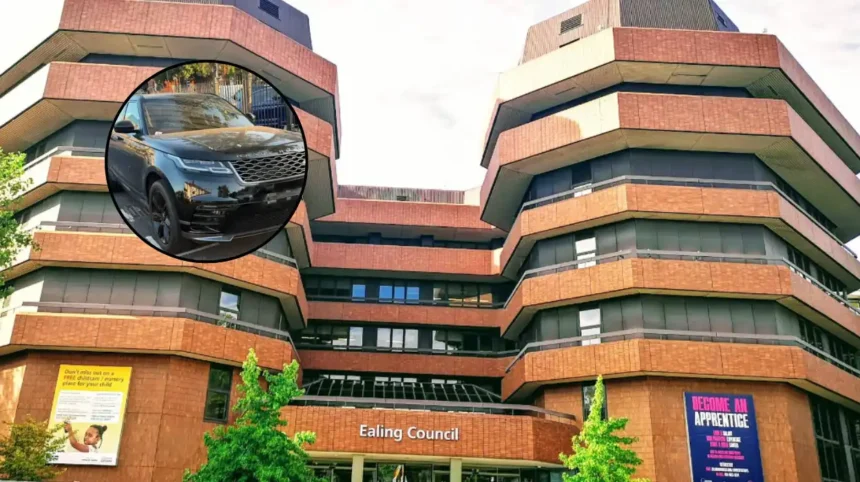
- A Range Rover in a Controlled Parking Zone (CPZ) without a permit has been towed away by Ealing Council parking enforcement after its number plates vanished without a trace.
- Initially, the car had received a Penalty Charge Notice (PCN); however, the number plates and PCN vanished simultaneously.
- The car was spotted by Ealing Council’s parking enforcement even without the number plates, and they made arrangements to tow the car off to the council pound.
- The owner had to pay £560 in order to retrieve the car, with £450 being a release fee and £110 being PCNs outstanding.
- This incident is one of the many efforts taken by Ealing Council in an intensive pilot scheme introduced in September 2025, with over 1,700 abandoned and unroadworthy vehicles removed from the borough over the course of last year.
- Out of all the vehicles, nearly 200 were cleared from the council housing estates.
- Ealing Council is planning on setting up a permanent 24-hour vehicle removal scheme to remove untaxed, un-MOTed, and uninsured vehicles round-the-clock.
Ealing (West London News) September 5, 2026 – A Range Rover parked without registration plates in a Controlled Parking Zone (CPZ) has been seized and towed away by Ealing Council enforcement officers, landing its owner with a financial bill exceeding £500 to secure its release. The luxury vehicle was initially detected by parking wardens for failing to display a valid parking permit, resulting in a Penalty Charge Notice (PCN) being placed on the windscreen. However, when enforcement officers subsequently returned to the location, they discovered that the statutory ticket had been stripped away and the vehicle’s registration plates had vanished entirely.
- Key Points
- Why Did Ealing Council Tow a Range Rover With Missing Number Plates?
- How Is Ealing Council Tackling Abandoned and Unroadworthy Vehicles Across the Borough?
- What Are the Long-Term Plans for Vehicle Removal Services in Ealing?
- What Rules Apply to Parking and Vehicles on Housing Estates and Private Land?
- Background of Municipal Vehicle Enforcement and Public Bay Allocation
- Prediction: How This Development Will Affect Local Residents and Motorists
Despite the deliberate removal of the number plates—a direct violation of UK road traffic law—Ealing Council’s specialised parking enforcement team successfully verified the vehicle’s identity through alternative diagnostic methods. Officers immediately dispatched a recovery vehicle to impound the Range Rover. To secure the release of the vehicle from the council pound, the owner was required to settle £450 in standard recovery and release charges alongside £110 in cumulative unpaid PCNs, bringing the total cost to reclaim the vehicle to £560.
Why Did Ealing Council Tow a Range Rover With Missing Number Plates?
The enforcement action against the Range Rover highlights a growing crackdown by municipal authorities against motorists attempting to evade penalty charges by removing identifying markers. Under UK motoring law, displaying clear registration plates is mandatory for any vehicle situated on a public highway or within a regulated parking sector. The removal of identification plates is frequently utilized as a tactic to prevent enforcement personnel from linking a vehicle to its registered keeper or issuing further civil penalty notices.
In this instance, Ealing Council’s enforcement squad utilised internal tracking procedures and physical vehicle identifiers to confirm the motor’s history before initiating the lift. The local authority confirmed that parked vehicles lacking registration plates automatically trigger heightened scrutiny due to the statutory requirement for vehicles to remain fully identifiable and roadworthy while positioned on public thoroughfares or council-controlled property.
How Is Ealing Council Tackling Abandoned and Unroadworthy Vehicles Across the Borough?
The removal of the Range Rover serves as a high-profile case within a broader, aggressive pilot programme initiated by Ealing Council to purge abandoned, illegal, and unroadworthy vehicles from public roads and residential housing estates. The targeted operational initiative focuses specifically on vehicles lacking valid Statutory Off Road Notifications (SORN), compulsory MOT certificates, road tax, or valid insurance coverage.
Since the establishment of the pilot initiative in September 2025, local authority enforcement teams have successfully seized and cleared more than 1,700 vehicles from streets across the borough. The operation has targeted both general public highways and residential areas, resulting in the direct removal of nearly 200 vehicles specifically from council-managed housing estates. The targeted haul includes abandoned commuter vehicles, un-roadworthy cars left to decay, and vehicles accumulating widespread unpaid parking penalties.
What Are the Long-Term Plans for Vehicle Removal Services in Ealing?
Following the significant operational volume recorded during the trial period, Ealing Council has announced plans to transition the pilot framework into a permanent, 24-hour vehicle removal service. Local authority leaders maintain that a round-the-clock enforcement presence is required to ensure that public parking infrastructure remains accessible to law-abiding residents and to prevent offenders from dumping vehicles during non-operational evening hours.
The expansion aims to systematically eliminate chronic parking congestion caused by untaxed or abandoned transport. Council officials noted that the enforcement push during the trial phase cleared significantly higher volumes of vehicles than in previous years, directly returning disputed parking spaces to local permit holders.
Addressing the scale of the ongoing operations, Councillor Dominic Moffitt, Ealing Council’s Cabinet Member for Climate Action, stated:
“Abandoned and unroadworthy vehicles take up valuable parking spaces, make neighbourhoods look neglected and can attract anti-social behaviour.”
Councillor Moffitt further emphasised the local authority’s continued commitment to municipal enforcement, stating:
“Ealing Council has taken more than 1,700 abandoned vehicles off our streets which shows the scale of the problem and our determination to tackle it. We will continue working across the borough to identify and remove abandoned and unroadworthy vehicles, helping keep our neighbourhoods cleaner, safer and more pleasant for residents.”
What Rules Apply to Parking and Vehicles on Housing Estates and Private Land?
Ealing Council has issued explicit guidance clarifying that parking regulations on residential housing estates mirror the strict legal requirements enforced across public highways. All vehicles parked within estate boundaries must maintain active vehicle tax, valid MOT status, up-to-date insurance, and fully legible registration plates at all times.
Furthermore, council regulations prohibit commercial garages from using public housing estate parking bays to conduct maintenance, mechanical overhauls, or commercial vehicle storage. Vehicles officially declared off-road via a Statutory Off Road Notice (SORN) are strictly forbidden from being stored within estate parking spaces or council housing land, as SORN status requires a vehicle to be kept strictly on private property such as a personal driveway or enclosed garage.
Vehicles impounded by enforcement officers are transported directly to the municipal vehicle pound. To retrieve an impounded asset, owners must present valid proof of ownership, pay all accumulated towing fees, administrative costs, and daily storage charges, as well as clear any outstanding penalty charge notices.
If an impounded vehicle remains unclaimed after the statutory holding period expires, Ealing Council initiates disposal proceedings. Unclaimed assets are either auctioned off to recover municipal costs or directed to authorized treatment facilities for scrapping. Vehicles slated for destruction undergo hazardous waste processing—including the drainage of engine fluids, fuel, and oils, alongside the removal of loose refuse—before being dismantled for spare parts or crushed for metal recycling.
For suspected abandoned vehicles located on public land, local residents can submit location reports via the municipal web portal or through the Love Clean Streets mobile application. Additionally, the council holds legal authorization to extract abandoned vehicles from private land, including private residential driveways, provided the verified landowner submits a formal request and explicit consent to enforcement teams.
Background of Municipal Vehicle Enforcement and Public Bay Allocation
The regulation of parking and the systematic removal of untaxed or abandoned vehicles across Greater London local authorities operate under the framework of the Road Traffic Regulation Act 1984, the London Local Authorities Act, and the Refuse Disposal (Amenity) Act 1978. Controlled Parking Zones (CPZs) were historically introduced across densely populated London boroughs like Ealing to manage residential parking space shortages, reduce commuter congestion, and ensure emergency vehicle accessibility.
Over the past decade, local councils across the capital have faced growing challenges regarding untaxed and unroadworthy vehicles occupying high-demand residential bays. The issue intensified following shifts in national vehicle licensing laws, notably the abolition of physical paper tax discs by the Driver and Vehicle Licensing Agency (DVLA) in 2014, which shifted enforcement entirely to automated number plate recognition (ANPR) systems and digital databases.
This digital shift led to a rise in intentional plate-tampering or complete plate removal by motorists seeking to evade automated municipal enforcement, speed cameras, and low-emission zone charges. In response, local authorities have expanded their roadside physical inspection protocols. The pilot programme launched by Ealing Council in September 2025 represents a structural shift toward proactive, zero-tolerance municipal recovery operations, addressing both roadside traffic management and housing estate space allocation under a unified enforcement contract.
Explore More Ealing News
Panayiotis Sinnos Runs London Marathon After Cancer Recurrence Ealing 2026
Asda Express Given Zero Food Hygiene Rating in West Ealing 2026
Prediction: How This Development Will Affect Local Residents and Motorists
The transition of Ealing Council’s vehicle removal pilot into a permanent, 24-hour operational service will have distinct structural impacts across different groups within the borough:
- Local Residents and Permit Holders: Residential permit holders are set to experience an increase in available street parking and estate parking capacity. The continuous removal of untaxed, SORN-declared, and abandoned vehicles will directly free up hundreds of bays previously blocked by persistent non-compliant vehicles. Furthermore, clearing neglected vehicles reduces visual blights and mitigates associated anti-social behaviour, such as vandalism or vehicle fires.
- Uncompliant Vehicle Owners and Commuters: Motorists operating untaxed, uninsured, or un-MOTed vehicles within Ealing face a drastically heightened risk of immediate vehicle seizure. The enforcement demonstrated in the Range Rover case indicates that deliberate tactics—such as stripping number plates or removing paper notices—will no longer delay council recovery efforts. Owners who attempt to store off-road vehicles on public streets or housing estate grounds will encounter severe financial penalties, including standard £450 release fees alongside daily compounding storage charges and outstanding PCN payments.
- Commercial Garages and Traders: Local mechanics and independent motor traders using housing estate parking spaces or residential streets as temporary holding lots for customer vehicles or sales stock will face rigorous compliance checks. The strict enforcement against commercial operations on housing estates will force businesses to secure formal private storage yards, eliminating the practice of utilizing public residential infrastructure for commercial storage.
- Landowners and Housing Associations: Private landowners across Ealing will benefit from a streamlined administrative pathway to clear unauthorized or abandoned vehicles left on private property and residential driveways. By utilizing the council’s reporting frameworks, landowners will gain access to municipal towing infrastructure, resolving protracted trespass and illegal parking issues without requiring costly civil court orders.