Co-working spaces in West London are shared workplaces that offer desks, offices, meeting rooms, internet access, and flexible memberships for freelancers, startups, remote workers, and growing teams. They are built for short-term use, regular use, or team use, depending on the space and membership type.
- What are co-working spaces in West London?
- Why do people choose West London?
- How do co-working memberships work?
- What facilities do they offer?
- Which West London areas have coworking options?
- What types of co-working spaces exist?
- How much do they cost?
- What makes a good choice?
- How has coworking in West London developed?
- What is the future of coworking here?
What are co-working spaces in West London?
Co-working spaces in West London are shared offices where different people and businesses work independently in the same building while using common facilities. They include hot desks, dedicated desks, private offices, and serviced offices, which gives users flexible options for work, meetings, and collaboration.
West London coworking serves a wide mix of users. Freelancers use it for focused daily work. Small businesses use it for professional presence. Remote employees use it for a structured work setting outside home. Larger teams use it for satellite offices and project space. The model suits people who want flexibility without the long commitment of a traditional lease.
West London is a strong location for this type of workspace because it combines commercial districts, residential neighbourhoods, and transport connections. Areas such as fulham/hammersmith/">Hammersmith, hounslow/chiswick/">Chiswick, Ealing, Notting Hill, Kensington, Fulham, and Holland Park all support coworking demand. Each area attracts a slightly different mix of workers and businesses.

Why do people choose West London?
People choose West London because it offers strong transport links, business activity, and neighbourhood convenience in one area. It gives workers access to offices, cafés, shops, and client-friendly locations while still supporting flexible and local working habits.
Transport access is one of the main reasons. West London connects to major Underground and rail routes, which makes commuting easier for people travelling from different parts of the city. That matters for workers who split time between home, office, and meetings.
The area also offers a broad range of workspace styles. Some spaces focus on premium design and privacy. Others focus on affordability and shared access. This gives users more control over cost, atmosphere, and daily routine.
How do co-working memberships work?
Co-working memberships in West London usually work on a flexible access model. Users pay for a day, a month, or a longer membership, then choose the level of desk access, privacy, and support they need.
A day pass suits short visits and occasional use. A monthly membership suits regular individual use. A dedicated desk suits someone who needs the same workspace each day. A private office suits a team that needs enclosed space and more control. A serviced office suits businesses that want managed space with reception, cleaning, and shared amenities.
Most memberships include shared essentials. These often cover Wi‑Fi, meeting rooms, printing, kitchen access, lounge areas, and reception support. Higher-end spaces also include showers, bike storage, event programming, and phone booths.
What facilities do they offer?
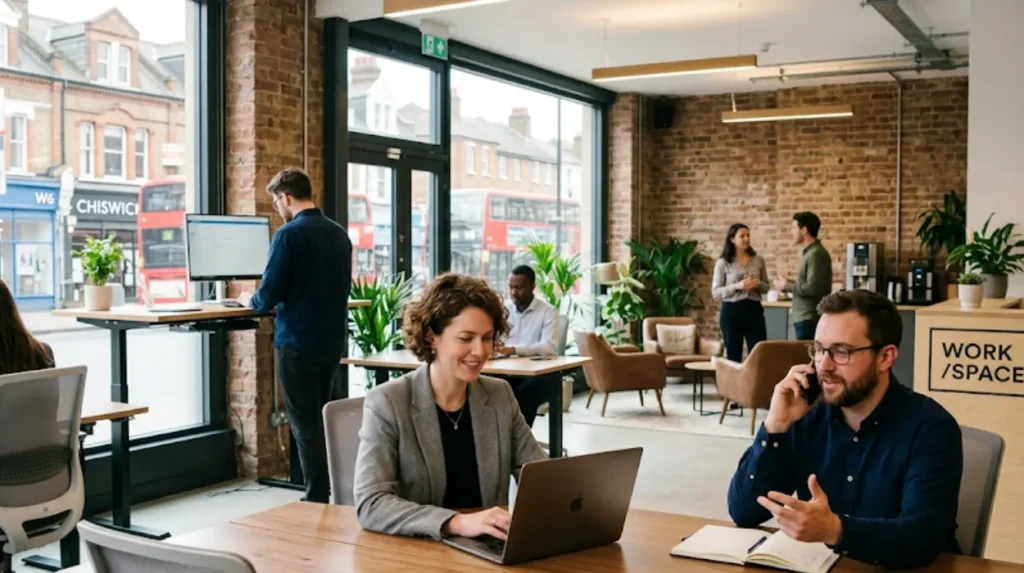
West London co-working spaces usually offer internet, desks, meeting rooms, breakout areas, printing, and reception support. Many also include coffee, kitchen areas, phone booths, showers, bike storage, and event spaces for networking or team use.
The exact facilities depend on the provider. Some spaces focus on simple and practical work settings. Others are designed more like lifestyle environments with strong interiors, natural light, and social areas. Premium spaces usually add more privacy, better furniture, and stronger support services.
These facilities matter because coworking is more than desk rental. It is a workplace model that supports communication, concentration, meetings, and community. A good space reduces friction in the workday by making services available in one place.
Which West London areas have coworking options?
West London has coworking options across neighbourhoods such as Hammersmith, Holland Park, Notting Hill, Chiswick, Ealing, Fulham, Kensington, and Shepherd’s Bush. These areas differ in price, atmosphere, and convenience, so the best choice depends on travel and work style.
Hammersmith is one of the strongest coworking locations because it has a busy business environment and strong transport access. It suits companies and individuals who want a central-west base with easy movement across London.
Holland Park and Notting Hill suit users who want a more premium or design-led environment. These areas often attract creative professionals, consultants, and teams that want a polished client-facing address.
Chiswick and Ealing suit users who want a slightly quieter West London setting. They often appeal to local businesses and hybrid workers who want workspace near home without moving into the busiest part of the city.
What types of co-working spaces exist?
West London coworking spaces usually fall into four main types: hot desks, dedicated desks, private offices, and serviced offices. Each type gives a different balance of cost, privacy, and flexibility.
Hot desks are the most flexible option. Users choose any available seat and usually pay for temporary access. This works well for freelancers and occasional users.
Dedicated desks give one fixed workspace to one person. This suits regular users who want consistency and some personal storage.
Private offices give enclosed space to a small team or business. This is useful for confidentiality, concentration, and team coordination.
Serviced offices provide a more complete managed setup. They often include cleaning, reception, security, and shared facilities, which makes them suitable for businesses that want convenience and less operational work.
How much do they cost?
Costs vary widely across West London depending on location, size, design, and membership type. Short-term access is cheaper, while private offices and premium memberships cost more because they include more space and services.
Day access is usually the cheapest entry point. Monthly hot-desking costs more but gives better value for regular users. Dedicated desks cost more than hot desks because they provide reserved space. Private offices and serviced offices are the highest-cost options because they offer privacy, scale, and more support.
Premium locations in West London usually charge more than basic shared spaces. That is because they are often closer to transport links, include better interiors, and offer stronger amenities. Businesses often treat the extra cost as part of brand image and convenience.
What makes a good choice?
A good co-working space in West London matches the user’s budget, commute, privacy needs, and work habits. The best choice is the one that supports daily productivity without adding unnecessary cost or complexity.
The first thing to check is location. A space near your home, clients, or main transport route saves time. The second thing to check is membership type. Someone who visits twice a week does not need the same setup as a team that works there every day.
Facilities also matter. Fast internet, meeting rooms, quiet zones, and reliable access are essential. After that, users should look at atmosphere, privacy, and flexibility. Some people work best in social spaces. Others need a quiet and structured environment.
Explore More Area Guide
West London for Young Professionals: Best Areas, Careers, Transport and Lifestyle
West London for Families: Parks, Schools, Transport, Neighbourhoods and Attractions
How has coworking in West London developed?
Coworking in West London developed as businesses moved away from rigid long leases and toward more flexible office use. It now supports hybrid work, freelance work, startup growth, and satellite offices for larger teams.
This shift reflects changes in how people work. More professionals now divide their time between home, office, and meetings. That creates demand for places that are easy to join, easy to leave, and easy to scale.
West London has adapted well to this model because it already has a strong mix of commercial streets, residential areas, and transport links. As a result, coworking spaces there serve both practical business needs and lifestyle preferences.
What is the future of coworking here?
The future of West London coworking is tied to flexible work, hybrid schedules, and demand for better-managed shared offices. The market will continue to favour spaces that combine convenience, good design, and adaptable membership options.
Businesses want less fixed overhead and more flexibility. Workers want professional environments without long commutes or rigid leases. Coworking fits both needs, which is why it remains relevant across West London.
The strongest spaces will be the ones that offer reliable services, strong location access, and clear membership choices. As work patterns continue to change, West London will remain an important area for shared offices and flexible workspace.