Wembley in West London traces its origins to the Old English name “Wemba’s lea,” first documented in an 825 charter, referring to a clearing owned by a figure named Wemba. For centuries, the area remained predominantly rural within the parish of Harrow on the Hill, centered around brent/wembley/">Wembley Green and surrounded by woodlands and historic manors. By 1547, it hosted just six houses but ranked among Middlesex’s richest locales thanks to its fertile agricultural lands. The arrival of the London & Birmingham Railway in 1837 revolutionized connectivity, followed by Sudbury station—now Wembley Central—in 1845, spurring suburban development. St John the Evangelist church, a George Gilbert Scott design consecrated in 1846, solidified Wembley’s parish identity amid rapid population growth from 4,519 in 1901 to 48,561 by 1931.
The British Empire Exhibition Era
Wembley Park, originally landscaped by Humphry Repton, became a global stage for the 1924–1925 British Empire Exhibition, attracting 27 million visitors and showcasing imperial achievements. The original Wembley Stadium, constructed in just 300 days as the Empire Stadium, debuted in 1923 with the legendary “White Horse Final” FA Cup match, drawing over 200,000 spectators. Its iconic twin towers embodied national pride, while earlier Watkin’s Tower—a failed Eiffel competitor begun in 1894—left ruins later discovered during modern excavations. This era prompted infrastructure upgrades like road widenings and new bus routes, embedding Wembley in London’s “Metroland” suburban ethos.

Iconic Wembley Stadium: Past to Present
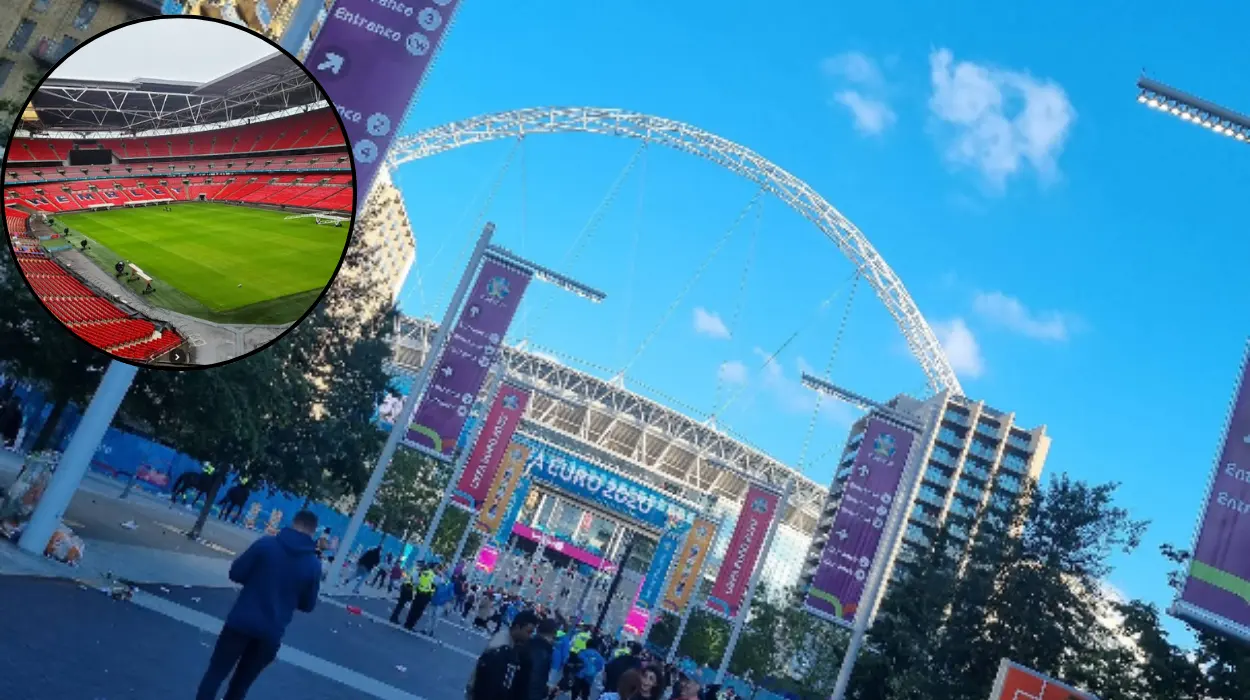
The original Wembley Stadium hosted pivotal events like FA Cup finals, the 1966 World Cup final where England triumphed over West Germany, and legendary concerts until its 2003 demolition. The current iteration, unveiled in 2007 after £798 million and delays, seats 90,000 as the UK’s largest venue, featuring Foster + Partners and Populous design with a 133m arch—the world’s longest unsupported roof span covering 75% of the structure. It serves as England’s national football home, FA Cup venue, and host for UEFA Euro 2020 final, multiple Champions League finals including 2011, 2013, and 2024, plus NFL London Games. Music icons from George Michael to Taylor Swift, Oasis, and BTS have electrified crowds here, with pitch tech like Desso GrassMaster and 2023’s lay-and-play system ensuring top conditions.
Wembley Park Regeneration
Since 2004, Quintain has spearheaded an 85-acre regeneration around the stadium, blending residential towers, offices, retail, and leisure into a thriving mixed-use destination. Key additions include the London Designer Outlet, the Grade II-listed SSE Arena from 1934, and BOXPARK, collectively welcoming 11.5 million visitors annually. The Brent Civic Centre opened in 2013 to streamline council operations, while the Wembley Area Action Plan pushes sustainable expansion eastward. Developments by McLaren incorporate high-rises amid green spaces like King Edward VII Park, enhancing urban livability.
Attractions and Daily Life
Wembley offers more than sports: Wembley Arena delivers top concerts, the Stadium Tour (£25 for adults) reveals player tunnels and changing rooms, and immersive spots like Bubble Planet captivate visitors. Cultural landmarks feature the Shree Sanatan Hindu Mandir (opened 2010) and Wembley Central Mosque in a repurposed church. Shoppers flock to London Designer Outlet’s 200+ brands and Ealing Road’s jewelry district, a South Asian commerce hub. Nature lovers enjoy Barham Park, Fryent Country Park, and Grand Union Canal walks, complemented by BOXPARK’s street food and diverse global dining.
Demographics and Community
In 2011, Wembley’s population hit 102,856, marked by extraordinary diversity: 66% Asian (46% Indian), 14% Black, with Wembley Central ward at 86% BAME—London’s fifth highest. Hinduism leads at 45% in Central ward, followed by Christianity at 25%, with a median age of 32 and unemployment at 5.3%. Brent borough, merging Wembley and Willesden in 1965, boasts the UK’s biggest Irish (4%) and Brazilian populations. Regeneration has boosted safety and family appeal, lowering crime rates below London averages.
Transport and Accessibility
Wembley connects seamlessly via Wembley Central (Bakerloo, Overground), Wembley Park (Jubilee, Metropolitan), and Wembley Stadium (Chiltern) stations. Buses such as 18 and 92 link to central London, while the North Circular (A406) and Harrow Road (A404) serve drivers. Pedestrian innovations like the White Horse Bridge streamline stadium access.

Why Wembley Endures in West London
Wembley captures West London’s shift from pastoral roots to a global beacon, harmonizing heritage with forward-thinking renewal. The stadium fuels cultural magnetism, while revitalized spaces nurture community spirit. For West London residents, it delivers enduring allure through sport, diversity, and serene escapes.