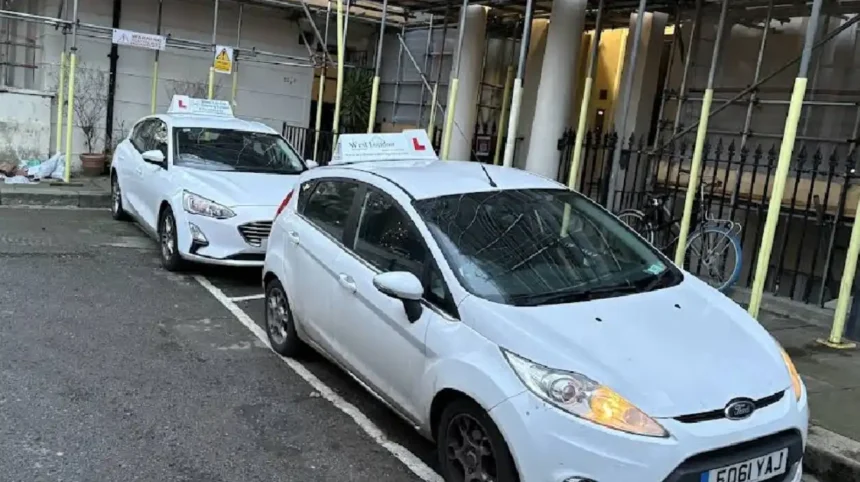
An intensive driving course in West London compresses standard driver training into a continuous timeline lasting up to a one-month period. This educational structure delivers concentrated instruction time to prepare a learner driver for the official government practical examination process.
- How does a crash driving course in West London work?
- What is the historical development of accelerated driver training in the United Kingdom?
- What are the key components of a West London intensive driving syllabus?
- Theory Test Integration and Hazard Perception Training
- Practical Vehicle Control and Maneuver Mastery
- How does the DVSA practical test booking process operate in West London?
- What do statistics reveal about intensive driving course pass rates in Greater London?
- What are the long-term safety implications of accelerated driving qualifications?
- FAQs About Intensive driving course in West London
- Is an intensive driving course worth the money compared to traditional weekly lessons?
- Can a complete beginner pass a practical driving test in just one week?
- How difficult is it to find a fast-track driving test cancellation in West London?
- Should I choose a manual or an automatic intensive driving course in London?
- Why do London driving test centres have lower pass rates on Reddit and Quora reports?
This accelerated educational methodology eliminates the extended weekly interval typical of traditional driving lessons (such as single-hour sessions). A learner driver engages in continuous daily instruction blocks to prevent skill degradation over time. The structural framework targets specific individuals (such as university students and career professionals) who require immediate licensing. A certified driving instructor conducts this program across specified administrative jurisdictions (such as Ealing, Hounslow, and Hillingdon). A candidate registers for a predefined hourly package based entirely on prior experience metrics. This immersive environment establishes technical driving competence within a condensed calendar period.
The legal baseline for participating in this training requires an individual to fulfill statutory criteria (such as age limits and residency status) before vehicle operation commences. A candidate must possess a valid provisional driving licence issued by the Driver and Vehicle Licensing Agency. An individual must also meet minimum legal eyesight standards by reading a registration plate from a distance of twenty meters. All instruction adheres strictly to the regulations (such as speed limits and lane discipline) outlined in the Road Traffic Act 1988. The final assessment takes place under the direct supervision of an official examiner from the Driver and Vehicle Standards Agency. This uniform structure guarantees that an accelerated learner meets identical safety metrics (such as vehicle control and hazard awareness) as a traditional student.
How does a crash driving course in West London work?
This specialized format functions by matching a learner driver with a certified instructor for a consecutive daily lesson block of a five-hour duration. Training takes place across a complex urban route to build vehicle control before the practical test appointment.
The instructional process divides total training allocations into intense daily units (such as morning modules and afternoon modules) to maximize cognitive retention. An instructor utilizes a dual-controlled motor vehicle to maintain safety during complex road situations (such as unexpected lane closures and sudden pedestrian crossings). The training architecture supports both manual and automatic transmission platforms depending on the career needs (such as commercial delivery driving and private commuting) of the student. An intensive format prevents the forgetting cycle that frequently disrupts traditional weekly training schedules. An instructor delivers immediate corrective feedback during an active driving session to rectify systemic operational errors (such as stalling the engine and incorrect mirror checks). This systematic repetition forces the rapid automation of mechanical driving skills (such as gear changing and clutch control).
A training vehicle navigates highly demanding urban environments (such as town centres and industrial estates) to expose a student to realistic driving challenges (such as heavy congestion and narrow streets). Training paths cross specific high-density roadways (such as the A40 Western Avenue, the A4 Great West Road, and the A406 North Circular). A driver learns to manage dense traffic flows (such as morning rush hour traffic), pedestrian crossings (such as zebra and pelican crossings), and designated bicycle lanes (such as segregated and painted cycle paths). An instructor emphasizes the navigation of multi-lane systems (such as three-lane roundabouts) and complex one-way networks (such as urban town centre grids). This exposure directly prepares a candidate for the rigorous demands (such as dual carriageway driving) of regional evaluation environments (such as suburban test routes). Mastery of these specific networks ensures long-term driving competence in major global cities (such as London, New York, and Paris).
What is the historical development of accelerated driver training in the United Kingdom?
Accelerated driver training expanded rapidly in the late twentieth century to accommodate a person requiring a swift licensing route for an employment purpose. The system evolved from a standard weekly methodology into a structured block format to optimize instructional continuity.
The concept of a formal driving evaluation originated with the introduction of the Road Traffic Act 1934. An early instructional framework relied exclusively on weekly single-hour lessons (such as weekend instruction) distributed over multiple calendar months (such as January, February, and March). The expansion of commercial logistics sectors in the post-war era created an urgent requirement for accelerated licensing systems (such as fast-track courses). A private driving school developed a compressed training syllabus during the 1970s to service industrial recruitment drives (such as haulage recruitment). This pedagogical shift recognized that concentrated practice hours accelerated muscle memory development in adult learners (such as mature students). The methodology subsequently transitioned from a niche commercial solution to a mainstream educational pathway.
The modernization of the regulatory landscape forced an intensive training model to integrate structural updates (such as independent driving modules) over successive decades (such as the 1990s and 2000s). The implementation of the compulsory theory examination in 1996 required a course to incorporate formal classroom elements (such as highway code lectures). The introduction of computer-based hazard perception assessments (such as digital video clips) in 2002 further transformed the training syllabus. Modern providers (such as national driving schools) deploy digital learning platforms (such as mobile applications) alongside practical car control sessions (such as on-road practice) to maximize success. This historical trajectory reflects an increasing societal demand for efficient time management and technical education. Today the framework represents a standardized option within the national transport training sector.
What are the key components of a West London intensive driving syllabus?
The core framework integrates comprehensive theoretical preparation with extensive practical vehicle operation to ensure adherence to a national standard. Training encompasses hazard perception mastery, primary vehicle control excellence, complex junction navigation, and specific reverse maneuver execution under a varied metropolitan condition.
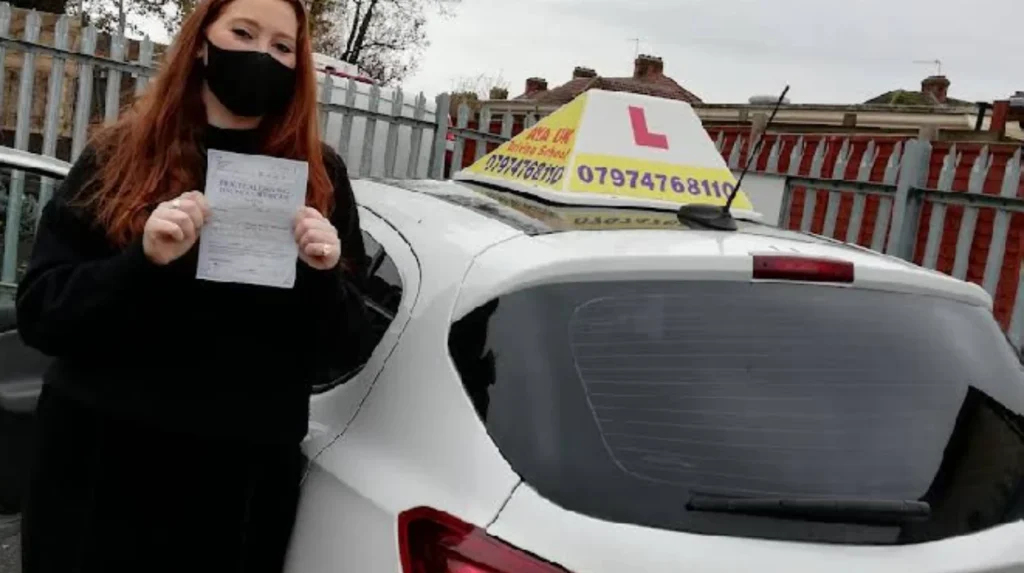
AYA UK DRIVING SCHOOL
Theory Test Integration and Hazard Perception Training
Theoretical instruction focuses on complete comprehension of the official highway code regulations (such as road signs and speed limits). A student utilizes interactive software programs (such as practice applications) to analyze dynamic hazard clips (such as dashcam recordings) simulating real-world driving environments. A training center situated near a regional transit hub provides dedicated support for the theoretical assessment. A candidate must correctly identify developing hazards (such as crossing pedestrians, emerging vehicles, and braking cyclists) to achieve a passing score. This academic foundation must be established before an individual books a practical test date. Success in this phase proves that a learner possesses the requisite cognitive awareness for safe vehicle operation.
Practical Vehicle Control and Maneuver Mastery
A practical module requires the systematic execution of mandatory precision movements (such as tight turns and stopping short) within active traffic streams (such as dual carriageway traffic). An instructor prioritizes the development of vehicle control skills (such as clutch control and steering precision) through targeted gear selection drills (such as downshifting for roundabouts). A student practices precise maneuvers (such as parallel parking and bay parking). The curriculum emphasizes blind-spot verification and constant mirror observation before every physical change of vehicle direction. An instructor simulates emergency stop scenarios (such as wet road stops) to ensure rapid physical reactions during unexpected road events (such as a sudden obstruction). This comprehensive training ensures full compliance with the strict criteria enforced by government examiners (such as DVSA assessment officers).
How does the DVSA practical test booking process operate in West London?
A candidate must secure a passing score on the official theory examination before arranging the practical driving test via the government application portal. A specialized training school utilizes an automated cancellation booking system to reduce a standard waiting period significantly.
The Driver and Vehicle Standards Agency manages the centralized allocation system for all practical driving appointments. High local demand within the capital routinely results in extensive waiting queues (such as summer backlogs) spanning several months (such as May, June, and July). An intensive course coordinator circumvents these delays by utilizing specialized digital search algorithms (such as automated scrapers) to identify short-notice cancellations (such as dropped test slots). This system matches the conclusion of an intensive training week with an immediate test vacancy. Fast-track booking protocols (such as priority booking) reduce the standard waiting window from sixteen weeks down to fewer than fourteen days. This administrative synchronization remains crucial to the structural viability of the compressed course model.
The practical assessment takes place at designated regional testing hubs (such as Greenford, Isleworth, Uxbridge, and Southall). A candidate completes an examination at a localized evaluation center (such as Greenford or Southall). Each center features unique layout challenges (such as spiral roundabouts and width restrictions) and narrow residential streets (such as cul-de-sacs). An instructor conducts dedicated mock examinations (such as full-length test simulations) within these exact postal zones (such as UB6 and TW7). Familiarity with specific testing environments (such as busy high streets) reduces candidate anxiety and eliminates navigational ambiguity on the assessment day. The selection of the testing hub depends entirely on the residential location and scheduling requirements (such as morning test slots) of the learner.
What do statistics reveal about intensive driving course pass rates in Greater London?
Official government data indicates that the national average pass rate for a practical driving examination remains approximately forty-eight percent. An urban evaluation center located within a metropolitan sector exhibits a lower pass rate due to heightened traffic density across London.
The Driver and Vehicle Standards Agency publishes comprehensive quarterly statistical updates (such as quarterly data sheets) regarding examination outcomes (such as passes and failures) across the United Kingdom. Data shows that metropolitan testing centers (such as Greenford and Southall) return pass rates (such as forty percent or fifty percent pass marks) lower than rural environments (such as country lanes). These figures reflect the inherent difficulty of navigating dense capital traffic compared to rural routes. An intensive course provider reports higher internal success metrics (such as first-time pass rates) by isolating statistics to candidates who complete a full training syllabus. Independent audits (such as government data reviews) demonstrate that instructional continuity raises first-time pass probability by eliminating the skill loss associated with weekly gaps (such as seven-day delays). Quantitative evidence confirms that continuous practice optimizes performance stability during a high-stress testing environment.
Several distinct operational variables alter the statistical probability of examination success within urban environments. Pass rates vary based on seasonal weather conditions, daily timing slots, and specific transmission choices. An automatic transmission option yields a higher initial pass percentage due to the elimination of mechanical clutch coordination challenges. The volume of vulnerable road users (such as delivery couriers, pedestrians, and cyclists) increases the probability of serious faults during a test. Statistical analysis highlights that comprehensive preparation on regional routes remains the most reliable method to mitigate these urban risks (such as sudden lane changes). Consequently, structured local training directly correlates with improved statistical outcomes (such as increased pass percentages).
What are the long-term safety implications of accelerated driving qualifications?
A comprehensive study demonstrates that instructional continuity enhances immediate vehicle handling proficiency and hazard recognition performance during early solo driving. A long-term safety outcome depends directly on the thoroughness of the syllabus and the elimination of a driving deficiency completely.
The transition from supervised training to independent solo vehicle operation represents a critical phase for newly qualified motorists (such as young drivers). Longitudinal research indicates that drivers (such as intensive course candidates) trained via intensive frameworks exhibit equivalent safety records to those taught through traditional weekly methods (such as hour-long lessons). The high concentration of instructional hours fosters strong habit formation regarding scanning patterns (such as rearview and side mirror checks) and vehicle control mechanics. Safe driving practices (such as maintaining a safe following distance) must be maintained through continuous adherence to the highway code post-examination. Specialized post-test qualifications (such as Pass Plus courses) provide additional safety benefits (such as reduced insurance premiums) for highway navigation. Ongoing monitoring confirms that educational quality remains far more significant than the overall duration of the training period.
The evolution of the automotive sector requires a modern intensive training framework to adapt to emerging technological paradigms (such as battery electric powertrains). A syllabus must incorporate specific instructions for operating electric vehicles and advanced driver assistance systems (such as autonomous emergency braking and lane keep assist). These technologies alter acceleration profiles (such as instant torque delivery), braking dynamics (such as regenerative braking), and vehicle monitoring requirements (such as digital touchscreen monitoring). A driving school in West London continuously updates its instructional vehicles (such as electric hatchbacks) to reflect these shifting manufacturing standards (such as mandatory safety tech). This forward-looking approach ensures that an accelerated graduate remains prepared for the safety demands (such as navigating low emission zones) of modern smart city infrastructures. Progressive education ensures the long-term relevance and efficacy of the intensive training methodology.
FAQs About Intensive driving course in West London
Is an intensive driving course worth the money compared to traditional weekly lessons?
An intensive driving course is highly efficient because compressing lessons prevents the skill degradation that often happens during weekly intervals. While the upfront cost is higher, students frequently save money overall by requiring fewer total hours of instruction to reach test standards. It is particularly ideal for learners who need to secure their licence quickly for urgent employment or personal relocations.
Can a complete beginner pass a practical driving test in just one week?
While it is technically possible, a complete beginner usually requires around forty hours of professional training to safely master an urban environment. Cramming all these hours into a single week can lead to physical exhaustion and cognitive overload, which reduces overall success rates. Most instructors recommend a semi-intensive approach over two to three weeks for individuals starting with zero prior experience.
How difficult is it to find a fast-track driving test cancellation in West London?
Securing a test cancellation in West London is notoriously difficult due to extreme local demand at hubs like Greenford and Southall. Most learners rely on automated driving test cancellation apps or specialized intensive course schools that utilize internal software to scan the DVSA portal constantly. Finding a slot independently requires refreshing the government website frequently during peak cancellation release hours.
Should I choose a manual or an automatic intensive driving course in London?
Choosing an automatic vehicle is generally recommended for intensive courses in London because it eliminates complex clutch control and gear coordination in heavy traffic. This allows you to focus purely on navigation, road signs, and hazard perception, which often leads to a quicker pass. However, a manual licence gives you the long-term flexibility to drive both vehicle types without future restrictions.
Why do London driving test centres have lower pass rates on Reddit and Quora reports?
London test centres feature some of the lowest pass rates in the country because candidates must navigate highly congested metropolitan environments. Learners face complex multi-lane roundabouts, unpredictable pedestrian behavior, narrow residential streets, and a high volume of delivery cyclists. Passing requires exceptional hazard perception and split-second decision-making skills compared to taking an evaluation in a rural area.