Key Points
- A TfL bus driver was stabbed in broad daylight at a West London bus stop early Friday, 29 May 2026, around 6am
- This is the second serious assault on a London bus driver in just 10 days
- The attack comes days after driver Sergei Krajev died following a fatal assault on Battersea Bridge
- Unite union calls the incident “shocking” and demands urgent safety reforms for bus drivers
- Unite criticises TfL’s current advice for drivers to “remain in their cab at all times” as flawed and impractical
- The union wants conflict de-escalation training, currently given to London Underground staff, extended to all bus drivers
- In both recent cases, drivers could not remain in their cabs during the attacks
- Sharon Graham, general secretary of Unite, calls for the Mayor of London, TfL, private bus operators, and Unite to develop concrete protection solutions
- Nadine Edwards, Unite regional officer, demands fresh guidance and full training to prevent drivers from putting themselves in danger
- Police are investigating the West London stabbing; no suspect has been named publicly yet
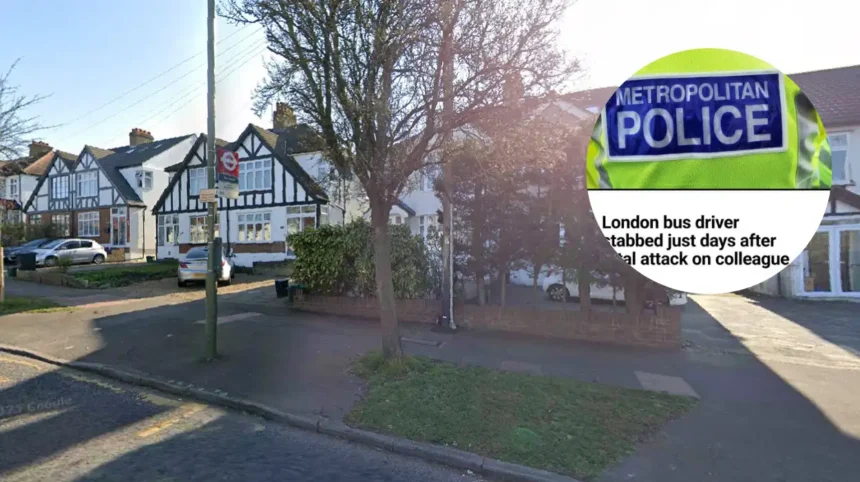
West London Crime(West London ) June 02, 2026 — A TfL bus driver was stabbed while waiting at a bus stop in broad daylight in West London early on Friday, 29 May 2026, marking the second serious assault on a London bus driver in just 10 days. The incident occurred around 6am, and the driver was taken to hospital with injuries. This attack comes shortly after the death of fellow bus driver Sergei Krajev, who died last week following a fatal assault on Battersea Bridge in south London.
- Key Points
- Why is this attack happening so soon after Sergei Krajev’s death?
- What has Unite the union said about the stabbing?
- What safety changes is Unite demanding for London bus drivers?
- Where and when exactly did the West London stabbing take place?
- What do police say about the investigation?
- Background: How recent violence has escalated against London bus drivers
- Prediction: How this development can affect London bus drivers and commuters
- For London bus drivers
- For TfL and bus operators
- For the Mayor of London and policymakers
- For London commuters
As reported by the team at London Now, the victim was waiting at a bus stop when he was attacked, and the violence has triggered urgent calls from Unite the union for stronger protections for bus staff.
Why is this attack happening so soon after Sergei Krajev’s death?
The stabbing in West London is the second serious assault on a London bus driver in 10 days, following the fatal attack on 64-year-old Sergei Krajev. Krajev was taken to hospital by air ambulance after being found critically injured on Battersea Bridge at about 00:30 BST on 17 May 2026, and police later launched a murder investigation into his death.
As reported by BBC News, Krajev died after a confrontation near Battersea Bridge, and his death has shocked the transport community. The timing of the West London stabbing has intensified concerns about rising violence against bus drivers in London.
What has Unite the union said about the stabbing?
Unite the union described the West London stabbing as “another shocking attack on a bus driver”. Sharon Graham, general secretary of Unite, stated: “This is another shocking attack on a bus driver. The Mayor of London together with TfL, the private bus operators must be brought together with Unite to develop concrete solutions to better protect London bus drivers”.
The union believes the current advice to drivers—that they should remain in their cab at all times—needs urgent revision. In both recent cases, including Krajev’s fatal attack and the West London stabbing, it was impossible for the driver to have remained in their cab.
As reported by Nadine Edwards, regional officer for Unite: “The current advice to drivers to always remain in their cabs is both flawed and impractical. We urgently need fresh guidance and full training for drivers to ensure that they do not put themselves in danger”.
What safety changes is Unite demanding for London bus drivers?
Unite is calling for conflict de-escalation training, currently given to London Underground staff, to be extended to all bus drivers. The union argues that the existing guidance is not working and that drivers need practical, up-to-date training to handle violent situations safely.
The key demands from Unite include:
- Urgent revision of the advice for drivers to remain in their cabs at all times
- Full conflict de-escalation training for all bus drivers, matching that given to London Underground staff
- A joint meeting between the Mayor of London, TfL, private bus operators, and Unite to develop concrete safety solutions
- Fresh guidance that recognises real-world situations where staying in the cab is not possible or safe
Where and when exactly did the West London stabbing take place?
The attack happened at a bus stop in West London around 6am on Friday, 29 May 2026. The driver was waiting at the stop when he was stabbed in broad daylight. Police are treating the incident as a serious assault and are appealing for witnesses and information.
The exact street name and specific bus route have not been fully detailed in initial reports, but the incident is confirmed to have occurred in West London early on Friday morning.
What do police say about the investigation?
Police are investigating the stabbing and have not yet named a suspect publicly. The Metropolitan Police are appealing for witnesses who saw the attack or who have information about the incident to come forward.
This investigation follows the murder inquiry launched into the death of Sergei Krajev, where police confirmed he was attacked after a confrontation near Battersea Bridge.
Background: How recent violence has escalated against London bus drivers
The recent attacks on London bus drivers mark a sharp escalation in violence against transport staff. Sergei Krajev, 64, was found critically injured on Battersea Bridge at about 00:30 BST on 17 May 2026 and later died in hospital. A murder investigation was launched by police, who said the attack followed a confrontation near the south London crossing.
Just 10 days later, another TfL bus driver was stabbed at a bus stop in West London around 6am on 29 May 2026. Unite the union has described this as “another shocking attack” and highlighted that both recent cases show the current safety advice is failing.
Previous reports show that violence against bus staff is not new: in the first half of last year, 907 sexual offences were reported across TfL services, and Unite has previously called action on “disgraceful” assaults on bus drivers. However, the concentration of two serious assaults, including one fatality, in such a short period has triggered urgent calls for systemic change.
Prediction: How this development can affect London bus drivers and commuters
This development is likely to have significant short- and long-term effects on London bus drivers, unions, TfL, and commuters.
For London bus drivers
- Increased fear and stress: Drivers may feel more vulnerable, especially when leaving their cabs for breaks, passenger assistance, or during incidents.
- Pressure to follow outdated guidance: The current “stay in the cab” advice may put drivers in impossible situations, as seen in both recent attacks.
- Demand for better training: Drivers will likely push strongly for conflict de-escalation training similar to London Underground staff, which could improve their ability to handle violent situations safely.
- Potential strikes or industrial action: If TfL, the Mayor’s office, and private operators do not act quickly, Unite may escalate industrial action to demand safer working conditions.
For TfL and bus operators
- Urgent review of safety policies: TfL and private bus operators will face intense pressure to revise the “remain in cab” guidance and implement new safety protocols.
- Investment in training: There will be strong pressure to roll out conflict de-escalation training across all bus services, which could involve significant cost and operational changes.
- Reputational risk: Continued violence against drivers could damage public confidence in bus safety and the employer brand of TfL and private operators.
For the Mayor of London and policymakers
- Political pressure: The Mayor will face calls to convene emergency meetings with TfL, operators, and Unite to develop concrete safety solutions.
- Potential new legislation or guidance: There may be pressure to introduce stronger legal protections for transport workers and clearer statutory guidance on worker safety.
For London commuters
- Potential service disruption: If drivers feel unsafe and industrial action escalates, bus services could face delays, cancellations, or reduced frequency.
- Short-term uncertainty: Commuters may see increased police presence at bus stops, revised safety announcements, and possible route changes during investigations.
- Long-term safety improvements: If reforms are implemented successfully, commuters could benefit from better-trained drivers, safer buses, and reduced violence on public transport.
If no concrete action is taken quickly, the risk is that violence against bus drivers continues to escalate, courts more industrial action, and public trust in London’s bus network erodes. If TfL, the Mayor, operators, and Unite work together as Sharon Graham has urged, this crisis could become a turning point for improved safety for all transport workers in London.