Key Points
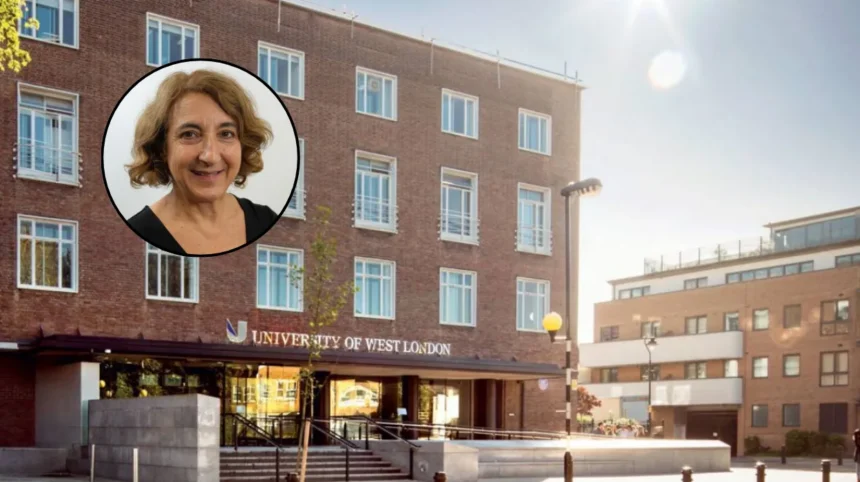
- Expert Presentation: Dr Efcharis Balodimou, senior lecturer in the Built Environment at the University of West London, delivered a lecture on digital technology in heritage conservation to the Ealing Civic Society.
- Event Details: The presentation took place at Open Ealing in Dickens Yard on 12 May.
- Core Technologies: Discussions focused on cutting-edge non-destructive techniques, including artificial intelligence, 3D printing, laser scanning, thermal imaging, and digital surveying.
- Case Study: The restoration of Notre-Dame Cathedral in Paris was highlighted as a landmark project demonstrating the synergy between modern technology and traditional craftsmanship.
- Human Centric Approach: Dr Balodimou emphasised that digital tools are designed to complement, rather than replace, human expertise in architectural conservation.
Ealing (West London News) August 8, 2026 – Modern digital technologies such as artificial intelligence and 3D printing are fundamentally altering the approach to preserving historical architecture, according to built environment experts. Speaking at Open Ealing in Dickens Yard, Dr Efcharis Balodimou, a senior lecturer in the Built Environment at the University of West London, addressed members of the Ealing Civic Society on the evolving methodologies used to protect and maintain historic structures.
- Key Points
- What Technologies Are Transforming Modern Conservation Methods?
- How Was Technology Applied to the Notre-Dame Cathedral Restoration?
- Will Artificial Intelligence Replace Human Conservation Specialists?
- Background of the Particular Development
- Prediction: How This Development Can Affect Conservation Professionals and Local Communities
What Technologies Are Transforming Modern Conservation Methods?
During the lecture, Dr Balodimou outlined how advanced technological instruments are changing structural analysis and restoration planning.
Specialists are increasingly relying on tools such as laser scanning, thermal imaging, and digital surveying to evaluate the physical condition of historic properties.
These tools allow conservationists to examine intricate architectural details, diagnose hidden structural flaws, and draft precise restoration plans without causing physical disruption to original building fabrics. Non-destructive testing methods ensure that fragile materials remain intact during preliminary assessments, eliminating the reliance on invasive inspection techniques.
How Was Technology Applied to the Notre-Dame Cathedral Restoration?
Dr Balodimou illustrated these concepts by highlighting the reconstruction of Notre-Dame Cathedral in Paris following the major fire that damaged the structure in April 2019. The five-year renovation project combined traditional artisan techniques with modern digital tools ahead of the cathedral’s reopening in 2024.
High-resolution 3D digital mapping and pre-existing laser scans served as precise blueprints for rebuilding damaged timber framing and vaulted ceilings.
By pairing modern 3D printing and advanced diagnostic equipment with traditional stone masonry and woodworking, project teams accelerated structural analysis while preserving historical accuracy.
Will Artificial Intelligence Replace Human Conservation Specialists?
Addressing concerns surrounding automation within the heritage sector, Dr Balodimou clarified the scope and boundaries of digital technology in architectural preservation.
Dr Balodimou stated:
“While digital technologies and artificial intelligence are transforming the way we preserve historic buildings, they complement rather than replace the expertise of architects and conservation professionals.”
She explained that while artificial intelligence can process large volumes of surveying data, model structural stresses, and identify potential deterioration, final diagnostic decisions and creative restoration work depend entirely on trained professionals.
Explore More Ealing News
Latimer Celebrates Topping Out at Twyford Park in Ealing 2026
Ealing Broadway Partners With Ealing Trailfinders For Kids Sports | Ealing 2026
Background of the Particular Development
The integration of digital techniques into historic building conservation reflects a broader shift across the architectural and built environment sectors.
Historically, structural monitoring relied heavily on manual inspections, physical sampling, and invasive probing—methods that occasionally risked damaging vulnerable historic materials.
Over the past decade, rapid advancements in spatial scanning, building information modelling (BIM), and non-invasive sensors have made digital documentation standard practice for high-value heritage projects. European institutions and UK academic bodies, including the University of West London, have increasingly focused research on how data-driven tools can reduce operational costs and mitigate environmental wear on aging structures.
Local heritage groups, such as the Ealing Civic Society, regularly host lectures to examine how these international restoration practices apply to regional conservation efforts and urban planning decisions.
Prediction: How This Development Can Affect Conservation Professionals and Local Communities
The adoption of artificial intelligence, 3D printing, and non-destructive survey technologies will directly impact conservation professionals, local planning bodies, and civic communities in several ways:
- For Conservation Professionals and Architects: Practitioners will need to acquire hybrid skill sets combining traditional architectural history with digital data literacy. Workflow efficiency is expected to rise as automated thermal imaging and 3D modeling reduce the time required to complete structural surveys. However, the core responsibility of design decisions will remain grounded in human professional judgment.
- For Local Authorities and Civic Societies: Planning authorities will have access to highly accurate digital records of local historic sites. This data will allow for faster, more precise decision-making regarding listed building consents and structural repairs, helping prevent heritage decay before costly interventions become necessary.
- For the General Public and Heritage Enthusiasts: Communities stand to benefit from safer, better-preserved local landmarks. Additionally, digital scans generated during preservation projects can be repurposed for public educational exhibits, VR tours, and interactive civic archives, widening access to cultural heritage.