Key Points
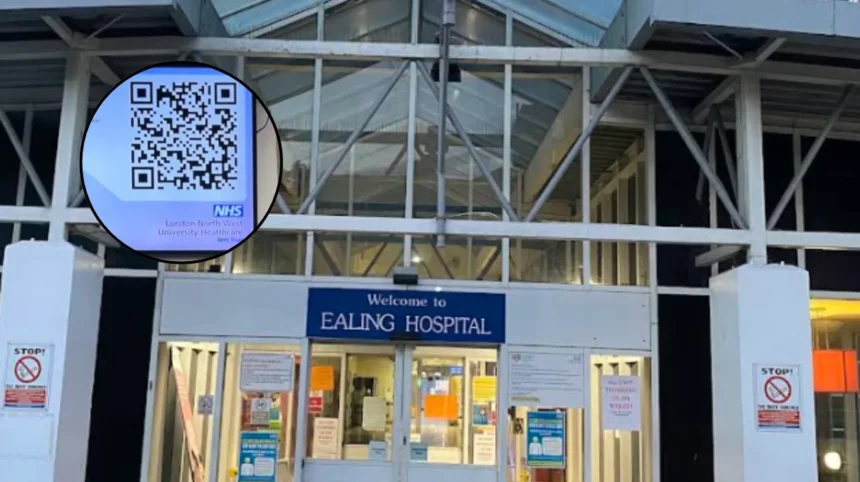
- London North West University Healthcare NHS Trust (LNWH) is introducing a mobile phone check-in service at Ealing Hospital’s Urgent and Emergency Care Centre this winter.
- The system allows arriving patients to scan a QR code using their own smartphones, complete registration, and submit initial clinical triage details electronically.
- The digital initiative follows a successful deployment at Northwick Park Hospital, where more than 6,700 walk-in patients—representing roughly two-thirds of arrivals—utilised the service.
- The tool aims to reduce physical reception queues, streamline administrative burdens, and assist clinical teams in identifying high-risk patients more rapidly during peak periods.
Ealing (West London News) August 20, 2026 – London North West University Healthcare NHS Trust (LNWH) has officially announced plans to roll out a smartphone-based digital check-in system at Ealing Hospital’s Emergency Department this coming winter. The service is designed to replace traditional manual reception registration, enabling walk-in patients to register their arrival and log initial clinical details directly into hospital databases via a secure mobile interface.
- Key Points
- How Does the Digital A&E Check-In System Work at Ealing Hospital?
- What Do NHS Consultants Say About the Impact on Patient Wait Times?
- What Were the Results of the Initial Rollout at Northwick Park Hospital?
- Background of the Digital Transformation in Emergency Departments
- Predictions: How Will This Development Affect NHS Patients and Staff?
How Does the Digital A&E Check-In System Work at Ealing Hospital?
Under the new operational protocol, individuals arriving at the Accident and Emergency (A&E) department are directed to scan a displayed QR code using their mobile devices.
The web-based interface guides users through a structured registration form that requests personal details alongside an initial self-reported clinical assessment detailing the reason for their visit.
Once completed, the submitted information routes electronically into the trust’s core hospital systems. This automated data entry eliminates the necessity for patients to wait in physical reception queues simply to log their presence, while simultaneously removing the requirement for receptionists to manually transcribe patient information into terminal workstations.
What Do NHS Consultants Say About the Impact on Patient Wait Times?
Addressing the operational challenges of traditional A&E reception desks, A&E Consultant Chris Nordstrom explained the clinical and administrative drawbacks inherent in existing models.
According to Dr Nordstrom, patients traditionally queue at reception to provide front-of-desk staff with details regarding the reason for their visit, which must then be manually typed into a computer terminal.
Dr Nordstrom highlighted that this registration process alone can frequently take up to an hour during peak operational hours, resulting in patient frustration and consuming significant staff capacity on manual administrative tasks.
Dr Nordstrom further stated that under the new procedure, patients can scan a QR code using their own mobile phone immediately upon arrival.
They are guided through a straightforward registration and initial triage process, with the information entered electronically into hospital systems. Dr Nordstrom noted that this removes the need for many patients to queue at the reception desk, offering a faster, smoother, and more comfortable method of registration.
What Were the Results of the Initial Rollout at Northwick Park Hospital?
The decision to expand the digital check-in service to Ealing Hospital follows a trial phase conducted at Northwick Park Hospital, which is also managed by London North West University Healthcare NHS Trust.
Data released by LNWH confirms that more than 6,700 patients successfully utilised the digital check-in system during its implementation at Northwick Park.
This usage rate accounts for approximately two-thirds of all walk-in patients presenting at the department, demonstrating substantial public uptake and operational viability prior to its broader geographical deployment across the trust’s network.
Explore More Ealing News
Man Arrested with Machete After Pursuit in South Acton 2026
Ealing Ranks Lowest in London Food Hygiene Study: Ealing 2026
Background of the Digital Transformation in Emergency Departments
The introduction of self-service digital triage and registration platforms represents a wider structural push across the National Health Service (NHS) to leverage technology in managing record emergency department demand.
Urgent and Emergency Care Centres across the United Kingdom routinely face severe winter pressures, characterized by extended queue times at front-of-house intake desks and overcrowded waiting rooms.
Historically, emergency department intake relied entirely on administrative reception personnel recording patient demographics and chief complaints by hand before passing the file to a triage nurse.
This manual bottleneck frequently delayed the crucial interval between a patient’s physical arrival and their secondary clinical assessment.
By introducing self-service digital triage prompts at the point of entry, healthcare trusts aim to accelerate the preliminary sorting process, ensuring that clinical staff receive immediate alerts regarding potentially life-threatening or urgent symptoms without administrative delays.
Predictions: How Will This Development Affect NHS Patients and Staff?
The adoption of mobile check-in technology at Ealing Hospital is expected to generate direct outcomes for two primary stakeholder groups: patients seeking urgent medical attention and front-line healthcare staff.
For the general public, particularly walk-in patients presenting with non-critical conditions, the system is predicted to substantially decrease initial waiting times experienced inside the reception foyer. By completing registration on personal devices, patients can take a seat immediately rather than standing in prolonged queues.
Crucially, because the digital system incorporates an initial clinical triage questionnaire, emergency teams will receive early data inputs, improving safety protocols by helping staff identify and prioritize high-risk patients sooner than traditional queue-based intake models permit.
However, for digitally excluded individuals, older demographics, or patients experiencing severe distress, traditional reception desks will remain operational to ensure equal access to care.
For administrative personnel and clinical teams within London North West University Healthcare NHS Trust, the automated system is anticipated to reduce repetitive data-entry workloads.
By diverting a significant proportion of registration tasks to the automated platform, reception staff can redirect their focus toward managing complex patient inquiries, assisting vulnerable arrivals, and maintaining clear communication channels within the waiting area.
Clinically, doctors and triage nurses stand to benefit from structured, standardized data entries delivered straight to hospital workstations, enabling more efficient patient processing throughout winter peak periods.