Key Points
- Hammersmith and Fulham Council has launched a formal investigation into potential planning breaches at the site of the former Hammersmith Ram pub on King Street.
- Long-standing pub operator Young’s closed the venue in July, after which the freehold was purchased by Hammersmith Realty Ltd, a subsidiary of Ealing-based property firm Arora Family.
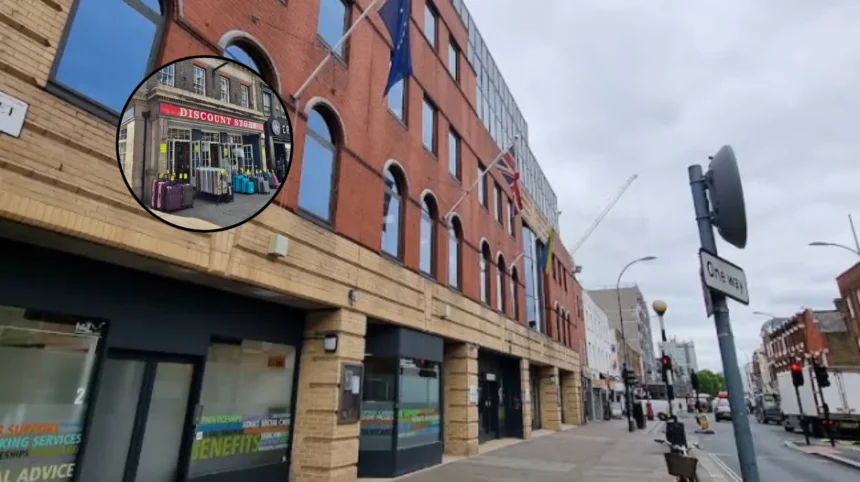
- Shortly after the closure, the vacant premises were briefly taken over by squatters before being converted into a discount convenience store.
- Local planning regulations dictate that changing the use of a pub (Sui Generis classification) into a retail store requires explicit local authority consent, which was not granted prior to opening.
- A representative for Arora Family confirmed that the long-term intention remains to operate the building as a pub, with efforts currently underway to secure a new hospitality tenant.
Hammersmith (West London News) August 28, 2026 – A formal planning investigation has been launched by fulham/hammersmith/">hammersmith-and-fulham/">Hammersmith and Fulham Council following the unauthorized conversion of the former Hammersmith Ram pub into a discount store. The historic King Street hostelry, which was shut down by parent company Young’s in July, was acquired by Hammersmith Realty Ltd, a property vehicle managed by the Ealing-based real estate entity Arora Family. Following a period of squatting at the vacant site, the premises were transformed into a retail shop selling low-cost goods, operating without the necessary change-of-use planning permission required under local authority and national regulations.
Why Is Hammersmith and Fulham Council Investigating the King Street Site?
The council initiated enforcement inquiries after local residents and visitors noticed that the former pub had reopened as a retail shop without any visible planning notice applications posted outside the building. Under UK planning law, pub buildings fall into the “Sui Generis” use class, a classification introduced to prevent the loss of community gathering spaces. Converting a Sui Generis pub into a Class E commercial retail unit strictly requires explicit approval through a full planning application.
Local authorities possess statutory powers to investigate unauthorized development under the Town and Country Planning Act 1990. If Hammersmith and Fulham Council determines that an illegal change of use has taken place, the authority can issue an enforcement notice requiring the property owners to cease retail operations, remove all shop fittings, and revert the premises back to its previous state. Alternatively, the building owners may be forced to submit a retrospective planning application, which would then undergo public consultation and committee review.
Who Owns the Building and What Are Their Plans for the Site?
The freehold of the King Street property was acquired by Hammersmith Realty Ltd following the decision by Young’s to cease trading at the location in July. Hammersmith Realty Ltd operates as a subsidiary of the Arora Family, a property and real estate firm headquartered in Ealing, West London.
Addressing the recent activity at the location, a spokesperson for the Arora Family confirmed that the long-term strategy for the real estate remains focused on maintaining the property as a pub. The spokesperson explained that the company is currently engaged in the process of searching for and identifying a new hospitality operator to lease and manage the venue as a public house. However, the property firm did not provide immediate detail regarding the current retail occupant operating inside the building or the nature of the short-term lease agreement that facilitated the conversion into a discount store.
Background of the Hammersmith Ram Development
The Hammersmith Ram has historically served as a central feature of King Street’s commercial and social landscape. Operating under the ownership of Young & Co.’s Brewery for several decades, the pub was a traditional drinking venue situated along one of West London’s busiest high streets.
In recent years, the pub sector across London has faced ongoing economic pressures, including rising energy bills, high business rates, changed consumer habits, and increased supply chain costs. These factors led Young’s to review its property portfolio, culminating in the decision to shut down operations at the Hammersmith Ram in July and place the freehold on the commercial property market.
Immediately following the departure of Young’s, the unsecured structure attracted the attention of squatters, who occupied the building during the transition of ownership to Hammersmith Realty Ltd. The legal removal of the illegal occupants was followed rapidly by internal modifications to fit out the ground-floor space with retail shelving, refrigeration units, and point-of-sale systems, leading to the rapid opening of the discount convenience market.
The rapid transition from pub to squat to retail store highlights broader trends across urban commercial centers in the UK. The protection of public houses has been a key priority for many London boroughs due to the high volume of pub closures over the past decade. Greater London Authority guidelines encourage councils to preserve pubs as assets of community value to protect social cohesion and local heritage.
Explore More Hammersmith and Fulham News
Hammersmith Fulham Extends Public Spaces Loudspeaker Ban In West London 2026
Hammersmith Council Urged to Build Ravenscourt Park Lido West London 2026
How Will This Development Affect the Local Community and High Street?
The ongoing situation regarding the former Hammersmith Ram carries direct implications for local residents, neighbouring business owners, and commercial property stakeholders along King Street.
For community members and pub patrons, the sudden loss of a social establishment in favour of an unpermitted retail shop reduces the availability of community space along the main thoroughfare. High streets increasingly face a decline in traditional hospitality venues, and the conversion of historic properties into temporary discount stores can alter the visual and cultural identity of the neighborhood. Residents living nearby may also experience changes in footfall patterns, delivery schedules, and trash management associated with retail logistics compared to standard pub operating hours.
For surrounding business owners, the presence of an unpermitted retail outlet highlights concerns regarding fair regulation and compliance. Licensed retail operators on King Street must comply with council guidelines, pay business rates based on standard commercial classifications, and obtain appropriate licenses. Uncontrolled retail conversions can create uncertainty regarding retail competition and high street standards.
For property owners and real estate developers, the outcome of Hammersmith and Fulham Council’s investigation will establish a regulatory signal regarding commercial property use in the borough. If enforcement action is pursued, property owners will be required to adhere strictly to formal planning channels before altering the operational function of heritage buildings. Conversely, if a temporary retail use is tolerated while a new pub operator is sought, it may create a operational precedent for property managers dealing with vacant high-street assets during tenancy transitions.