Key Points
- Hillingdon recorded its lowest ever permanent school exclusion rate in 2024/25, with a 23 per cent drop year-on-year.
- Total suspensions in the borough also fell by 9 per cent to 1,977 across more than 56,000 pupils.
- Northwood School, led by head teacher Mehul Shah, has not permanently excluded any pupil in the past three years.
- The school uses “therapeutic thinking” and de-escalation techniques instead of confrontational discipline.
- A dedicated “green room” for SEN students helps reduce behavioural incidents by offering a quieter workspace.
- Persistent disruptive behaviour is now the leading cause of permanent exclusions in Hillingdon, while physical assault and substance use have declined.
- Hillingdon’s exclusion rates remain significantly below the national average, despite rising rates elsewhere.
- The Local Democracy Reporting Service (LDRS) quoted Mr Shah emphasising community safety as a key factor in any exclusion decision.
Hillingdon (West London News) August 4, 2026 – Hillingdon has recorded its lowest ever rate of permanent school exclusions, with official figures showing a 23 per cent drop in 2024/25 compared with the previous academic year. The data indicates that just 33 permanent exclusions were recorded across the borough last year — a figure that undercuts even the reduced levels seen during the COVID-19 pandemic.
At the same time, total suspensions in the borough fell by 9 per cent year on year, to 1,977 incidents among more than 56,000 pupils. This decline runs counter to national trends, where both exclusions and suspensions have risen sharply.
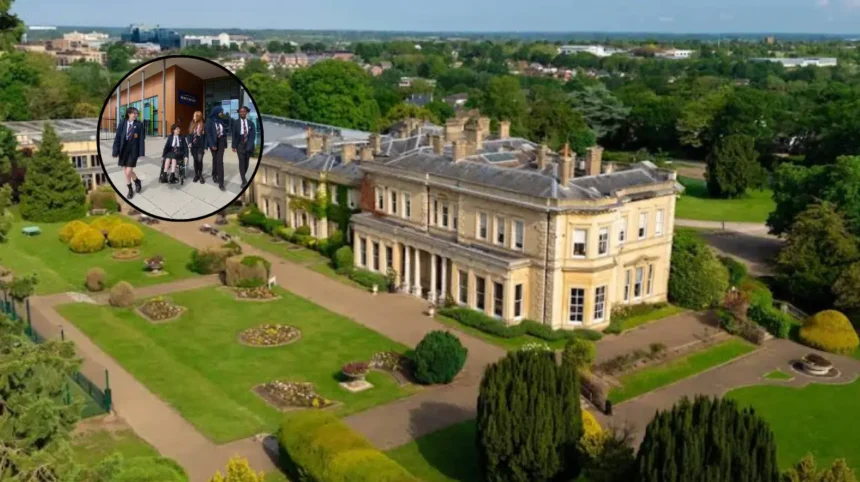
Much of the focus has turned to Northwood School in Northwood, where head teacher Mehul Shah said that the school “hasn’t permanently excluded at all in the past three years.”
Mr Shah said:
“We prioritise happiness as being essential if we’re going to have successful children… It’s about having really high standards right from the start when the children join the school so that they never veer into anything more wrong.”
Rather than escalating confrontations with defiant pupils, staff at Northwood use a module described as “therapeutic thinking” to de-escalate situations. Mr Shah explained:
“You don’t elevate a situation when a child is saying no. You don’t chase after them. You don’t shout even more at them because they’re not in a state where they can respond positively.”
The school has also introduced a “green room” for students with special educational needs (SEN), allowing them to step away from high-stimulus environments before reaching the point of sanction. Mr Shah noted that poor behaviour often “bubbles up when there is a lot of stimulus around,” and the quiet space helps prevent incidents.
How do Hillingdon’s exclusion figures compare nationally?
Hillingdon’s permanent exclusion rate remains significantly below the national benchmark. In 2024/25, the borough recorded 33 permanent exclusions, down from 44 issued initially, with 11 of those subsequently rescinded or retracted by schools.
By contrast, national data shows rising rates of both permanent exclusions and suspensions, with Hillingdon’s performance bucking the national trend.
The most common recorded reason for permanent exclusions in Hillingdon has shifted in recent years. Persistent disruptive behaviour is now the leading cause for the first time in three years, while incidents involving physical assault and substance use have declined significantly, according to council figures.
When might exclusions still be necessary?
Despite the overall decline, exclusions still occur where school leaders deem them necessary for community safety. Mr Shah said:
“The main thing for me as a head teacher to think about is, by excluding the pupil will the rest of the school community be able to work in a less hindered fashion, and a more safe fashion?”
He added:
“So often when I’m considering exclusion, it is because of that reason — I don’t feel that the rest of the community would feel safe if that person continued at the school.”
This suggests that the lower exclusion rate does not mean schools have abandoned permanent exclusions altogether. Instead, exclusions are being reserved for circumstances where leaders believe continued attendance could create significant risks for other pupils or staff.
Background: How did Hillingdon’s exclusion rates develop over time?
Hillingdon’s exclusion figures have been falling steadily in recent years, even as national rates have climbed. In 2024/25, the borough’s Exclusions and Reintegration team received 44 permanent exclusion referrals — 39 from Hillingdon schools and four from out-of-borough schools for Hillingdon residents. Of these, 11 were rescinded or retracted, leaving 33 recorded exclusions.
This represents a 23 per cent reduction compared with the previous year and marks the lowest level since records began, including during the pandemic period when many schools adopted more flexible approaches to discipline.
The borough’s approach has been supported by wider safeguarding and educational initiatives. The Hillingdon Safeguarding Children Partnership’s 2024–25 annual report highlights ongoing work to support children with behavioural and mental health needs, including multi-agency training and early intervention through the Stronger Families Hub.
Explore More Hillingdon News
Man Pleads Guilty in Fatal M4 Crash, Hillingdon 2026
Hillingdon Approves 5 Yeading Homes Despite Petition – Yeading, 2026
Prediction: How might this development affect students, parents, and schools in Hillingdon?
If Hillingdon’s approach continues to deliver results, several outcomes are likely.
For students, reduced exclusions mean more pupils remain in mainstream education, potentially improving long-term attainment and reducing the risk of disengagement. Early intervention and therapeutic support may also help address behavioural difficulties before they escalate.
For parents, families may experience fewer disruptions to their children’s education and reduced stigma associated with exclusions. However, some parents may seek greater transparency about how schools assess serious behavioural incidents and decide when exclusion is necessary.
For schools, the model used at Northwood — emphasising de-escalation, high expectations and tailored support — could be adopted more widely across the borough. This may require additional staff training and resources, particularly for SEN provision.
For policymakers, Hillingdon’s results may attract attention from other local authorities seeking to reduce exclusions without compromising school safety. However, replicating the model may depend on local circumstances, including staffing levels, school leadership and access to specialist support.
Overall, Hillingdon’s record-low exclusion rates suggest that a proactive, therapeutic approach to discipline can deliver sustained improvements, even as national exclusion and suspension rates move in the opposite direction.