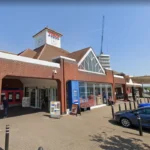
Key Points
- Approval of Planning Permission: The Planning Committee of Hounslow Council has granted permission to demolish Units 1–4 and 7–8 of the Wireless Factory site (formerly the Victory Business Centre) to construct 111 new homes.
- No Affordable Housing in New Phase: This latest phase has no provision for any affordable houses because according to the developer, including affordable housing in this particular phase would not make the project viable.
- Serious Criticisms from Local Representatives: Councillor John Todd has made serious criticisms in the meeting, stating that his colleagues should be wary of developers who “were pulling the wool over our eyes” concerning viability assessments and affordable housing.
- Allocations Across Whole Site: While there is provision of affordable housing in the masterplan of Wireless Factory site at Fleming Way, the previous and concurrent phases have affordable housing schemes. However, local councillors had worries about diluting overall affordable house requirements of the whole site.
- Viability Assumption Explanation: Independent viability assessments attached to the application proved that owing to expensive construction costs and site limitations, the inclusion of any affordable housing units in this particular 111 unit phase was financially non-viable for the developer.
Isleworth (West London News) September 5, 2026 — Hounslow Council’s planning committee has granted approval for the partial demolition and redevelopment of the historic Wireless Factory site in Isleworth, giving the green light for 111 new residential properties despite no affordable homes being included in the scheme.
- Why Did Councillors Claim Developers Are ‘Pulling the Wool Over Our Eyes’?
- What Was the Developer’s Justification for Zero Affordable Housing?
- How Does This Decision Fit Into the Wider Wireless Factory Masterplan?
- Background of the Wireless Factory Redevelopment
- Prediction: How Will This Approval Impact Local Stakeholders?
The decision applies to Units 1 to 4 and Units 7 to 8 at the location on Fleming Way, historically known as the Victory Business Centre. The existing industrial and commercial structures will be cleared to construct the new block of flats. However, the proposal faced sharp debate inside the council chamber after financial viability calculations showed that the developer could not deliver affordable units within this specific phase while maintaining a commercial profit margin.
Why Did Councillors Claim Developers Are ‘Pulling the Wool Over Our Eyes’?
During the planning committee debate, local elected representatives voiced steep criticism over the lack of affordable housing delivered by private developers across the London Borough of Hounslow.
As reported by media outlets covering the committee session, Councillor John Todd warned fellow committee members against accepting the viability arguments without deeper skepticism, stating that developers are “pulling the wool over our eyes” when using financial appraisals to avoid statutory affordable housing targets.
Councillor Todd argued that the systematic reliance on viability assessments allows development firms to scale back affordable commitments once initial outline approvals are obtained. He noted that local residents facing severe housing shortages gain little from large-scale urban regeneration projects if the resulting properties are priced exclusively for open-market sale or private rental.
What Was the Developer’s Justification for Zero Affordable Housing?
The applicant submitted detailed financial viability assessments prepared by independent property experts to support the planning application. Under planning policy frameworks across Greater London, developers are expected to target 35% to 50% affordable housing on major developments; however, national policy allows developers to reduce or eliminate this quota if they demonstrate that doing so would render the scheme financially unviable.
The viability assessment for the Fleming Way site concluded that:
- Existing Use Value & Clearance Costs: Demolishing active commercial floorspace (Units 1–4 and 7–8) carries high initial site acquisition and demolition expenditure.
- Escalating Construction Costs: Inflationary pressures across the UK building sector have driven up build costs per square metre.
- Target Return Margins: Granting affordable housing concessions on this phase would push developer returns below the standard 15% to 20% benchmark needed to secure development finance from commercial lenders.
Council planning officers confirmed that an independent review of the developer’s financial calculations verified the findings, leaving officers with limited legal grounds to recommend refusal solely on the absence of affordable units.
How Does This Decision Fit Into the Wider Wireless Factory Masterplan?
The Wireless Factory, located off Fleming Way in Isleworth, is a three-acre commercial site that has been undergoing incremental redevelopment into a modern mixed-use community.
- Earlier Phases: Previous allocations and partnerships across the masterplan included forward-funding agreements with housing associations (such as RHP Group) to deliver social and shared-ownership homes on adjacent plots within the complex.
- Phase-by-Phase Viability: Planning officers highlighted that while earlier phases delivered affordable units, this specific 111-home phase stood as a separate standalone assessment.
- Late-Stage Viability Reviews: To safeguard public benefits, the approved planning permission includes standard “review mechanisms.” If housing market conditions improve or build costs drop during construction, a late-stage viability review can force the developer to make financial contributions toward off-site affordable housing in Hounslow.
Background of the Wireless Factory Redevelopment
The site originally served as a manufacturing hub before being repurposed into the Victory Business Centre, offering light industrial and office space for small and medium-sized businesses.
In 2014, real estate investment firm Dunmoore acquired the estate and rebranded it as the Wireless Factory, refurbishing vacant spaces into creative offices and urban business suites. Over the subsequent decade, changing land-use policies and local development plans encouraged the transition of low-density industrial sites across West London into residential-led developments.
In late 2024, the redevelopment strategy progressed into major residential construction. Dunmoore established an £11 million forward-funding agreement with RHP Group to deliver a 33-home 100% affordable block on part of the land, representing the initial residential phase. However, subsequent phases covering the remainder of the site—including the newly approved 111-unit block—have relied on market-sale models, sparking ongoing tensions between local representatives and developers over the balance of tenure across the entire masterplan.
Explore More Hounslow News
Future of Outdoor Events at Gunnersbury Park Decided West London 2026
Schools in Hounslow Will Save £100.000 On Energy Bills
Prediction: How Will This Approval Impact Local Stakeholders?
The committee’s decision to approve 111 market-rate homes with zero affordable units is anticipated to have several key consequences for local groups and the wider West London housing landscape:
1. Local Residents and First-Time Buyers
For residents in Isleworth and the broader borough of Hounslow seeking low-cost or social housing, this decision creates immediate headwind. With no affordable units on this phase, lower-income households and key workers will be priced out of the new development. Local housing waiting lists will see no relief from these 111 units, further driving demand into neighboring areas or the private rented market.
2. Local Council and Future Planning Precedents
This approval reinforces a precedent where developers can utilize viability clauses to bypass local affordable housing quotas. While Hounslow Council secures new housing stock and future Council Tax revenue, councillors may face increased political pressure from constituents over the perceived failure to enforce community benefits against commercial developments.
3. Property Developers and Investors
For commercial real estate developers, the outcome demonstrates that independent viability assessments remain a legally robust tool for protecting profit margins against high build costs. Investors are likely to continue targeting underutilised business parks in suburban West London, confident that planning authorities will prioritize total housing delivery over tenure requirements when financial viability is proven.