Key Points
- Massive Waste Clearance: Over 300 tonnes of waste was collected from the streets of Kensington and Chelsea, as well as Westminster, after a two-day celebration.
- Recorded Attendance: Over two million visitors came to West London during the August bank holiday weekend to mark the 60th anniversary of the Notting Hill Carnival.
- Major Police Interventions: The Metropolitan Police made 636 arrests during the two-day event, out of which 242 arrests took place on Sunday, while the remaining 394 occurred on Monday.
- Decrease in Serious Violent Cases: Though there was an increase in the number of arrests, there was a noticeable decline in the cases of serious violence reported by law enforcement agencies.
West London (West London News) September 2, 2026 — Cleaning crews have swept through West London, collecting over 300 tonnes of rubbish left behind in the wake of the 60th anniversary of the Notting Hill Carnival. The two-day cultural spectacle, which took place over the traditional August bank holiday weekend, attracted approximately two million visitors to the capital to celebrate Caribbean culture, music, and performance. While local councils and sanitation staff worked round the clock to clear the debris, law enforcement officers managed large crowds across the festival footprint, resulting in more than 600 total arrests across the Sunday and Monday events.
- Key Points
- How Was the Street Clean-Up Operation Executed Across West London?
- What Do the Attendance and Arrest Figures Reveal About Security?
- How Did Security Dynamics Compare to Previous Years?
- Background of the Particular Development
- Prediction: How This Development Can Affect Local Residents, Businesses, and Local Authorities
How Was the Street Clean-Up Operation Executed Across West London?
Following two full days of high-density crowds, music floats, and food vendors along the parade route, local authorities deployed hundreds of sanitation workers, street sweepers, and specialized waste collection vehicles during the early hours of Tuesday morning. The multi-agency operation was tasked with restoring residential streets and commercial thoroughfares across the Royal Borough of Kensington and Chelsea and the City of Westminster back to normal operational standards.
Crews worked through overnight shifts to collect, sort, and process more than 300 tonnes of discarded items, food packaging, aluminum cans, and general refuse. The cleaning initiative required coordinate sweeps directly behind the main parade routes to ensure local transport links, bus lanes, and primary roads could safely reopen to public traffic ahead of the Tuesday morning rush hour.
What Do the Attendance and Arrest Figures Reveal About Security?
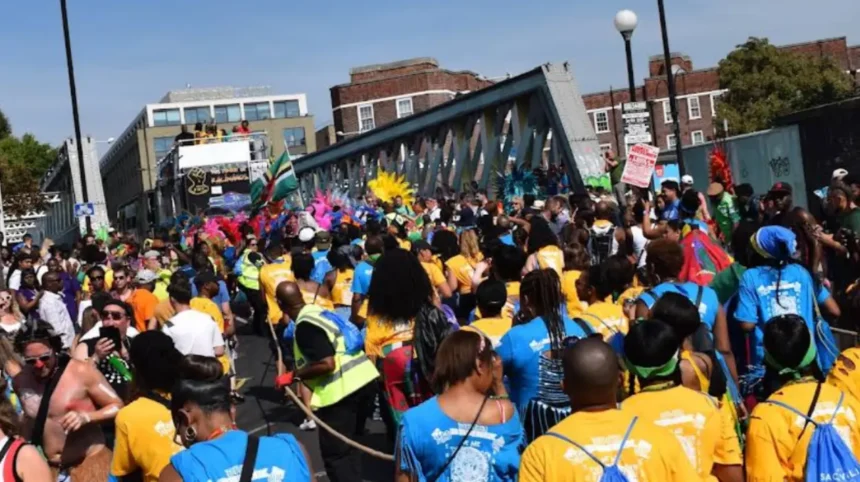
An estimated crowd of two million people attended the landmark 60th anniversary event, filling the streets with music sound systems, elaborate costumes, and procession floats across Sunday’s Family Day and Monday’s Adult Parade. The high volume of visitors required a significant law enforcement footprint throughout the festival boundaries.
Figures confirmed by the Metropolitan Police Service indicate that a total of 636 arrests were made across the entirety of the weekend. The statistics detail that:
- Sunday, August 30: Officers made 242 arrests as crowds gathered for the traditional Children’s Day parades and opening ceremonies.
- Monday, August 31: Officers made 394 arrests as the main adult parade and sound systems reached peak visitor capacity across the district.
Offences logged by police ranged from public order infractions and possession of offensive weapons to drug-related incidents and breaches of conditions set under local policing orders.
How Did Security Dynamics Compare to Previous Years?
While the grand total of 636 arrests represents a high overall volume of police interventions, representatives from the Metropolitan Police noted that the profile of offences shifted during this year’s event. Law enforcement officials highlighted a marked reduction in incidents involving serious violence when compared against historical data from previous years of the festival.
Police leadership credited enhanced operational planning, targeted stop-and-search procedures, and multi-agency coordination with local community stewards for disrupting potential conflicts before they escalated into serious violent incidents. Dedicated command units monitored high-density choke points and sound system locations using real-time surveillance to maintain order among the large crowds.
Background of the Particular Development
The Notting Hill Carnival originated in the mid-1960s as a community-led response to racial tensions, economic hardship, and the historic 1958 Notting Hill race riots. Established primarily by members of the British Caribbean community—most notably Trinidadian community activist Rhaune Laslett and steelpan pioneer Russell Henderson—the event initially began as a neighborhood street festival aimed at fostering cultural unity and celebrating West Indian traditions.
Over six decades, the event has expanded from a modest local gathering into one of the largest street festivals in the world, second in size only to Brazil’s Rio Carnival. The modern event encompasses live music stages, dozens of static sound systems, Caribbean food stalls, and an extensive parade route featuring steel drum bands and masquerade troupes (“mas bands”).
As the scale of the festival grew from thousands to millions of visitors, management of the event evolved into a complex operational challenge involving multiple public bodies, including:
- The Notting Hill Carnival Trust (and event organizers): Responsible for parade logistics, band routes, and cultural programming.
- The Metropolitan Police Service: Tasked with managing public safety, crowd control, and crime prevention across the carnival zone.
- Local Authorities: The Royal Borough of Kensington and Chelsea and the City of Westminster, who manage street trading licenses, traffic management, noise monitoring, and post-event waste collection.
The logistical impact on local infrastructure has historically been a topic of debate among community stakeholders, local residents, and municipal authorities. Waste management has remained one of the largest municipal expenses and operational hurdles associated with the carnival, requiring months of pre-planning to handle the sheer volume of rubbish generated within a compact residential area. Similarly, policing strategies have been continually modified over the decades to balance public safety with the celebration of the event’s cultural heritage.
Prediction: How This Development Can Affect Local Residents, Businesses, and Local Authorities
The combination of successful large-scale street management, significant waste removal metrics, and shifting crime profiles from the 60th anniversary edition is expected to influence future planning, policy decisions, and community relations across several specific groups:
1. Local Residents in Kensington, Chelsea, and Westminster
For residents living directly within or adjacent to the carnival perimeter, the rapid clearance of 300 tonnes of waste allows for a faster return to normal daily routines and restored access to residential streets. However, the recurring necessity for intensive clean-ups and high police presence will likely maintain ongoing debate regarding local quality-of-life impacts. Residents may advocate for further refinements in crowd control, noise boundaries, and early-morning sanitation schedules to minimize residential disruption during future bank holiday weekends.
2. Local Businesses and Commercial Operators
Retailers, restaurants, and venue operators within the event zone experience both significant economic opportunities and operational challenges during carnival weekend. The efficient clearing of street debris by Tuesday morning ensures that commercial premises can resume normal trading hours without prolonged disruption to deliveries or foot traffic. Evidence of reduced serious violence may also boost commercial confidence, encouraging more local businesses to stay open or participate directly in festival-related commerce in subsequent years rather than boarding up premises.
3. Municipal Councils and Taxpayers
The municipal response demonstrates the high cost and labor intensity required to support major street festivals. Local councils will evaluate the fiscal budget allocated to post-carnival street cleansing and public health services. Demonstrating efficient management of over 300 tonnes of rubbish helps justify the use of public funds for event operations, but local authorities will likely continue pressing event organizers and central government agencies for operational cost-sharing mechanisms to offset sanitation and infrastructure expenses.
4. Law Enforcement and Event Planning Committees
The contrast between high total arrest numbers and a reduction in serious violence will serve as a key case study for future Metropolitan Police operational strategies. Police planners are likely to refine existing tactical frameworks—such as targeted crowd monitoring, weapon sweeps, and dynamic perimeter management—for future iterations of the Notting Hill Carnival and other major public gatherings across London. This approach aims to maintain public safety while preserving the open, cultural nature of the celebration.