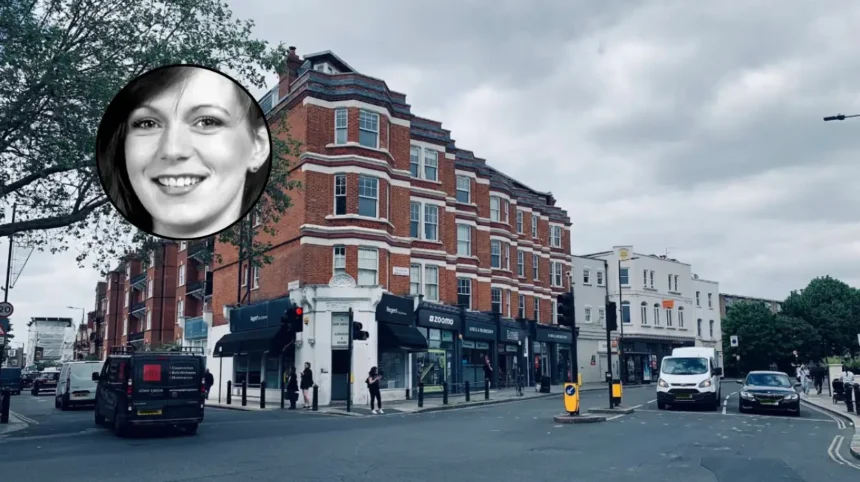
Key Points
- Cold case detectives say they remain “haunted” by the disappearance of Suzy Lamplugh four decades after she vanished.
- Suzy Lamplugh, aged 25, disappeared after leaving Sturgis and Sons in Fulham, west London, at 12.30pm on July 28 1986.
- The Metropolitan Police’s cold case homicide squad says its aim is still to “bring Suzy home”.
- Investigators say the inquiry is expected to move into an “inactive phase” in 12 months, although new information will still be followed up.
- Prime suspect John Cannan died in prison in November 2024, and police say there has still been no forensic evidence to link him to her disappearance.
Fulham (West London News) July 28, 2026 – Cold case detectives investigating the disappearance of Suzy Lamplugh say they remain “haunted” by the case as the 40th anniversary of her vanishing is marked and the investigation approaches an inactive phase within the next 12 months.
What happened to Suzy Lamplugh?
As reported by the Metropolitan Police cold case homicide squad, the 25-year-old estate agent left the office of Sturgis and Sons in Fulham at 12.30pm on July 28 1986 and was never seen again.
The case became one of the best-known missing persons investigations in the UK and has remained unresolved ever since.
According to reporting from LBC, Lamplugh had noted an appointment in her diary with a mysterious “Mr Kipper” at a property in Shorrolds Road, Fulham, on the day she vanished.
Her white Ford Fiesta was later found abandoned in Stevenage Road. She was declared presumed dead in 1993, with official reports later describing her as presumed murdered, although her body has never been found.
Why do detectives say the case still matters?
Detective Chief Inspector Teresa Foster, head of the Metropolitan Police cold case homicide squad, said the case continues to weigh on the team because Suzy has never been found.
As reported by LBC, Foster said it “haunts” her as the senior investigating officer, and that the force’s aim remains to bring Suzy home.
The Met has also said that in many other cases investigators at least know what happened to the victim, whereas this inquiry still lacks that final answer.
Foster also said the disappearance remains unusual within her team because of the lack of closure for the family and because no one has ever been charged in relation to the killing.
The Met has said that the case is still open, but that the inquiry will be moved into an inactive phase in 12 months, meaning detectives will no longer actively work the file while still following up any new information.
What evidence has police reviewed?
Police have said the inquiry is still using an old 1980s card index system, because officers believe crucial written information from the time may still be overlooked.
Investigators have also examined forensic evidence from the car, including adhesive tape taken from a seat headrest for mitochondrial DNA analysis in the US, but no profile was found.
A smudged fingerprint was also found on the rear-view mirror, but police have not identified who it belongs to.
The force has said no forensic evidence has ever been found linking John Cannan directly to Lamplugh’s disappearance. Police presented a file to prosecutors in 2002, but there was not enough evidence to charge him with her murder.
Who was the main suspect?
John Cannan was the prime suspect in the case, and he died in prison in November 2024 while serving a sentence for the 1987 abduction and murder of Bristol newlywed Shirley Banks.
Police have long believed he was responsible, but they have never secured a charge or a conviction for Lamplugh’s disappearance.
The BBC reported in November 2024 that detectives were still pursuing answers despite Cannan’s death, underlining that the case remained active at that stage.
The latest reporting now suggests the investigation is approaching a quieter phase, though officers say they will continue to act on any fresh evidence.
How has the family case developed over time?
The disappearance prompted one of the largest missing persons investigations in the UK, with the Met later carrying out repeated reviews and searches over the years.
Suzy Lamplugh was officially declared dead after being presumed murdered, yet the central question has never been answered: where her body is, and what exactly happened after she left her office that summer afternoon.
Reporting from earlier coverage also shows how long the case has remained in public view, with BBC material in 2016 noting that her father had already said he had “little hope” after a 30-year search.
More than 40 years later, detectives say they still hope that advances in technology, including forensic tools or AI, could eventually help resolve the case.
Explore More Fulham News
Labour Retains Hammersmith and Fulham Council in 2026 Vote
White City Councillors Face Engagement Claims in White City 2026
Why is the investigation moving to inactive phase?
The Metropolitan Police has said the inquiry will be moved into an inactive phase in 12 months because the case has reached a point where active day-to-day investigation is no longer sustainable without new leads. That does not mean the file is closed, but it does mean resources will be reduced and the team will no longer work it in the same way.
Officers say they will still review any credible new information and that they remain open to speaking with anyone who may have relevant knowledge.
According to the current reporting, the force believes the possibility of future breakthroughs remains, especially if new witnesses come forward or if forensic methods improve further.
Background of the development
Suzy Lamplugh disappeared on July 28 1986 after going to show a property in Fulham, and the case soon became one of the most closely followed missing-person investigations in Britain.
Over the years, police have carried out searches, reviewed evidence and considered several leads, but no body has been recovered and no one has been charged with her disappearance.
Her case has also stayed in the public eye because it touches on wider concerns about personal safety, missing persons investigations and the limits of older evidence when cases stretch across decades.
The latest comments from detectives show that, even after 40 years, the case remains unresolved and emotionally significant for those still working on it.
Prediction
For Suzy Lamplugh’s family and supporters, the move to an inactive phase is likely to mean less visible police activity, even though the case will not be formally forgotten.
For missing-persons campaigners and the wider public, the case may continue to be cited as an example of how long-running investigations depend on new information, modern forensic science and witness recall.
For journalists and the audience following true-crime or cold-case reporting, the development may also renew attention on unsolved historic disappearances and the challenges police face when key suspects are dead and physical evidence remains limited.