Key Points
- Sadiq Khan has launched a 10-year Clean Rivers and Waterways plan for London.
- The strategy aims to tackle sewage pollution, restore wildlife habitats, and open up riversides for public access.
- The Lower Crane Valley in Hounslow and Richmond is among ten key locations targeted across the capital.
- The River Brent catchment, which includes Hounslow, is also included in the west London focus areas.
- The plan is backed by £1.8 billion from partners over five years, with an additional £2.7 million pledged by the mayor over three years.
- The mayor wants to restore 550 hectares of waterway habitat and 80 kilometres of river over the next decade.
- The plan also includes measures to reintroduce native species, improve fish habitats, and create new walking routes.
- Khan said access to nature is an issue of social justice and linked the programme to wider environmental inequality in London.
Hounslow (West London News) July 30, 2026 – Sadiq Khan has launched a 10-year plan to clean up London’s rivers and waterways, with the Lower Crane Valley and the River Brent catchment among the west London sites expected to benefit from the strategy. The programme is designed to reduce sewage pollution, restore habitats, and improve access to riverside green space across the capital.
As reported by the London Standard, the mayor’s Clean Rivers and Waterways plan is being presented as one of the most ambitious urban waterway transformation programmes in the world, with more than 50 partners involved in shaping the work. The strategy targets ten key locations across London and places several projects directly in west London, including Hounslow.
The plan comes against a backdrop of long-term environmental decline in London’s waterways. According to the report, more than 600 kilometres of rivers and waterways across the city have suffered from decades of neglect and pollution, while five times more sewage flowed into London’s rivers in 2023 than in the previous year.
Which west London sites are included in the plan?
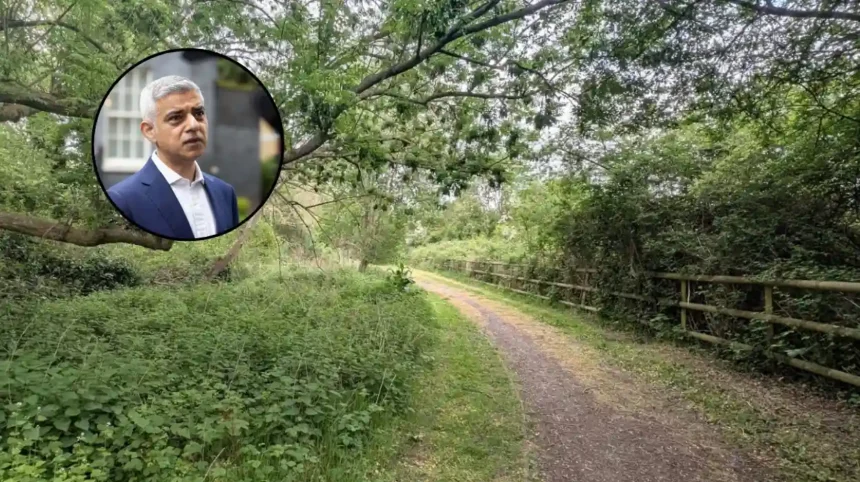
The Lower Crane Valley, which runs through Hounslow and Richmond, is one of the main sites named in the strategy. The report says a new 40km riverside trail will be created there, alongside work to restore the river closer to its natural state and improve habitats for local wildlife.
The River Brent catchment is also part of the west London section of the plan, covering Barnet, Brent, Harrow, Ealing and Hounslow. Work there will focus on fixing incorrectly plumbed pipes to reduce sewage pollution, while also creating new walking routes and habitat improvements within a proposed West London Regional Park and a marathon-length park spanning four boroughs.
The plan also includes the Grand Union Canal across Brent, Ealing and fulham/hammersmith/">Hammersmith & Fulham, where towpath upgrades and waterside regeneration are planned. Another west London target is Yeading Brook in Harrow and Hillingdon, where a rewilding programme is intended to restore the brook to a more biodiverse condition.
How much funding has been pledged?
The strategy is backed by £1.8 billion from partners over the next five years, according to the report. Khan has also pledged an extra £2.7 million over three years, adding to his existing £13.55 million commitment for capital waterway projects.
A further £1.25 million will support linked green and blue spaces along the River Wandle, Grand Union Canal, Lower Lea, Royal Docks and Lower Roding. Another £1.48 million is being directed to two large-scale rewilding projects in Hillingdon and Redbridge.
The wider ambition is to stop sewage pollution, carry out regular water testing, restore 550 hectares of habitat and 80 kilometres of river, and bring back native species such as water voles and beavers where conditions allow. The mayor also wants to expand walking routes and deliver swimmable waterways where that can be done safely.
Why is the mayor linking rivers to social justice?
As reported by the London Standard, Khan said the city’s rivers have been neglected, polluted or cut off from nearby communities for too long. He said habitats for species including otters, kingfishers, water voles and fish have been damaged by sewage, road runoff, litter and years of underinvestment.
Khan also described access to nature as an issue of social justice. He said communities already facing environmental inequality have felt the impact most sharply, and argued that restoring waterways would help Londoners reconnect with nature and enjoy cleaner public spaces.
What happens next for Hounslow rivers?
The plan is intended to deliver both immediate and long-term change across London’s waterways, with Hounslow positioned as part of the west London corridor for improvement. In practical terms, that means river restoration, path building, habitat work and pollution reduction could all affect how local residents use and experience the Lower Crane Valley and nearby stretches of the River Brent.
The London Standard said the programme aims to create lasting change over the next decade, rather than short-term clean-up work. The first phase will focus on delivery through partner organisations, boroughs, charities and water companies already involved in the scheme.
Explore More Hounslow News
Hounslow Council Lampton Group Profit Sparks Debt Concerns 2026
Lynne Weedon Murder: Hounslow Cold Case, 2026
Background of this development
London’s rivers have been under pressure for decades from sewage overflows, pollution, runoff and fragmented access, with many stretches cut off from the public and from wildlife recovery. The mayor’s new plan builds on earlier restoration efforts and seeks to coordinate councils, utilities and community groups around a city-wide approach to blue and green infrastructure.
In west London, the Lower Crane Valley and River Brent have already been part of environmental and access schemes, including work supported by the mayor’s previous Green Roots fund. This new strategy expands that model into a broader 10-year framework covering habitat recovery, access routes and pollution control.
Prediction for local residents
For people living in Hounslow, the plan could mean better access to riverside walking routes, improved local green space and a gradual reduction in visible pollution if the work is carried through as planned. Residents who use the Lower Crane Valley, River Brent corridors and nearby waterways may also see more habitat restoration and more coordinated maintenance over time.
For families, walkers, cyclists and local community groups, the main effect is likely to be improved public amenity and stronger links between neighbourhoods and open space. For wildlife and environmental groups, the success of the plan will depend on whether funding, enforcement and cross-agency delivery match the scale of the ambition.