Parks and green spaces in West London include over 100 public parks, commons, gardens, and conservation areas across boroughs such as Richmond upon Thames, Ealing, Hammersmith and Fulham, Hounslow, Brent, and Kensington and Chelsea. These spaces range from UNESCO World Heritage Sites like Kew Gardens to Royal Parks such as Richmond Park and Bushy Park, plus smaller local parks, commons, and gardens managed by local councils and organisations like The Royal Parks and the Royal Botanic Gardens, Kew.
- What are the main types of parks and green spaces in West London?
- Which parks in West London are the largest and most significant?
- Where can visitors see deer and other wildlife in West London parks?
- What historical significance do West London parks hold?
- What recreational facilities and activities are available in West London parks?
- How are West London parks managed and funded?
- What biodiversity and conservation roles do West London parks serve?
- How can residents and visitors access parks and green spaces in West London?
West London holds some of the capital’s most significant green infrastructure, with large historic parks, biodiversity-rich commons, and carefully maintained gardens forming a dense network of accessible outdoor space. The area’s parks support recreation, wildlife conservation, cultural heritage, and community events, while also contributing to air quality, urban cooling, and flood management across the Thames basin.
What are the main types of parks and green spaces in West London?
West London’s parks and green spaces fall into distinct categories including Royal Parks, botanic gardens, borough-managed public parks, commons and heaths, historic estate gardens, and smaller pocket parks and recreation grounds. Each type serves different functions, from large-scale nature conservation and heritage tourism to local sports, children’s play, and everyday walking routes for residents.
Royal Parks represent the largest and most historically significant category. Richmond Park (approximately 2,500 acres or 1,012 hectares) and Bushy Park (about 1,100 acres or 445 hectares) are both Royal Parks managed by The Royal Parks charity, featuring free-roaming deer herds, ancient woodlands, and protected landscapes. These parks originated as royal hunting grounds and retain statutory protection and heritage designations.
Botanic gardens include Kew Gardens (Royal Botanic Gardens, Kew), a 326-acre UNESCO World Heritage Site with over 50,000 living plant taxa, and Chelsea Physic Garden, a four-acre site established in 1673 by the Worshipful Society of Apothecaries, holding around 5,000 medicinal and edible plant species. Both operate as research and education centres alongside public visitor attractions.
Borough-managed public parks form the largest group by number. Examples include Ravenscourt Park (13 hectares), Gunnersbury Park (70 hectares), Walpole Park (28 acres), Ealing Common (47–48 acres), Wormwood Scrubs (67 hectares), and Bishops Park in Fulham. These spaces provide sports pitches, playgrounds, cafés, and event spaces, funded and maintained by local authorities such as hammersmith-and-fulham/">Hammersmith and Fulham Council, Ealing Council, and Hounslow Council.
Commons and heaths include Wimbledon Common, Wormwood Scrubs, Ealing Common, and Acton Common, which often retain historic open-access rights and support diverse grassland and heathland habitats. Historic estate gardens such as Chiswick House and Gardens, Syon Park, and Holland Park blend designed landscapes with public access, featuring classical architecture, walled gardens, and museum buildings.
Pocket parks and recreation grounds include smaller sites like Cathnor Park, Lille Road Recreation Ground, and numerous garden squares in Kensington and Chelsea, offering local green space within dense urban neighbourhoods.
Which parks in West London are the largest and most significant?
The largest and most significant parks in West London are Richmond Park, Bushy Park, Kew Gardens, Syon Park, and Wormwood Scrubs, each exceeding 200 acres and holding national or international heritage status. These parks combine extensive landscapes with biodiversity value, historic buildings, and high visitor numbers, making them key destinations for both Londoners and tourists.
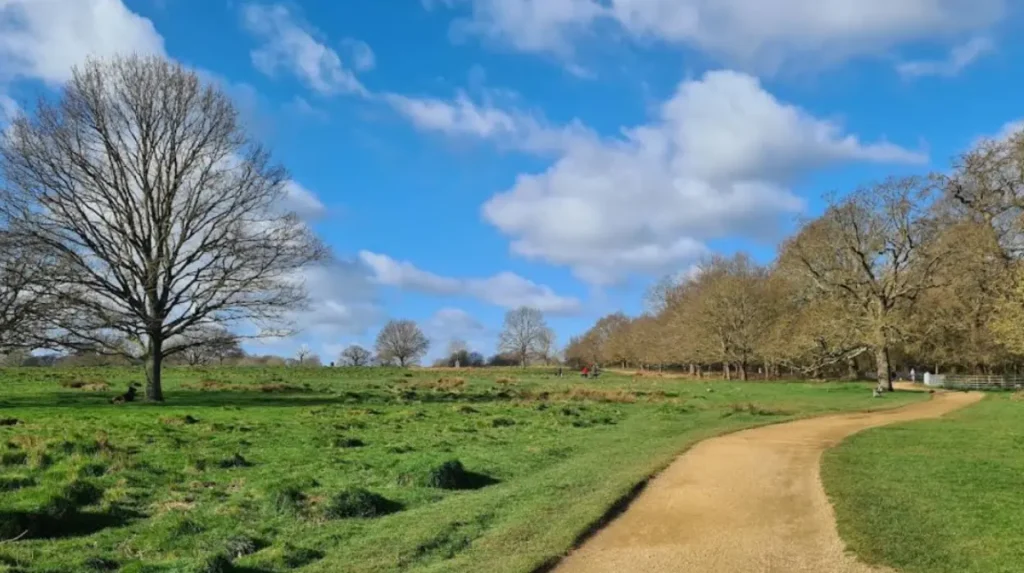
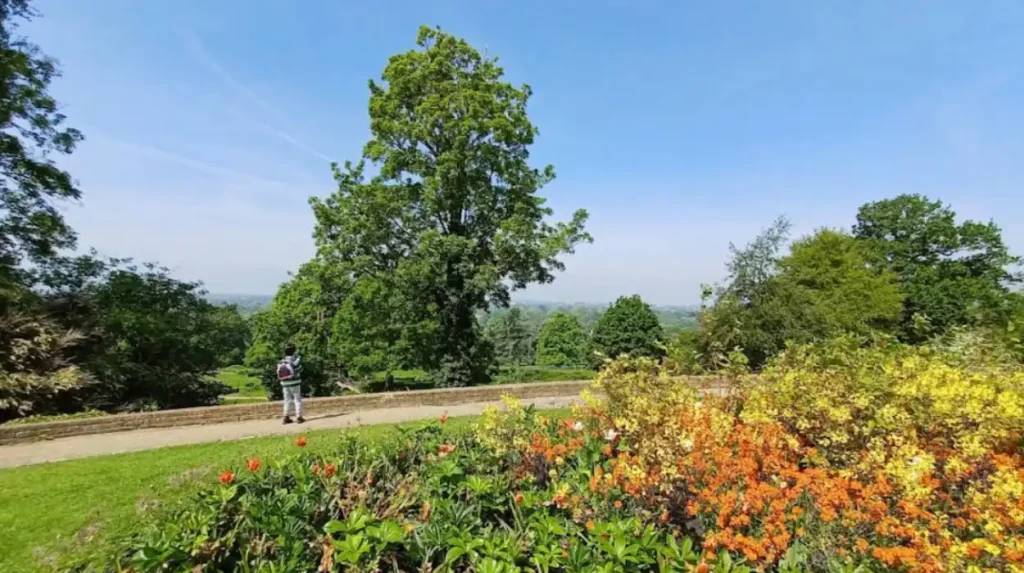
Richmond Park is the largest Royal Park in London, covering approximately 2,500 acres (1,012 hectares) of grassland, ancient oak woodlands, and ponds. It holds National Nature Reserve status and supports two herds of red and fallow deer, plus rare acid grassland and invertebrate habitats. Key features include King Henry’s Mound, offering a protected vista to St Paul’s Cathedral, and the Isabella Plantation, a 40-acre woodland garden with azaleas, rhododendrons, and ornamental trees.
Bushy Park, located near Hampton Court Palace, spans around 1,100 acres (445 hectares) and also holds National Nature Reserve and Grade I heritage designations. It features the Longford River, constructed in the 1630s for Charles I, Chestnut Avenue designed by Sir Christopher Wren, and herds of red and fallow deer. The park’s Diana Fountain and formal water gardens add Baroque landscape elements.
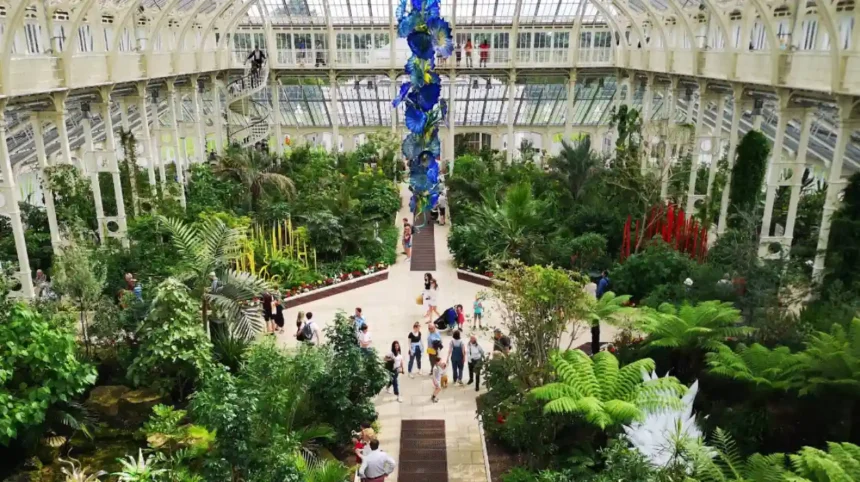
Kew Gardens (Royal Botanic Gardens, Kew) covers 326 acres (132 hectares) along the Thames in Richmond upon Thames. It holds UNESCO World Heritage status and contains over 50,000 living plants, historic glasshouses including the Palm House and Temperate House, and major scientific collections used for global plant research and conservation.
Syon Park, the London seat of the Duke of Northumberland, extends over 200 acres of parkland and gardens in Brentford. Its history dates to a 16th-century abbey site, with Capability Brown-designed landscapes, an arboretum, lakes, and a butterfly house. The estate remains in the Percy family for over 400 years.
Wormwood Scrubs, in Acton, covers 67 hectares (165 acres) and functions as a large open space with sports pitches, nature areas, and walking routes. It supports grassland flora and invertebrates, and hosts local football, rugby, and community events.
Where can visitors see deer and other wildlife in West London parks?
Visitors can see deer and other wildlife primarily in Richmond Park, Bushy Park, and selected smaller parks such as Brent Lodge Park and Golders Hill Park, where free-roaming deer herds, mini-zoos, and protected habitats support regular wildlife encounters. These parks maintain specific conservation measures and visitor guidance to protect animals while allowing public access.
Richmond Park supports around 630 red and fallow deer, managed by The Royal Parks with seasonal culling and veterinary care. Deer are most visible at dawn and dusk, particularly around open grassland and woodland edges. Visitors must keep at least 50 metres from deer, avoid feeding them, and take extra care during the autumn rut (September–November) and May–June birthing season, when deer can be aggressive or protective.
Bushy Park also maintains herds of red and fallow deer, with similar access and safety guidelines. Deer graze across open lawns and woodland areas, and the park’s status as a Site of Special Scientific Interest (SSSI) protects associated flora and fauna, including rare invertebrates and ancient trees.
Brent Lodge Park, known locally as “Bunny Park,” features a small animal centre with flamingos, meerkats, lemurs, capybaras, and baby goats, plus a millennium maze and children’s play areas. Golders Hill Park, near Hampstead Heath, includes a small zoo with donkeys, lemurs, kookaburras, and other animals, plus a stumpery (log garden) and ornamental ponds.
Other parks support wildlife through habitat management rather than large mammals. Bishops Park in Fulham is designated as a local nature reserve, supporting stag beetles, bats, and riparian species along the Thames. Ravenscourt Park, Ealing Common, and Walpole Park maintain ponds, meadows, and woodland edges that attract birds, amphibians, and invertebrates, with interpretive signage and occasional wildlife walks organised by local councils and friends’ groups.
What historical significance do West London parks hold?
West London parks hold historical significance as former royal hunting grounds, aristocratic estates, Victorian public health projects, and sites of architectural and landscape design innovation, with origins spanning from the 16th to the 20th centuries. Many parks preserve listed buildings, historic vistas, and designed landscapes that reflect broader social, political, and cultural changes in London.
Richmond Park was enclosed by Charles I in 1637 as a royal deer park, and later opened to the public under the Parks Regulation Act 1872. Its boundaries, ancient oak trees, and King Henry’s Mound vista are legally protected, and the park’s landscape influenced 18th-century English garden design.
Bushy Park’s Longford River (1630s) supplied water to Hampton Court Palace, and Chestnut Avenue (late 17th century) exemplifies Baroque landscape planning. The park’s formal water gardens and Diana Fountain reflect Stuart and later royal patronage.
Kew Gardens began as a private exotic garden in the 17th century, expanding under Princess Augusta and George III in the 1700s, with Kew Palace, the Orangery, and early glasshouses forming a royal botanical collection. It became a public institution in 1840 and a UNESCO World Heritage Site in 2003, recognised for its role in global plant science and empire.
Chiswick House and Gardens, developed by the 3rd Earl of Burlington and architect William Kent in the 1720s–1730s, is a founding site of the English Landscape Movement. Its Palladian villa, classical statues, ha-has, and serpentine paths influenced later parks across Europe.
Holland Park centres on the ruins of Holland House, a Jacobean mansion damaged in the Blitz, with the Kyoto Garden (gifted in 1959) and open-air theatre adding 20th-century cultural layers.
Gunnersbury Park’s mansion dates to the 18th century, and the park was donated by the Rothschild family, opening in 1926 with Neville Chamberlain presiding. Walpole Park’s Pitzhanger Manor was designed by Sir John Soane in the early 1800s and restored in the 2010s, preserving Regency architecture and landscape features.
Smaller parks also hold local historical value. Ravenscourt Park’s lake formed part of a medieval manor moat, and the estate was landscaped by Humphry Repton in the early 19th century. Cathnor Park opened in 1973 on a former World War II bomb site, representing post-war redevelopment and community green space creation.
What recreational facilities and activities are available in West London parks?
West London parks offer extensive recreational facilities including sports pitches, tennis and basketball courts, outdoor gyms, playgrounds, paddling pools, cafés, and organised activities such as parkrun, yoga classes, and community events. These amenities support daily exercise, family leisure, and social interaction across all age groups.
Sports facilities are widespread. Gunnersbury Park features a modern sports hub with cricket squares, tennis courts, football pitches, and a 3.7km circular walking route. Ravenscourt Park includes tennis and basketball courts, a paddling pool, children’s beach area in summer, and a tea house. Pitshanger Park offers eight tennis courts, six netball courts, a 3G football pitch, outdoor gym equipment, and regular 5K run clubs.
Play facilities are a priority in many parks. Brent Lodge Park has multiple playgrounds, a millennium maze, and an animal centre. Walpole Park’s playground includes waterplay features, and Ravenscourt Park has four play areas for different age groups plus a sandpit. Bishops Park features an urban beach area, splash pad, and sports courts.
Cafés and hospitality venues operate in numerous parks. Gunnersbury Park, Ravenscourt Park, Kew Gardens, Richmond Park (Pembroke Lodge and other kiosks), and Holland Park all host cafés or tearooms, supporting longer visits and social gatherings.
Organised activities include weekly parkrun events in Richmond Park, Bushy Park, and other large parks, plus outdoor theatre and opera in Holland Park during summer, and seasonal events such as funfairs and cultural festivals on Ealing Common. Canal towpaths and the Thames Path provide linear routes for walking and cycling, linking parks and neighbourhoods across West London.
How are West London parks managed and funded?
West London parks are managed and funded through a mix of local authority budgets, dedicated charities such as The Royal Parks, national bodies like the Royal Botanic Gardens, Kew, and community groups, with additional income from events, concessions, and grants. This multi-source model supports maintenance, conservation, and public programming across different park types.
Royal Parks, including Richmond Park and Bushy Park, are managed by The Royal Parks, a charity established in 2017 that receives partial government funding alongside commercial income from events, catering, and donations. The charity is responsible for biodiversity management, heritage conservation, and public safety across eight Royal Parks.
Kew Gardens operates as an independent non-departmental public body sponsored by the Department for Environment, Food and Rural Affairs (DEFRA), with income from admissions, memberships, research grants, and commercial activities. Chelsea Physic Garden is managed by the Worshipful Society of Apothecaries, funded through admissions, events, and charitable support.
Borough-managed parks such as Ravenscourt, Gunnersbury, Walpole, and Ealing Common are funded primarily through local council tax and business rates, with additional support from Friends of Parks groups, Heritage Lottery Fund grants, and developer contributions via planning agreements. Councils employ park rangers, horticultural teams, and maintenance contractors, and many parks have adopted management plans aligned with the Green Flag Award scheme, which recognises well-maintained and accessible green spaces.
Community involvement is significant. Volunteer groups support litter picking, biodiversity monitoring, and event organisation in parks such as Wormwood Scrubs, Acton Park, and Southall Park. Public consultations and park forums allow residents to influence priorities for play equipment, sports facilities, and landscaping.
Explore More Area Guide
Weekend Activities in West London: Parks, Museums, Markets and More
Uncover Top Secret Historic Sites and Parks in West London
What biodiversity and conservation roles do West London parks serve?
West London parks serve critical biodiversity and conservation roles by protecting ancient woodlands, acid grasslands, riparian habitats, and rare invertebrate populations, with several sites designated as National Nature Reserves, Sites of Special Scientific Interest, or local nature reserves. These designations require specific management plans to maintain and enhance ecological value.
Richmond Park holds National Nature Reserve and SSSI status, supporting one of the largest expanses of lowland acid grassland in Greater London, plus ancient oak trees that host rare beetles, fungi, and lichens. Deer grazing maintains open grassland structure, while woodland areas provide deadwood habitats for invertebrates and nesting birds.
Bushy Park is also an SSSI and National Nature Reserve, with similar grassland and invertebrate communities, plus the Longford River and ornamental ponds supporting aquatic species.
Kew Gardens maintains globally significant plant collections, seed banking via the Millennium Seed Bank, and research programmes on plant conservation, climate change, and sustainable agriculture. Its living collections include threatened species from around the world, and its glasshouses recreate tropical and temperate ecosystems for conservation and education.
Bishops Park in Fulham is designated as a local nature reserve, supporting stag beetles (a UK Biodiversity Action Plan species), bats, and riverside vegetation along the Thames. Wormwood Scrubs and Ealing Common support grassland flora, including wildflowers and pollinators, and are managed through reduced mowing regimes and habitat creation projects.
Local councils and conservation groups implement biodiversity action plans across parks, including tree planting, pond restoration, wildflower meadow creation, and invasive species control. These efforts contribute to London’s Urban Greening Factor and Biodiversity Net Gain policies, which require new developments to enhance green infrastructure.
How can residents and visitors access parks and green spaces in West London?
Residents and visitors access West London parks via public transport including London Underground, Overground, National Rail, and bus services, plus walking and cycling routes along canal towpaths and the Thames Path, with most parks offering free entry and open access from dawn to dusk. Larger attractions such as Kew Gardens and Chelsea Physic Garden charge admission but provide discounted and free entry for local residents, members, and specific groups.
Royal Parks and borough-managed parks are free to enter and generally open from early morning until dusk, with some facilities such as cafés and sports centres operating specific hours. Richmond Park is accessible via Richmond, Kingston, and Putney stations, plus numerous bus routes; Bushy Park is served by Hampton Wick, Teddington, and Hampton Court stations.
Kew Gardens is a short walk from Kew Gardens station (District Line and London Overground), with paid entry except for local residents holding a Kew Gardens Local Resident Pass. Chelsea Physic Garden is accessible via Chelsea and South Kensington stations, with ticketed entry and seasonal opening times.
Canal towpaths (Regent’s Canal, Grand Union Canal) and the Thames Path provide continuous walking and cycling routes linking parks such as Ravenscourt, Bishops Park, and Brent Lodge Park, supporting active travel and recreation without motor traffic. Many parks include cycle parking, accessible paths, and step-free access points, and local councils publish accessibility guides for parks with varied terrain.
Community events, parkrun gatherings, and seasonal festivals further increase access and usage, with information available via council websites, park noticeboards, and social media channels.
What are the best parks and green spaces in West London?
The best parks and green spaces in West London include Richmond Park, Bushy Park, Kew Gardens, Holland Park, Gunnersbury Park, Chiswick House and Gardens, Walpole Park, Ravenscourt Park, Bishops Park, and Wormwood Scrubs.