Key Points
- Hottest Day Recorded: Central England experienced severe wildfires as temperatures soared across the UK, marking the warmest day of the year so far.
- Significant Damage in West Midlands: Multiple houses were destroyed by spreading wildfires, leading fire officials to label the situation one of the most critical in the region’s history.
- Hospitalisations Reported: A child and three firefighters were transported to hospital for treatment following an intense blaze in Stourbridge.
- Emergency Response Mobilised: Chief Fire Officer Simon Tuhill and West Midlands Mayor Richard Parker confirmed a large-scale emergency response to manage the fast-moving, widespread incidents.
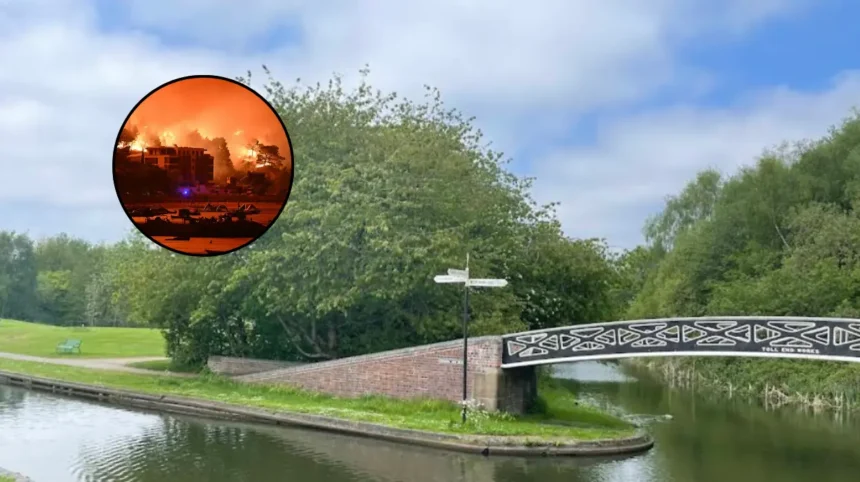
London, UK (West London News) August 15, 2026 — Emergency service crews were deployed in full force across central England on Friday as firefighters worked to contain multiple major wildfires during the UK’s hottest day of the year. The surge in temperatures, part of an intense heatwave affecting broad swathes of Europe, triggered fast-moving blazes across the West Midlands that destroyed several residential properties and required extensive emergency resources. Local authorities confirmed that a child and three firefighters were admitted to hospital following a particularly severe fire in the town of Stourbridge, highlighting the scale and immediate physical risk posed by the conditions.
What caused the emergency deployment across the West Midlands?
The rapid escalation of the wildfires followed a period of extreme heat that dried out vegetation and created highly flammable conditions throughout central England. As temperatures reached record peaks for the year, multiple blazes broke out nearly simultaneously, forcing local fire departments to operate at maximum capacity. The combination of high ambient temperatures, low humidity, and variable wind speeds accelerated the flame spread through residential edges and open green spaces, quickly overwhelming initial containment lines and threatening domestic structures.
How severe was the impact on local communities and emergency personnel?
The physical impact of the blazes was most pronounced in residential areas of the West Midlands, where several houses were reduced to rubble as flames jumped from nearby vegetation to property boundaries. In Stourbridge, emergency medical services were called to treat multiple casualties directly affected by the fire front. A child sustained injuries requiring hospital admission, while three responding firefighters were also taken to medical facilities after encountering hazardous conditions on the front line. Chief Fire Officer Simon Tuhill stated that the outbreak represents one of the most significant incidents the region’s fire service has ever dealt with, reflecting both the operational strain and the sheer spatial extent of the fires. West Midlands Mayor Richard Parker reinforced the gravity of the emergency, describing the widespread blazes across the region as an extremely worrying and fast-moving situation that required continuous coordination between local councils, health services, and fire brigades.
Background of the particular development
Wildfire threats in the United Kingdom have historically been limited in scope, but prolonged heatwaves during summer periods have increased both the frequency and intensity of rural and semi-urban blazes. Over recent years, regional fire services across central and southern England have increasingly had to adapt operational strategies to manage wildfires that encroach directly upon inhabited suburbs. Severe heat events dry out ground cover, heathland, and residential gardens, turning everyday vegetation into potential fuel source lines. The simultaneous outbreak of multiple fires across a single region tests emergency manpower, water supply logistics, and regional coordination protocols, prompting ongoing discussions regarding resource allocation and climate adaptation strategies for municipal services.
Explore More UK News
UK Economy Grows 0.4% Meeting Second Quarter Forecasts London 2026
London Witnessed Deepest Solar Eclipse Since 1999: Details and Timings London 2026
Prediction: How will this development affect local residents and emergency services?
For local residents in the West Midlands and similar regions across central England, this development points toward heightened seasonal precautions, potential property insurance adjustments, and increased awareness regarding fire safety in residential areas bordering open land. Communities may face stricter local regulations regarding open flames, garden burn-offs, and water usage during heat spikes to reduce accidental ignition risks.
For emergency services and municipal authorities, the scale of this incident is likely to prompt structural reviews of wildfire response protocols, resource distribution, and specialized equipment provisions. Fire brigades may reallocate budgets toward enhanced wildland firefighting gear, improved inter-agency communication infrastructure, and targeted training for urban-wildland interface blazes. Local councils may also be pressed to implement proactive vegetation management and clear defensive buffer zones near housing developments to mitigate future risks during extreme heat events.