West London has some of the strongest transport connections into central London. Railways, the London Underground, the Elizabeth line, buses, cycling routes, taxis and airport services link districts such as Ealing, fulham/hammersmith/">Hammersmith, hounslow/chiswick/">Chiswick, Hounslow and Richmond with central destinations.
- What are the main travel connections from West London to central London?
- How does the Elizabeth line connect West London with central London?
- Which London Underground lines are useful for travelling from West London?
- How does Paddington connect West London with the rest of London?
- How can travellers reach central London from Heathrow Airport?
- How do buses connect West London with central London?
- How do fares and contactless payments work for West London journeys?
- Which central London stations are most useful for West London travellers?
- How should visitors choose the best route from West London?
- How has West London’s connection with central London developed historically?
- What should travellers know about future travel connections from West London?
For visitors, commuters and residents, understanding these connections makes journeys more predictable. The most useful interchange points include Paddington, Bond Street, Tottenham Court Road, Oxford Circus, Victoria, Waterloo, Farringdon and Liverpool Street.
The transport network is also historically significant. London’s first underground railway opened in 1863 between Paddington and Farringdon. The modern network now combines Underground, National Rail, Elizabeth line, London Overground, buses and other services.
What are the main travel connections from West London to central London?
West London connects with central London through the Elizabeth line, London Underground, National Rail, buses and road services. Major routes link Ealing, Acton, Hammersmith, Chiswick and Heathrow with Paddington, Bond Street, Oxford Circus, Victoria and other central destinations.
West London covers a large geographical area. Transport options therefore differ between neighbourhoods.
Ealing and Acton benefit particularly from the Elizabeth line and Central line. Hammersmith has Piccadilly, District, Hammersmith & City and Circle line connections. Chiswick has District line and National Rail access. Hounslow connects to central London through the Piccadilly line and other rail and bus services.
Paddington is one of the most important gateways for West London. It provides National Rail, Elizabeth line, Bakerloo, Circle, District and Hammersmith & City line connections. National Rail identifies Paddington as a Zone 1 station and a major hub for services towards Heathrow, Reading, Bristol, Bath, Oxford, Cardiff and other destinations.
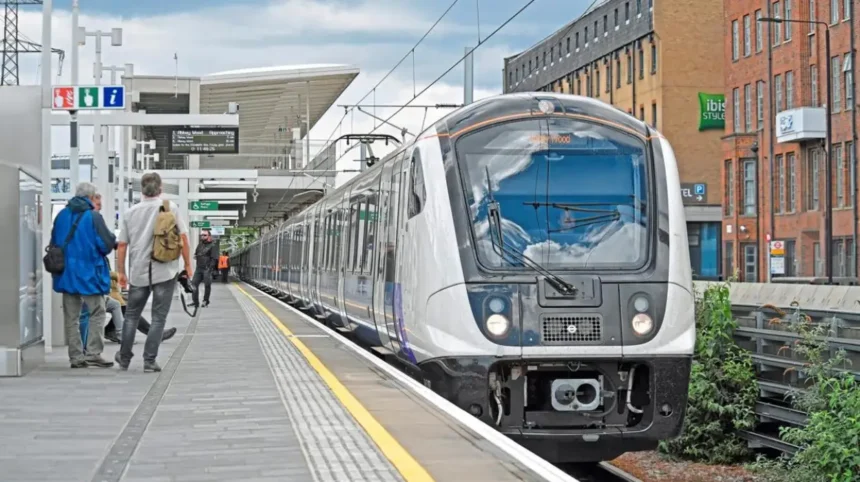
The Elizabeth line has strengthened these connections significantly. Its route includes Ealing Broadway, West Ealing, Hanwell, Southall and Hayes & Harlington before reaching Heathrow and continuing into central London.
For travellers, the best route depends on the starting district and final destination. A passenger heading from Ealing Broadway to the West End has different requirements from someone travelling from Hounslow to King’s Cross or from Richmond to Westminster.
The key principle is to identify the nearest fast rail or Underground station and then select the service that reaches the required central London area with the fewest unnecessary changes.
How does the Elizabeth line connect West London with central London?
The Elizabeth line provides a direct east-west railway through West London and central London. Stations including Ealing Broadway and West Ealing connect with Paddington, Bond Street, Tottenham Court Road, Farringdon and Liverpool Street before continuing east.
The Elizabeth line is a high-capacity railway operated as part of the Transport for London network. It opened its central section on 24 May 2022. Full through services developed during 2022 and 2023, connecting Reading and Heathrow in the west with Shenfield and Abbey Wood in the east.
For West London, the route is especially important because it reduces the need for passengers to travel first to a traditional terminal such as Paddington before entering central London.
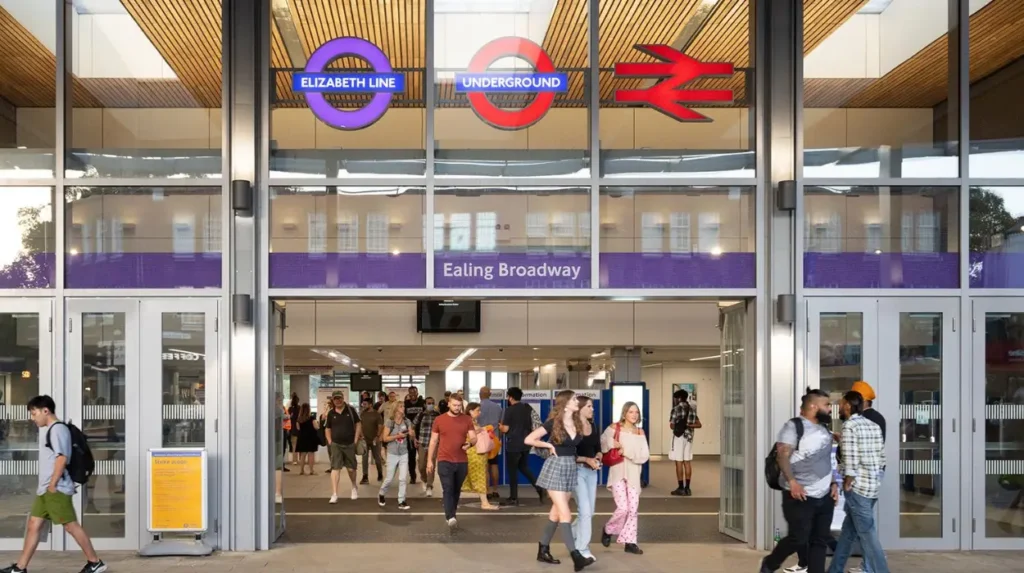
Ealing Broadway is a major interchange. It connects the Elizabeth line with National Rail and the Central and District lines. West Ealing provides another Elizabeth line and National Rail connection. Hanwell, Southall and Hayes & Harlington extend the route further west.
Inside central London, the Elizabeth line provides access to important destinations including Paddington, Bond Street, Tottenham Court Road, Farringdon and Liverpool Street. Heathrow Airport also has direct Elizabeth line services into London.
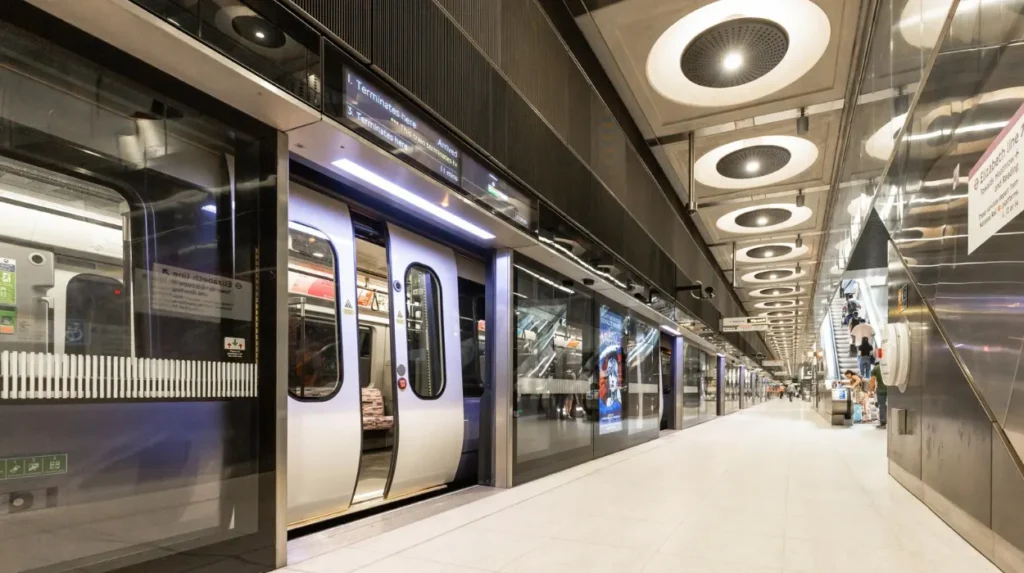
The line is particularly useful for visitors carrying luggage. Its trains and stations were designed as part of the Crossrail programme, with spacious trains and modern stations forming a major addition to London’s transport infrastructure.
The Department for Transport stated at opening that the Elizabeth line was designed to increase central London rail capacity by 10%. The government also reported that the project received substantial public investment and supported employment during construction.
The railway quickly attracted high passenger numbers. TfL reported more than 100 million journeys by February 2023, with approximately 600,000 journeys per day at that stage.
For West London passengers, this demonstrates the importance of the Elizabeth line as a permanent part of London’s east-west transport structure.
Which West London stations are most useful on the Elizabeth line?
Ealing Broadway is the principal Elizabeth line interchange for much of Ealing. It also provides access to the Central and District lines and National Rail services.
West Ealing serves the local residential area and provides National Rail interchange.
Hanwell provides Elizabeth line access for passengers in the Hanwell area.
Southall connects a densely populated West London district directly with the central railway.
Hayes & Harlington serves Hayes and surrounding communities and provides connections towards Heathrow and central London.
These stations create a continuous transport corridor between suburban West London and the centre.
Which London Underground lines are useful for travelling from West London?
The Piccadilly, District, Central, Circle and Hammersmith & City lines provide the principal Underground connections from West London. Their routes serve destinations such as Hammersmith, South Kensington, Paddington, Oxford Circus, Leicester Square, Piccadilly Circus and Westminster.
The London Underground remains one of the most important transport systems for West London. It is also historically significant. The first underground railway opened in 1863 between Paddington and Farringdon, establishing a transport connection that helped reshape London’s growth.
The District line is particularly important for Hammersmith, Chiswick and Richmond. It provides access towards central locations such as South Kensington, Westminster and Embankment.
The Piccadilly line provides a direct connection from Hounslow and surrounding West London districts towards central destinations. Its central stations include Leicester Square and Piccadilly Circus. Heathrow also sits on the Piccadilly line.
The Central line serves Ealing Broadway and provides direct access towards central destinations including Oxford Circus and the City.
Hammersmith provides an important interchange between several Underground services. Passengers can use the District and Piccadilly lines, while the Hammersmith & City and Circle lines serve the nearby Hammersmith station.
Paddington provides another major interchange. The station is served by the Bakerloo, Circle, District and Hammersmith & City lines, alongside National Rail and Elizabeth line services.
This combination makes Paddington particularly useful for journeys where passengers need to switch between West London rail services and the central Underground network.
The Underground also provides access to major cultural, commercial and tourist districts. Visitors travelling from West London can reach the West End, Westminster, South Kensington and other central districts without relying on road transport.
How does Paddington connect West London with the rest of London?
Paddington is a major Zone 1 interchange linking West London with central London, Heathrow and destinations across southern and western England. It combines National Rail, Elizabeth line, Heathrow Express, Bakerloo, Circle, District and Hammersmith & City services.
Paddington is one of the most important transport hubs for West London. The station sits in the City of Westminster and is classified as a Zone 1 station.
Its National Rail services include Great Western Railway routes towards destinations such as Reading, Oxford, Bath, Bristol, Cardiff and Exeter. The station also provides Heathrow Express and Elizabeth line services.
For travellers from West London, Paddington is important for two reasons.
First, it provides access to central London. Second, it provides connections beyond London.
The Heathrow Express provides a direct connection between Heathrow and Paddington. Heathrow Airport states that the service takes 15 minutes between Heathrow and Paddington, with trains running every 15 minutes.
The Elizabeth line provides another Heathrow connection. Heathrow states that journeys between Heathrow and central London take under 40 minutes on the Elizabeth line.
Paddington also has direct Underground connections. This means a traveller arriving by National Rail can continue towards different parts of central London without leaving the transport network.
The station’s location also makes it useful for destinations around Hyde Park, Bayswater, Marble Arch and the West End.
For West London residents, Paddington is therefore more than a railway terminus. It is an interchange between suburban rail, airport transport and the central London transport network.
How can travellers reach central London from Heathrow Airport?
Heathrow Airport connects with central London through the Elizabeth line, Piccadilly line, Heathrow Express, coaches, buses and taxis. Heathrow Express reaches Paddington in 15 minutes, while the Elizabeth line and Piccadilly line provide wider central London access.
Heathrow Airport is located in West London and is one of the area’s most important transport generators. Its location means airport connections are also major routes into central London.
The Heathrow Express is the fastest dedicated rail option to Paddington. Heathrow states that trains operate every 15 minutes and connect all terminals with Paddington.
The Elizabeth line provides a broader central London connection. Passengers can travel directly towards Paddington, Bond Street, Tottenham Court Road, Farringdon and Liverpool Street.
The Piccadilly line is the traditional Underground connection. It serves Heathrow’s terminals and continues through central London. Heathrow describes it as the most affordable of its main rail options. The route serves central stations including King’s Cross St Pancras, Leicester Square and Piccadilly Circus.
Heathrow also has coach connections to Victoria Coach Station and other destinations. Taxis and private hire services provide door-to-door journeys, although road journey times depend heavily on traffic. Heathrow advises allowing at least an hour for a car journey to central London.
The choice of service therefore depends on the destination.
Paddington is best suited to travellers heading towards the western side of central London or connecting with Great Western Railway.
Bond Street and Tottenham Court Road are useful for the West End.
Farringdon provides access to London’s wider rail network and connections towards areas such as St Pancras and the City.
Leicester Square and Piccadilly Circus are useful for visitors travelling directly to central entertainment and shopping districts.
How do buses connect West London with central London?
London buses provide extensive local connections between West London neighbourhoods and Underground or rail stations. They are particularly useful for short journeys, station access and areas without direct rail services, with contactless and Oyster payment available across the network.
Buses form the local layer of West London’s transport network. They connect residential streets with major interchanges such as Hammersmith, Ealing Broadway, Shepherd’s Bush, Acton and Richmond.
A bus journey is often most useful when the traveller is not close to a railway or Underground station.
Buses also provide alternative routes during railway disruptions. TfL operates bus services as part of the integrated London transport system, allowing passengers to combine bus journeys with rail services.
Pay-as-you-go payment is available on London buses through contactless payment and Oyster cards. TfL states that pay-as-you-go can be used on buses, Tube, tram, DLR, London Overground and most Elizabeth line services.
The Hopper fare is another important feature of London’s bus system. It allows qualifying bus and tram journeys within a specified time period to be made without paying a separate full fare for each transfer.
For visitors, buses also provide a useful way to reach destinations that are not directly beside Underground stations.
For residents, buses are particularly valuable for first-mile and last-mile travel. A passenger can travel by bus from a residential street to Ealing Broadway and then transfer to the Elizabeth line. Another passenger can take a local bus to Hammersmith and continue by Underground.
The network therefore works as a connected system rather than a collection of independent services.
How do fares and contactless payments work for West London journeys?
Contactless payment and Oyster provide pay-as-you-go travel across much of London’s transport network. TfL applies fare rules and daily or weekly caps, while National Rail fares apply to journeys outside the TfL fare structure and on relevant rail services.
Understanding fares is important because West London journeys often cross several transport modes.
TfL states that contactless and Oyster pay-as-you-go payment works across London’s bus, Tube, tram, DLR, London Overground and most Elizabeth line services. Passengers touch in and out where required.
Fare calculations depend on the journey, zones, time and transport mode. TfL’s Single Fare Finder provides the applicable price for individual journeys between stations.
Daily and weekly caps limit the amount charged for eligible pay-as-you-go travel. TfL publishes separate cap information for different zone combinations.
The 2026 fare structure includes different caps for journeys covering Zones 1-2, Zones 1-3 and wider combinations. The Greater London Authority published the March 2026 pay-as-you-go cap schedule, including a £10.50 adult daily cap for Zones 1-3 and £12.80 for Zones 1-4.
Travellers should use the official fare finder for the exact journey because prices depend on the route and travel conditions.
National Rail tickets have separate rules. Some rail journeys use London Terminal stations, while others incorporate Underground or other TfL travel under specific ticket conditions. National Rail lists 18 London Terminal stations, including Paddington, Victoria, Waterloo, Euston, King’s Cross, St Pancras and Liverpool Street.
This distinction matters for visitors arriving by train from outside London.
A ticket to London Paddington does not automatically mean the passenger can use every Underground route without checking ticket validity. Cross-London travel depends on the ticket type and route.
For straightforward TfL travel, contactless or Oyster is generally the simplest pay-as-you-go approach.
Which central London stations are most useful for West London travellers?
Paddington, Bond Street, Tottenham Court Road, Victoria, Waterloo, Farringdon and Liverpool Street provide major central London interchange points. Their usefulness depends on whether the destination is the West End, Westminster, the City, South Bank or another central district.
Paddington is the principal western gateway. It combines Elizabeth line, Underground, National Rail and Heathrow Express services.
Bond Street is particularly useful for Oxford Street, Mayfair and the West End. The Elizabeth line provides a direct connection from several West London stations.
Tottenham Court Road provides access to Oxford Street, Soho and surrounding central districts. It is also an Elizabeth line and Underground interchange.
Farringdon is an important cross-London interchange. It connects the Elizabeth line with London Underground and National Rail services.
Victoria is important for Westminster, Buckingham Palace, Victoria Coach Station and rail connections towards southern England.
Waterloo serves the South Bank and provides connections with the Bakerloo, Jubilee, Northern and Waterloo & City Underground lines. National Rail identifies Waterloo as a Zone 1 station and a major hub for South Western Railway services.
Liverpool Street is useful for the City of London, eastern London and connections towards other parts of the Elizabeth line.
The correct central station therefore depends on the final destination rather than simply the fastest train from West London.
How should visitors choose the best route from West London?
Choose the route according to the nearest station, final destination, number of changes, luggage, accessibility requirements and service status. Check live departures before travelling because engineering works and disruptions can alter normal routes and journey times.
Visitors should begin by identifying the nearest West London transport hub.
For Ealing, Ealing Broadway is a key interchange. For Hammersmith, the Underground network provides several direct options. For Chiswick, District line and National Rail services provide alternatives. For Hounslow, the Piccadilly line is an important central London route. For Heathrow, rail and Underground services provide direct connections.
The second step is identifying the central London destination.
A passenger heading to Oxford Street can prioritise Bond Street or Tottenham Court Road. Someone visiting Westminster can consider District line services or interchange through central stations. A traveller heading to the City can use the Elizabeth line towards Farringdon or Liverpool Street.
The third step is checking accessibility.
Paddington has step-free access to all platforms, although National Rail classifies its access as Category B1 because some routes involve long or steep ramps.
Waterloo has step-free access to all platforms and passenger assistance facilities.
Travellers with mobility requirements should check the specific station and route rather than assuming every interchange has identical facilities.
The fourth step is checking live service information.
Railway engineering works regularly affect services. National Rail publishes planned engineering information and live departures. TfL also provides live transport information and journey planning tools.
This is particularly important on weekends and during overnight periods.
The fifth step is considering luggage.
The Elizabeth line and Heathrow Express are practical choices for airport passengers travelling with large bags. Underground routes remain useful but involve stairs, escalators, lifts and interchange corridors at some stations.
The final step is checking payment.
Contactless and Oyster are widely accepted across TfL services. Passengers should use the same contactless card or device when touching in and out to ensure the journey is correctly recorded.
Explore More Area Guide
SEO Title: Accessibility in West London: Complete Guide 2026
West London Bus Routes: TfL Guide to Key Services
How has West London’s connection with central London developed historically?
West London’s modern transport network developed from Victorian railways and Underground expansion into an integrated system of suburban rail, Tube and airport services. Paddington played a central role, while the Elizabeth line added a modern east-west connection in 2022.
London’s transport expansion was closely connected with suburban development.
The Metropolitan Railway opened in January 1863. Its first route ran between Paddington and Farringdon, establishing the world’s first underground passenger railway. Approximately 40,000 passengers used the service on its first day.
The Metropolitan District Railway followed in 1868. Its development created routes that evolved into today’s District line. The railway connected South Kensington and Westminster before extending eastwards.
By the 1870s, London’s underground railways were already carrying approximately 60 million passengers annually. The expansion supported suburban growth and provided alternatives to congested roads.
West London’s transport importance increased as railways connected growing residential districts with employment areas in central London.
Paddington became a major western railway gateway. Underground services expanded around it, while National Rail routes connected London with western and southwestern destinations.
The modern stage of this development came with Crossrail and the Elizabeth line.
Construction of the Elizabeth line formally began in 2009 after Crossrail Ltd was established to manage the project. The central section opened on 24 May 2022. Full services were progressively introduced, with the route reaching Reading and Heathrow in the west and Shenfield and Abbey Wood in the east.
The Elizabeth line therefore represents the latest major transformation of West London’s connection with central London.
What should travellers know about future travel connections from West London?
West London’s transport future centres on maintaining high-capacity rail services, improving accessibility, expanding digital travel information and coordinating Underground, Elizabeth line, National Rail and bus services as London’s population and travel demand continue to change.
The Elizabeth line has already changed the geography of London travel.
Its central tunnels provide direct east-west movement without requiring passengers to terminate at Paddington or another traditional terminal. Its stations also create new interchange opportunities.
TfL continues to publish service information, performance data and accessibility information for the Elizabeth line.
Digital journey planning is also becoming more important. TfL provides live network information through its journey-planning tools, while National Rail provides live departures and arrivals for railway stations.
For West London, the long-term significance is network integration.
A passenger can begin with a local bus, transfer to the Elizabeth line, change to the Underground and finish the journey on foot. Another traveller can use National Rail to Paddington, the Underground to a central destination and a bus for the final section.
The transport system therefore functions through connections between services rather than through one single mode.
Accessibility is another important part of future transport planning. Major stations such as Paddington and Waterloo already provide step-free facilities, while TfL continues to publish accessibility policies and journey-planning information.
The most reliable approach for West London travellers remains simple: identify the nearest transport hub, select the central London station closest to the final destination, check live services and use the appropriate pay-as-you-go or rail ticket.
West London’s connection to central London is now supported by more transport options than at any previous stage. The combination of historic Underground routes, National Rail, the Elizabeth line, buses and Heathrow services provides a comprehensive travel framework for residents, visitors and business travellers.
What is the best way to travel from West London to central London?
The Elizabeth line, London Underground and National Rail provide the main connections. The best option depends on your starting location and destination. Ealing Broadway, Paddington and Hammersmith are important interchange points.