West London has one of the most extensive bus networks in the capital, connecting residential districts, town centres, railway stations, Heathrow Airport, shopping areas and major employment zones. The network is managed primarily by Transport for London (TfL), which plans routes, sets service levels, manages contracts and oversees bus stops across London. TfL currently manages a fleet of around 9,000 buses operating across approximately 675 routes and more than 19,000 bus stops.
- What are West London bus routes?
- Which are the main West London bus routes?
- How do West London buses connect with major transport hubs?
- Which West London bus routes serve Heathrow Airport?
- What is the Superloop network in West London?
- How do West London buses connect Ealing, Acton and Hammersmith?
- How do West London buses serve Uxbridge and Hillingdon?
- How do West London buses serve Hounslow and Richmond?
- How do West London buses operate at night?
- How are West London bus routes planned and changed?
- How much do West London bus journeys cost?
- How reliable are West London bus routes?
- How should visitors use West London bus routes?
- What is the future of West London bus routes?
- Why are West London bus routes important for the region?
For passengers, West London bus routes provide important links between places including fulham/hammersmith/">Hammersmith, hounslow/chiswick/">Chiswick, Acton, Ealing, Brentford, Hounslow, Hayes, Southall, Uxbridge, Harrow, Heathrow and surrounding communities. The network also connects with the London Underground, Elizabeth line, National Rail and other transport services.
Route numbers, timetables and stopping patterns change as TfL responds to population growth, new housing, transport developments and passenger demand. The most reliable way to check a current service is TfL’s live bus and timetable information.
What are West London bus routes?
West London bus routes are scheduled public transport services connecting residential areas, town centres, transport hubs, airports and employment districts across West London, with TfL planning routes and regulating service levels while contracted operators run most services.
West London does not have one separate bus system. It forms part of the wider London Buses network. Routes cross borough boundaries and often connect several major destinations in a single journey.
The network covers areas administered by boroughs such as Hammersmith and Fulham, Ealing, Hounslow, Hillingdon, Brent and parts of Richmond upon Thames and Harrow.
The operational structure is important. TfL’s London Bus Services Ltd plans routes, sets service levels and monitors service quality. Most London bus services are operated by private companies under contracts awarded and managed by TfL.
West London routes perform several functions. Local buses provide short journeys between neighbourhoods and town centres. Longer routes connect boroughs and major transport interchanges. Express services provide faster connections between outer-London centres.
The network therefore supports residents, commuters, students, tourists, airport passengers and visitors.
Which are the main West London bus routes?
Major West London services include routes such as 65, 70, 94, 105, 207, 237, 267, 272, 281, 282, 283, 290, 297, 306, 423, 607, U1, U3, U4, U5 and U7, alongside Superloop services.
The exact route map changes over time, so passengers should check current TfL information before travelling. Several routes are particularly important because they connect major West London centres.
The 207 provides a major east-west corridor through areas including Uxbridge, Hayes, Southall and Ealing towards White City. It is one of the most recognisable cross-West-London bus corridors.
The 607 is a limited-stop service linking Uxbridge and White City. It provides a faster alternative to conventional stopping services along parts of the corridor.
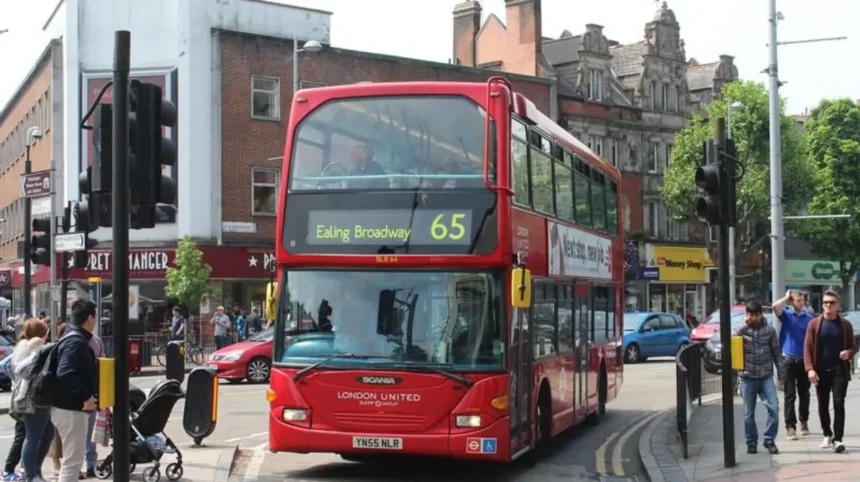
The 65 serves the Richmond, Kew and Kingston corridor, providing connections through southwest London.
The 70 serves the South Kensington, Hammersmith and Acton corridor.
The 94 provides a significant route between central London and areas around Shepherd’s Bush, Acton and Northolt.
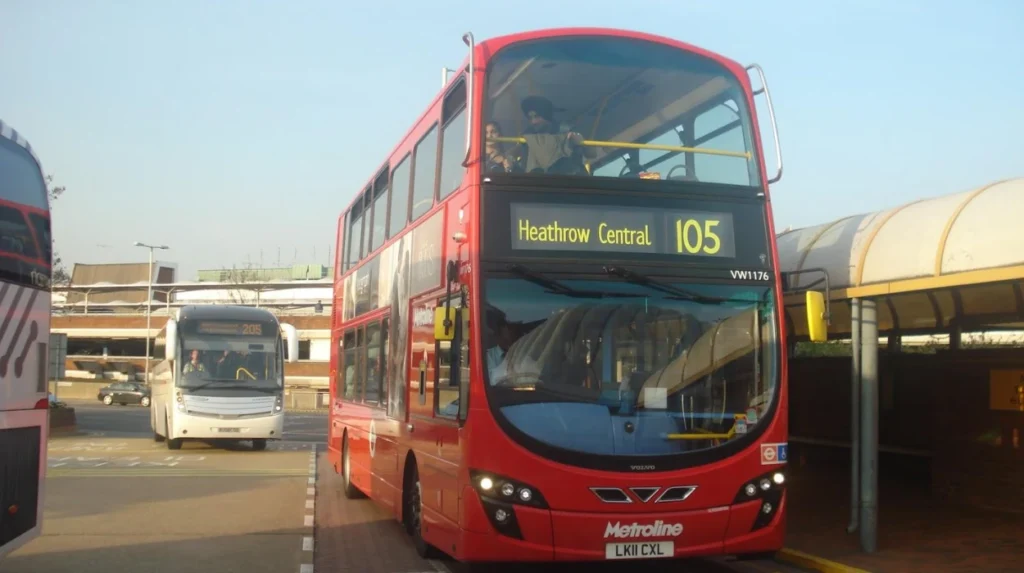
The 105 connects Hayes, Southall and surrounding areas with Heathrow Airport.
Local U routes are particularly significant around Uxbridge and Hillingdon. TfL stop information currently shows services including U1, U3, U4, U5 and U7 around Uxbridge High Street.
Because routes are periodically revised, these examples should be treated as important West London corridors rather than a permanent route list.
How do West London buses connect with major transport hubs?
West London buses connect residential districts with Heathrow Airport, Uxbridge, Ealing Broadway, Hammersmith, Shepherd’s Bush, Hayes and Harrow, while interchange with Underground, Elizabeth line and National Rail stations extends journeys across London.
Transport hubs are central to West London’s bus network. They allow passengers to transfer between buses and rail services without requiring every bus route to reach central London.
Uxbridge is a major interchange in the western part of Greater London. TfL’s current stop information shows several local routes serving Uxbridge High Street, including U1, U3, U4, U5, U7 and 222.
Ealing Broadway is another important interchange. It combines Underground and Elizabeth line services with numerous local bus connections. The Elizabeth line has changed travel patterns across West London, and TfL has specifically studied how suburban bus services should respond to Elizabeth line development.
Hammersmith is a major interchange between bus routes and Underground services. Its location makes it important for journeys between western neighbourhoods and central London.
Hayes & Harlington is an important rail and bus interchange. Local services connect surrounding residential districts with the station and Heathrow area.
Heathrow Airport has a particularly extensive bus network. Routes serve airport terminals and nearby communities, supporting both airport workers and passengers.
Harrow also functions as a major outer-London interchange, with local buses connecting the town centre to surrounding districts and other transport hubs.
Which West London bus routes serve Heathrow Airport?
Heathrow Airport is served by numerous London bus routes linking terminals and surrounding communities, including services from Uxbridge, Hayes, Hounslow, Harrow and other West London districts. Route availability varies by terminal and timetable.
Heathrow is one of the defining destinations in West London’s transport network. Bus services provide connections for airport employees, local residents and passengers.
Routes serving the Heathrow area include services such as 105, 111, 278, 285, 423 and U3, with other routes providing connections through nearby Hillingdon and Hounslow districts.
TfL’s current Uxbridge information demonstrates the scale of the airport connection. The U3 links Uxbridge with Heathrow Airport Central, while route 278 also provides a Heathrow connection from the Uxbridge area.
Heathrow journeys require careful checking because terminals, stopping arrangements and operating patterns can change. TfL’s live information is therefore more useful than relying on an old printed route map.
Airport bus travel also has a different purpose from airport rail services. Local buses serve intermediate communities and provide access from residential streets that are not directly connected to rail stations.
What is the Superloop network in West London?
Superloop is TfL’s express outer-London bus network, using limited stops to connect major town centres and transport hubs; West London services include SL7, SL8 and SL9, linking Heathrow with places such as Uxbridge, Harrow and White City.
Superloop was introduced to improve connections between outer-London centres. Unlike conventional buses, Superloop services stop only at selected locations rather than serving every stop along the road.
The network covers 218 kilometres, serves 24 boroughs and connects 63 bus and rail stations. TfL describes Superloop as a 12-route express network.
West London has several particularly important Superloop corridors.
SL7 runs between West Croydon and Heathrow Airport and serves locations including Sutton, Worcester Park, Kingston, Teddington and Hatton Cross.
SL8 connects Uxbridge with White City. Its corridor includes Ealing Broadway, Ealing Common, Acton Central and Shepherd’s Bush.
SL9 connects Heathrow Airport and Harrow, serving Northolt.
These services create faster cross-town connections than many conventional local routes because they do not stop at every bus stop.
For West London residents, Superloop is particularly important where rail journeys require multiple changes. It also supports outer-London travel without requiring passengers to travel through central London.
How do West London buses connect Ealing, Acton and Hammersmith?
Ealing, Acton and Hammersmith form a major east-west transport corridor, with buses linking residential neighbourhoods to Underground, Elizabeth line and National Rail stations, shopping centres and employment districts across the western inner suburbs.
Ealing is one of West London’s largest town centres and an important transport interchange. Bus services connect the centre with surrounding neighbourhoods and other major destinations.
Acton occupies a strategic position between Ealing and central-west London. Its multiple rail and Underground connections make local bus services important for first-mile and last-mile journeys.
Hammersmith provides another major interchange. Its location between central London and the outer western suburbs creates strong demand for cross-borough bus services.
Route changes in this corridor reflect wider transport development. TfL has repeatedly reviewed bus services in response to changes in passenger demand and improvements to rail services. The opening of the Elizabeth line is one example of a development that affects how passengers use buses.
The result is an integrated system rather than a collection of independent routes. A passenger can use a local bus to reach Ealing Broadway, continue by Elizabeth line, and then use another bus for the final part of a journey.
How do West London buses serve Uxbridge and Hillingdon?
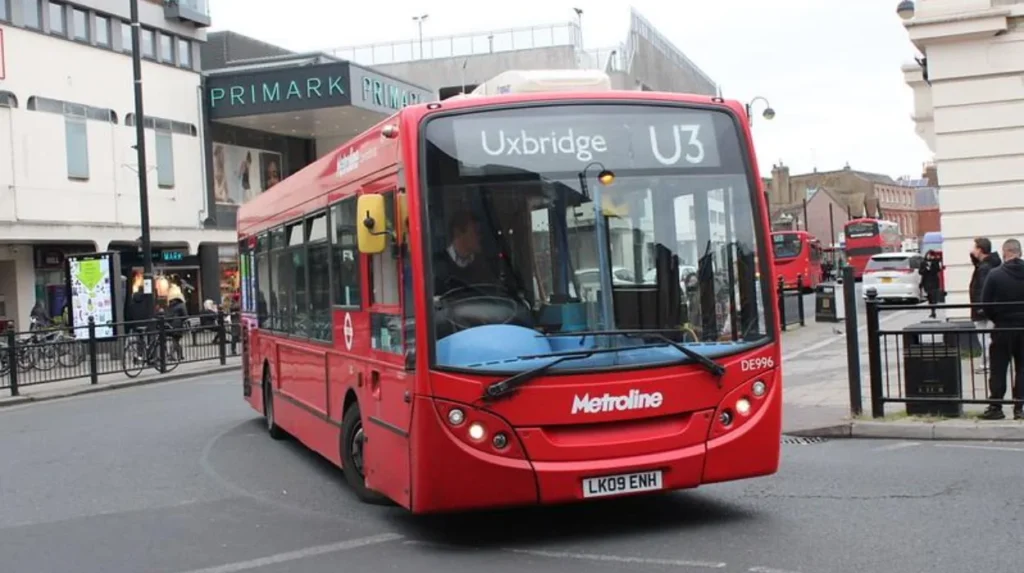
Uxbridge and Hillingdon have a dense local bus network connecting town centres, residential districts, hospitals, employment areas, Underground stations, Heathrow Airport and railway stations, with U routes forming an important part of local West London transport.
Uxbridge is the administrative and commercial centre of the London Borough of Hillingdon. Its bus network extends beyond the town centre into surrounding residential and employment areas.
Current TfL stop information at Uxbridge High Street lists services including 222, 427, N207, U1, U3, U4, U5 and U7.
The U-numbered routes have a strong local role. They connect Uxbridge with places such as West Drayton, Heathrow, Hayes and other Hillingdon communities.
The U3 is particularly relevant to Heathrow journeys, while the U1 provides a connection towards West Drayton. The U4 and U5 connect Uxbridge with Hayes-area destinations.
TfL live-stop information also demonstrates how several routes can operate through the same town-centre interchange. This creates opportunities for passengers to change buses without travelling into central London.
How do West London buses serve Hounslow and Richmond?
Hounslow and Richmond are supported by local and cross-borough bus routes connecting town centres, residential areas, transport stations, Heathrow, Kew and surrounding southwest London destinations, with bus services complementing Underground, rail and other public transport.
Hounslow is a major West London town centre and an important gateway to Heathrow and southwest London.
Routes around Hounslow connect the town with Heathrow, Brentford, Feltham, Isleworth, Twickenham and surrounding communities. Services also provide links to Underground and National Rail stations.
Richmond occupies a different transport role. It is both a town centre and an important interchange for journeys across southwest London.
Bus routes in this part of West London connect with destinations around Kew, Kingston, Twickenham, Hammersmith and other surrounding areas.
The District line has historically strengthened the westward transport structure. TfL records that the District line extended to Hammersmith in 1874, Richmond in 1877 and Ealing Broadway in 1879.
Bus routes subsequently developed alongside this wider transport network, serving areas between stations and connecting communities not directly served by rail.
How do West London buses operate at night?
Night bus services extend public transport availability beyond daytime schedules, with West London routes including 24-hour and night services serving major corridors such as Hammersmith, Ealing, Hounslow, Heathrow and surrounding districts.
Night transport is an important component of West London’s public transport system. It supports workers, residents, visitors and passengers travelling outside conventional daytime hours.
TfL’s West London night-service planning has included routes such as 14, 27, N16, N27, N72, N74, N414 and N430. TfL has also identified 24-hour routes within its night bus planning work.
Night routes do not necessarily duplicate every daytime route. Their purpose is to maintain strategic connections when daytime services have reduced frequencies or stopped.
Passengers should always check the current timetable because night services are particularly sensitive to route changes, diversions and service revisions.
How are West London bus routes planned and changed?
TfL plans and reviews bus routes according to passenger demand, housing development, transport changes, road conditions, network performance and available resources, with permanent changes published through TfL’s formal consultation and service-development processes.
Bus route planning is an ongoing process. TfL publishes bus network development papers explaining how new developments can require changes to local services.
New housing developments create additional passenger demand. New railway stations can alter journey patterns. Road schemes can affect bus speeds and reliability.
The Elizabeth line provides a clear example. TfL has examined how suburban bus services should support and complement the new railway connection.
Route performance is also monitored. TfL publishes data covering passenger journeys, operated kilometres and bus speeds. Its performance datasets include network, borough and individual route measurements.
This data-based approach allows TfL to assess whether services are meeting operational and passenger requirements.
How much do West London bus journeys cost?
London bus fares operate within TfL’s integrated fare system, allowing passengers to use contactless payment, Oyster and other accepted methods, while the Hopper fare supports qualifying transfers between London buses within the applicable time period.
Bus fares are integrated with the wider London transport system. Passengers can use accepted contactless payment methods and Oyster on London buses.
The Hopper fare is particularly important for passengers making multiple bus journeys. It allows qualifying bus and tram transfers within the applicable period without paying a separate full fare for each journey.
TfL’s bus network development research identifies the Hopper fare as one factor that has changed passenger behaviour and bus demand.
Fare rules and prices are subject to change. Passengers should therefore verify current fares through TfL before making a journey.
How reliable are West London bus routes?
West London bus reliability depends on traffic, roadworks, weather, congestion, bus priority, passenger boarding and operational conditions, while TfL monitors speeds and network performance to identify problems and improve service delivery.
Bus services operate on public roads, so road conditions directly affect journey times.
Congestion is particularly important on busy West London corridors. Roads around Hammersmith, Ealing, Heathrow, Uxbridge and other town centres experience different traffic conditions throughout the day.
TfL measures bus speeds across the network. Its published data includes route-level and borough-level speed information and identifies peak periods for monitoring.
Bus priority measures also influence reliability. TfL’s current bus programme includes investment in bus lanes and other measures intended to improve bus movement.
Passengers should therefore distinguish between timetable duration and actual journey time. Live arrival information provides a better indication of current operating conditions than a static timetable.
How should visitors use West London bus routes?
Visitors should identify the nearest bus stop, check the current TfL route and timetable, confirm the destination shown on the bus, allow extra time for road traffic and use interchange points such as Ealing Broadway, Hammersmith, Uxbridge and Heathrow.
Visitors often use buses differently from regular commuters. They frequently combine buses with walking, Underground services, Elizabeth line trains and National Rail.
The most useful starting point is the official TfL bus journey planner and live arrival service. TfL provides current information for bus stops, routes, timetables and service status.
A visitor travelling around West London should check:
The route number identifies the service.
The destination display confirms the direction.
The stop name confirms where to board or leave.
The live arrival information shows current service conditions.
The interchange station determines whether another bus or rail service provides a faster connection.
This approach reduces the risk of using outdated information because bus routes are periodically reviewed.
Explore More Area Guide
Cycling Around West London: Routes & Guide 2026
Best West London Areas Near Tube Stations 2026
What is the future of West London bus routes?
The future of West London’s bus network is centred on cleaner vehicles, better bus priority, stronger outer-London connections, integration with rail expansion and continuing network reviews designed around changing passenger demand and new development.
London’s bus network is undergoing technological and operational change. TfL currently manages around 9,000 buses, including electric, hydrogen, diesel and hybrid vehicles.
Cleaner buses are an important part of London’s transport strategy. The transition reduces tailpipe emissions and supports wider environmental objectives.
Outer-London express services are also becoming more significant. Superloop provides faster connections between major outer-London centres, with West London services such as SL7, SL8 and SL9 creating new alternatives to conventional local buses.
Rail expansion will continue to influence bus planning. The Elizabeth line has already changed passenger flows in West London, particularly around Ealing and other major interchanges.
Future development therefore depends on integration. Local buses will continue providing neighbourhood access, while express services, Underground trains, Elizabeth line services and National Rail will handle longer sections of many journeys.
Why are West London bus routes important for the region?
West London bus routes provide essential connections between residential communities, town centres, employment districts, airports and major rail stations, making buses a fundamental part of everyday mobility and supporting access across a geographically diverse part of London.
West London’s bus network serves communities that do not all have direct rail access. It provides connections between local streets and major transport hubs.
The network also supports economic activity. Employees use buses to reach offices, retail centres, hospitals, airports and industrial areas. Students and visitors use buses to reach education, cultural and leisure destinations.
The scale of the wider London network demonstrates the importance of buses. TfL manages approximately 675 routes and more than 19,000 bus stops, making buses one of the capital’s most extensive public transport modes.
West London demonstrates how this network works at a local level. Uxbridge, Ealing, Hammersmith, Hounslow, Heathrow, Richmond and surrounding districts are connected through a mixture of local, cross-borough, limited-stop and express services.
For passengers, the most important principle is to treat the network as integrated infrastructure. A bus route is rarely isolated. It connects with other buses, Underground stations, railway stations, airports and walking routes.
The network will continue to evolve as London develops. TfL’s ongoing route reviews, performance monitoring, cleaner-bus programmes and Superloop expansion all show that West London buses remain an active part of the capital’s transport system.
What are the main bus routes in West London?
Major West London routes include the 65, 70, 94, 105, 207, 237, 267, 272, 281, 282, 283, 290, 297, 306, 423 and 607. Local U routes also serve Uxbridge and Hillingdon.