Key Points
- The Labour-led Ealing Council is receiving harsh criticism from residents of the locality and other concerned people for its plan to build a temporary 1,200-seat Troubadour Theatres in Walpole Park.
- A site plan document found by Ealing.news indicates that the project was already thought of in April 2024, over two years before the local authority disclosed it in September 2026.
- The Ealing Parks Foundation, in addition to several other grassroots organizations, including Green Party, strongly criticizes this plan since it reduces the green space area with no discussion with the community beforehand.
- The council’s cabinet will be considering a report on a three-and-a-half-year lease (three years operational from April 2027 to March 2030) with the purpose of assessing the economic feasibility of a major performance venue within the borough.
- A protest will be organized outside Perceval House in preparation for the upcoming cabinet meeting, as many online and paper petitions have gained hundreds of signatures in no time.
- The leadership of the council, comprised of the Council Leader, Peter Mason and Cabinet Member for Thriving Communities, Lauren Wall, have defended this project as a way to encourage local economic activity, generate over 40 full-time job opportunities and high-quality cultural performances in west London.
Ealing (West London News) September 7, 2026 —The Labour-run Ealing Council is facing mounting public anger over proposals to introduce a temporary 1,200-seat performance venue operated by Troubadour Theatres into the historic Walpole Park. The initiative, which is scheduled for initial review by the council’s cabinet, outlines a three-and-a-half-year lease arrangement. This timeframe includes construction and dismantling periods, with the actual theatre operations planned to run for three years—from April 2027 through to March 2030.
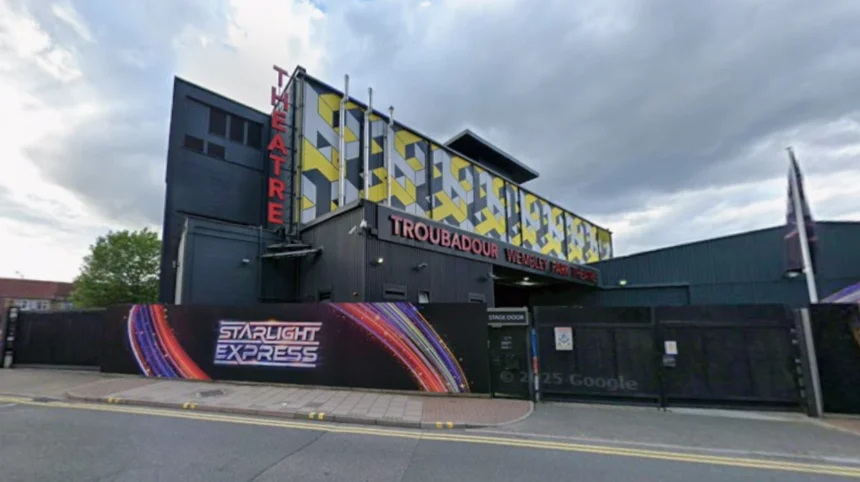
According to the council report authored by assistant director Joyce Guthrie, the venue would host upwards of eight performances a week, offering major theatrical productions similar to those managed by the company at brent/wembley/">Wembley Park and Canary Wharf. The temporary structure would feature a box office, a bar, a merchandise shop, food outlets, and fully integrated heating, cooling, and accessibility facilities. Furthermore, the authority claims the project would generate over 40 full-time equivalent employment opportunities and stimulate footfall for nearby commercial hubs in Ealing Broadway and West Ealing.
Why Are Residents and Campaigners Criticising the Council’s Handling of the Project?
Public frustration has intensified not only over the chosen site within a public park, but also regarding the transparency of the administration’s timeline. Leslie Bunder of Ealing.news disclosed that a site plan document for the Troubadour venue inside Walpole Park bears the date of 23 April 2024—indicating that discussions had taken place more than two years prior to public disclosure on September 2, 2026.
Opponents and community organizations argue that the scheme was formulated entirely behind closed doors. Jane Fernley and Paul Carter, co-chairs of the Ealing Parks Foundation, stated: “Ealing Parks Foundation strongly objects to the proposed location of the Troubadour Theatre in Walpole Park; a much needed, high quality green space in central Ealing”. Ms Fernley added that the project was omitted from discussions during an Ealing Parks Forum meeting on August 20, 2026, despite the physical presence of council officers. Furthermore, the foundation criticized the timing, noting it conflicts with the local authority’s freshly commissioned Green Infrastructure Strategy and Nature Recovery Plan.
How Are Local Politicians and Action Groups Responding to the Theatre Plans?
Grassroots mobilization has expanded rapidly across the borough. By Sunday evening, an official e-petition hosted on the Ealing Council portal collected over 450 signatures within less than a day of launching, accompanied by a separate high-traffic Change.org petition. Campaigners have circulated “Save Walpole Park” leaflets over weekends, culminating in plans for a public demonstration outside Perceval House ahead of the cabinet review.
A spokesperson representing local anti-theatre campaigners clarified their stance to Leslie Bunder of Ealing.news, stating: “To be clear, many members of the community we have spoken to support the idea of Troubadour coming to Ealing, just in an appropriate location that doesn’t impact and remove green space in a public park”.
Political resistance has also manifested locally. Councillor Clare Welsby, leader of the Ealing Green Party councillors and representative for Hanwell Broadway, published an opinion piece on Ealing.news raising alarms about the commercialization of open municipal land. Councillor Welsby questioned whether successful commercial outcomes would lead to long-term extensions or permanent fixtures, noting that alternative brownfield or regeneration sites—such as those in West Ealing—should be prioritized instead of public parks.
Explore more Ealing News:
TfL Launches Calm Space Trial for Neurodivergent Passengers at Ealing Broadway 2026
Range Rover Towed in Ealing Penalty Enforcement Drive Ealing 2026
What Is Ealing Council’s Stance on the Controversy?
Defending the initiative, council leadership has highlighted the potential cultural and financial benefits for the wider borough. Council Leader Peter Mason stated: “This administration promised to bring world class performing arts to the borough”. Councillor Mason added that the temporary structure serves as an effective mechanism to “test whether Ealing can support a theatre of this scale while protecting Walpole Park for future generations”.
Similarly, Councillor Lauren Wall, Ealing Council’s cabinet member for thriving communities, emphasized: “A theatre of this calibre could give residents the chance to enjoy world-class productions closer to home while helping us become a cultural destination for west London”. The council report stresses that Troubadour will shoulder all capital and operational costs without placing a financial burden on taxpayers, while providing a fixed lease fee intended to help fund park improvements across the borough. Under the proposal, existing events like the Ealing Summer Festivals would be successfully decoupled from Walpole Park and decentralized across all seven towns in the borough.
Background of the Development
The roots of this controversy stretch back into local planning strategies concerning cultural regeneration and the preservation of metropolitan green assets in West London. Ealing Council has long sought to elevate its cultural footprint, aiming to establish the borough as a prominent destination for performing arts outside central London. Troubadour Theatres, recognized for managing large-scale temporary and permanent entertainment infrastructure in zones like Wembley Park and Canary Wharf, approached the local authority with a model designed to test suburban market viability without demanding direct capital investment from municipal budgets.
However, Walpole Park itself carries significant historical and community value as a central green lung in Ealing. Protected under Metropolitan Open Land status, the park frequently serves as a focal point for civic life and annual community gatherings, including the historic Ealing Summer Festivals. The decision by the local authority to utilize a portion of this space for a multi-year commercial entertainment venue triggered immediate friction between civic development goals and environmental preservation mandates, setting the stage for intense regulatory and public scrutiny.
If the Ealing Council cabinet advances the proposal, this development is likely to trigger a protracted, highly contentious planning battle that could significantly impact local political dynamics and community trust. For local residents, park users, and environmental campaigners, the installation of a 1,200-seat commercial structure risks reducing accessible green space, altering local traffic patterns, and driving up noise pollution in a densely residential urban centre.
Conversely, if the project successfully navigates the formal planning process—including potential interventions by the Mayor of London—it could permanently alter Ealing’s cultural landscape by injecting thousands of visitors into local high streets, boosting patronage for nearby independent businesses, and providing empirical data on whether a permanent theatrical home can thrive in west London. However, mishandling community engagement risks deepening a perceived divide between municipal decision-makers and grassroots stakeholders.