Key Points
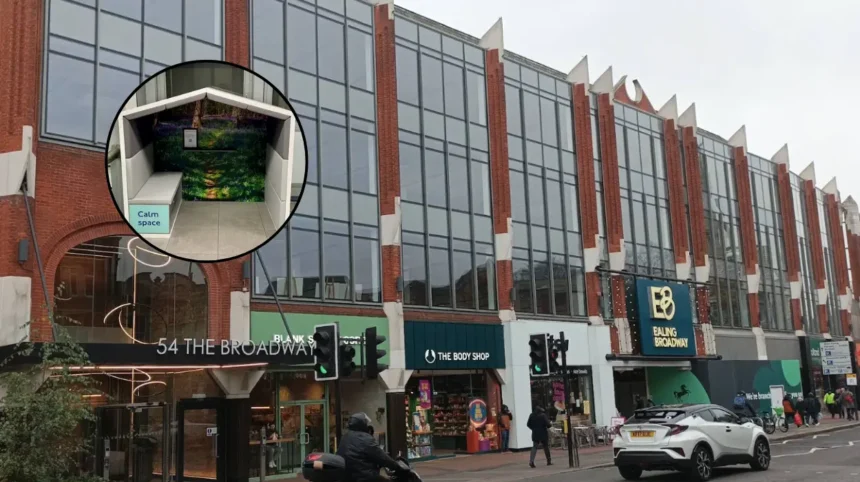
- Trial Launch: Transport for London (TfL) has introduced a designated ‘calm space’ pod at Ealing Broadway station in west London as part of a new trial aimed at supporting neurodivergent passengers and individuals who experience sensory overload.
- Key Partnerships: The project has been developed in partnership with pod manufacturer NOOK and autism research charity Autistica, incorporating direct research and lived-experience insights from neurodivergent individuals.
- Design Features: The acoustic shelter features noise-reducing construction, fixed internal seating, nature-inspired visual wallpaper artwork depicting a woodland scene, level access, and dedicated space for mobility aids, buggies, and assistance animals.
- Secondary Location: A complementary eight-week trial is scheduled to take place at the London Transport Museum in Covent Garden later this autumn.
- Duration and Feedback: The Ealing Broadway installation, located beyond the ticket gateline, will run until at least 2 October 2026, with public feedback collected via QR codes, site reviews, and community engagement visits to evaluate potential network-wide expansion.
Ealing (West London News) September 7, 2026 — Transport for London has formally launched a live trial of specially designed ‘calm space’ pods at Ealing Broadway station to provide neurodivergent passengers, neurodivergent travellers, and individuals suffering from sensory overstimulation with a dedicated location to pause, regulate, and recover during their journeys across the capital.
- Key Points
- What Are the Key Features and Intentions Behind the New TfL Calm Spaces?
- What Have Key Stakeholders and Official Representatives Said About the Initiative?
- How Will TfL Collect Passenger Feedback and Evaluate the Success of the Trial?
- Background of Transport Accessibility and Neuroinclusive Design on London’s Transit Network
- Prediction: How This Development Can Affect Neurodivergent Passengers and Public Transport Operations
The initiative, which officially opened to the public on 4 September 2026, sees TfL collaborate with modular furniture specialist NOOK and autism research charity Autistica. Positioned securely beyond the main ticket barriers at Ealing Broadway station, the low-stimulation structure features an acoustic shell designed to dampen ambient noise, integrated fixed seating, level access, and visual elements including a nature-inspired woodland mural. The space has been constructed to accommodate wheelchairs, mobility scooters, children’s buggies, and assistance animals.
As reported by Leslie Bunder of EALING.NEWS, TfL selected Ealing Broadway for the initial station deployment due to its accessible ground-level layout, which facilitated the positioning of the unit, and its location within clear line of sight of station staff to ensure passenger safety. The trial at Ealing Broadway is set to run through until Friday, 2 October 2026. A secondary eight-week trial of the pod design is also scheduled to launch at the London Transport Museum in Covent Garden later in the autumn.
What Are the Key Features and Intentions Behind the New TfL Calm Spaces?
As detailed by official statements from Transport for London, the introduction of the calm space pods forms an integral element of the transport authority’s broader ‘Equity in Motion’ customer strategy. This overarching framework commits TfL to breaking down systemic barriers to travel and creating an inclusive transport network accessible to all Londoners and visitors.
The physical structure itself comprises a compact acoustic shelter that shields occupants from the high decibel levels, bright lighting, and heavy footfall typical of major transit hubs. Inside, the booth incorporates subtle tones and natural imagery alongside fixed seating to create an environment designed to lower anxiety and sensory fatigue.
According to reporting by RailAdvent, the project relies heavily on empirical research conducted by Autistica. The charity carried out dedicated focus groups, interactive workshops, and survey consultations with neurodivergent citizens to ensure the final design addressed genuine lived experiences. This research indicated that access to a dedicated, quiet, low-stimulation zone mid-journey could significantly enhance passenger confidence, enabling individuals to undertake journeys independently that they might otherwise avoid altogether.
What Have Key Stakeholders and Official Representatives Said About the Initiative?
The implementation of the trial has drawn official commentary from transport leaders, accessibility advocates, and project engineers across the capital.
As reported by TfL’s official press office, Mark Evers, Chief Customer Officer leading on Customer Insight, Strategy and Experience at Transport for London, stated:
“Everyone should be able to travel confidently and independently across London, and we know that busy environments can sometimes pose a barrier and be overwhelming, particularly for our neurodivergent customers. These trials will help us understand how we can better support customers who might need to take some time out when using our services. By working closely with Autistica and people with lived experience, we are testing an innovative approach that could help more people to benefit from our services.”
Speaking on the municipal context of the strategy, Dr Debbie Weekes-Bernard, Deputy Mayor for Communities and Social Justice, noted as reported by RailAdvent:
“Busy stations can be overwhelming for many customers using the capital’s transport network, and that can make travelling across our city feel daunting. That’s why I’m pleased that TfL have worked with partners to trial these new calm spaces, which offer Londoners and visitors somewhere to pause and reset so they can travel with confidence and independence.”
Highlighting the design and structural delivery of the acoustic pod, David O’Coimin, Founder of NOOK, stated as reported by TfL Press Services:
“NOOK was created to help make environments work better for more people, and we are incredibly proud to support TfL and Autistica on this important trial, contributing in one of the most important public spaces in the country. For us, this is about recognising that people experience busy environments differently, and that a small amount of thoughtfully designed space can make a significant difference to someone’s ability to travel, participate and feel independent and understood.”
Emphasising the psychological impact on neurodivergent travellers, Dr Amanda Roestorf, Director of Research at Autistica, stated as reported by Leslie Bunder of EALING.NEWS:
“For many neurodivergent Londoners, a calm space can be the difference between avoiding the Underground and travelling with confidence. These spaces offer a vital safe space to pause, regulate, and continue their journey independently.”
How Will TfL Collect Passenger Feedback and Evaluate the Success of the Trial?
To evaluate the operational effectiveness of the calm spaces, Transport for London has established a multi-channel feedback infrastructure that will collect data throughout the duration of the pilot schemes at Ealing Broadway and the London Transport Museum.
Passengers utilizing the Ealing Broadway pod are encouraged to submit direct assessments by scanning an integrated QR code located inside the cabin, which links directly to an online survey. Furthermore, TfL’s dedicated Community Engagement Team will conduct periodic on-site visits to observe usage patterns and capture direct passenger testimonials. Standard customer service channels and website submissions will also log public sentiment.
Concurrently, the charity Autistica will oversee a dedicated evaluation panel composed of neurodivergent individuals with lived experience. The findings gathered from both the Ealing Broadway station platform and the London Transport Museum trial will be synthesized to determine whether the pods successfully mitigate journey stress. The resulting dataset will directly inform TfL’s long-term accessibility policy and guide decisions on whether to roll out permanent calm spaces across additional surface and subsurface Underground, Overground, and Elizabeth line stations.
Background of Transport Accessibility and Neuroinclusive Design on London’s Transit Network
The installation of calm space pods at Ealing Broadway represents the latest evolution in Transport for London’s ongoing efforts to modernise public transit infrastructure for passengers with visible and non-visible disabilities. Historically, accessibility initiatives within public transport networks predominantly focused on physical mobility, such as step-free access, elevators, tactile paving, and wheelchair ramps. However, awareness surrounding sensory accessibility and neurodiversity—which encompasses autism, ADHD, anxiety disorders, and sensory processing differences—has grown significantly over the past decade.
In recent years, TfL has introduced several non-physical accessibility schemes. Prominent among these was the rollout of the “Please Offer Me a Seat” badge and card system, designed to assist passengers with hidden conditions or conditions that make standing difficult. Similarly, TfL has supported the widely recognised Sunflower Lanyard scheme, which alerts staff and fellow passengers that a traveller may require additional time, patience, or assistance.
The current calm space trials operate under TfL’s comprehensive ‘Equity in Motion’ customer plan, launched to remove systemic barriers across the network. This broader commitment includes capital investment in physical station infrastructure. For instance, London Mayor Sadiq Khan allocated £3 million per year over a five-year period specifically dedicated to improving and extending toilet facilities across the network. Recent works under this funding umbrella include the opening of new accessible facilities at Morden Underground station, Seven Sisters, and White Hart Lane, alongside scheduled upgrades for accessible, gender-neutral facilities at Northolt, Colindale, and Amersham stations.
By partnering with specialist organisations such as Autistica and participating in broader design forums—such as the Neuroplaces exhibition at Shoreditch Design Week—TfL is increasingly incorporating neuroinclusive principles into its architecture, station layout strategies, and public interface standards.
Prediction: How This Development Can Affect Neurodivergent Passengers and Public Transport Operations
The ongoing trial of calm space pods at Ealing Broadway and Covent Garden is expected to have notable effects on both public transport users and broader urban infrastructure planning.
Primary Audience Impact: Neurodivergent Passengers and Vulnerable Commuters
For neurodivergent individuals, sensory overload caused by dense crowds, high noise levels, fluorescent lighting, and subterranean heat often leads to acute distress, panic, or physical exhaustion. Historically, these factors have forced many individuals to avoid public transit entirely, limiting their access to employment, education, social activities, and healthcare.
If successful, the widespread introduction of quiet, low-stimulation pods across key interchanges will provide a reliable safety net. Knowing that a quiet space is available mid-route allows passengers to manage sensory fatigue proactively. This increase in spatial certainty is predicted to foster greater travel autonomy, reducing reliance on specialized transport services or private vehicles, and encouraging higher overall participation in urban mobility.
Secondary Impact: Transit Operations and Urban Design Standards
From an operational perspective, integrating designated recovery areas within station concourses can assist frontline station staff. When passengers experience sensory crises or panic attacks in crowded transit corridors, staff often struggle to find safe, private areas to assist them without disrupting station throughput. Calm pods offer an immediately accessible, purpose-built sanctuary, thereby reducing medical call-outs or travel delays linked to passenger distress.
Furthermore, a positive outcome from the TfL trial is likely to set a precedent for UK and international transport operators. Commercial rail networks, airport hubs, and municipal bus terminals may adopt similar modular acoustic solutions. Over time, neuroinclusive features—much like step-free ramps and tactile paving—are anticipated to transition from experimental pilot schemes into standardized baseline requirements for modern public architecture.