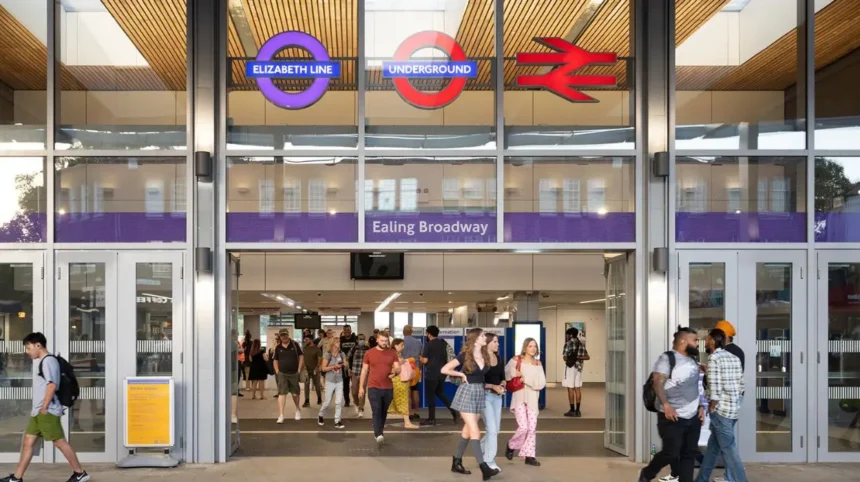
West London has one of the most varied transport networks in the capital, combining London Underground, Elizabeth line, London Overground, National Rail, buses, roads, cycling routes and Heathrow Airport connections. The network links residential districts such as Ealing, Hounslow, Richmond and Hillingdon with central London, Heathrow and destinations across southern England.
- What transport links serve West London?
- How did West London’s transport network develop?
- Which London Underground lines serve West London?
- How important is the Elizabeth line for West London?
- Which West London stations are the main transport hubs?
- What National Rail connections are available in West London?
- How does Heathrow Airport connect with West London?
- How do buses connect West London neighbourhoods?
- Which London Overground services serve West London?
- Which roads are important for West London transport?
- How accessible is public transport in West London?
- How do fares and ticketing work across West London transport?
- How should visitors choose transport in West London?
- How does West London transport support commuters and businesses?
- What future changes are relevant to West London transport?
- Why are West London transport links important for the wider London network?
Transport for London (TfL) manages London Underground, London buses, the Elizabeth line and London Overground services, while National Rail operators provide longer-distance and regional rail connections. West London therefore functions as both a major commuter area and an important gateway for international and domestic travel.
The transport structure is centred around several major interchange locations. Ealing Broadway connects the Central line, District line, Elizabeth line and National Rail. fulham/hammersmith/">Hammersmith provides interchange between the District and Piccadilly lines and nearby Hammersmith & City and Circle line services. Shepherd’s Bush connects the Central line with the Mildmay line and local bus services. Heathrow provides direct connections through the Elizabeth line, Piccadilly line and Heathrow Express.
What transport links serve West London?
West London is served by Underground, Elizabeth line, Overground, National Rail, bus, road and cycling networks, with major hubs including Ealing Broadway, Hammersmith, Paddington, Shepherd’s Bush, Heathrow and Richmond. These services connect residential areas with central London, airports, employment centres and regional destinations.
The main transport modes form an integrated network rather than separate systems. London Underground provides high-frequency urban services. The Elizabeth line provides fast east-west rail connections. London Overground provides orbital and cross-London journeys. National Rail connects West London with Reading, Oxford, Bristol, South Wales and other destinations.
London buses provide local connections between areas that do not have a nearby railway station. Bus routes are particularly important around Hounslow, Brentford, Chiswick, Hanwell, Northolt, Southall and Hillingdon.
Road transport is also significant. The M4 connects West London with Heathrow, Berkshire and the wider motorway network. The A4 provides a major east-west corridor through Hammersmith, Chiswick, Brentford and Hounslow. The A40 provides connections towards North West London and Oxfordshire.
Cycling infrastructure forms another part of the network. TfL and London boroughs operate cycle routes, cycle lanes and quieter streets that support short-distance journeys.
How did West London’s transport network develop?
West London’s transport network developed through successive railway, Underground and road investments that transformed former villages and industrial districts into connected suburbs. Railways reached areas such as Ealing and Hounslow during the nineteenth century, followed by Underground expansion and modern Crossrail infrastructure.
Railway development fundamentally changed West London during the nineteenth century. The Great Western Railway established London Paddington as a major western railway gateway and created connections through areas that later became major suburban centres.
The Metropolitan District Railway expanded Underground services through West London during the nineteenth century. Its routes helped connect Hammersmith, Ealing, Richmond and surrounding districts with central London.
The Piccadilly line later strengthened connections towards Hammersmith, Acton, Hounslow and Heathrow. The Central line extended westwards through Shepherd’s Bush, Ealing and Ruislip.
The twentieth century brought extensive road construction and suburban development. Increasing car ownership created demand for major routes such as the A4 and M4.
The most significant recent change was the Elizabeth line. Crossrail infrastructure introduced a new east-west railway through central London. The Elizabeth line opened in stages from 2022 and subsequently connected Heathrow and Reading with central and eastern London. TfL states that the line now covers 118 kilometres and serves 41 stations.
Which London Underground lines serve West London?
The main Underground services serving West London are the District, Piccadilly and Central lines, with additional access to Circle and Hammersmith & City services around Hammersmith. These lines provide direct connections towards central London, Heathrow, Ealing, Hounslow, Richmond and West Ruislip.
The District line is one of the most important West London Underground routes. It serves Hammersmith, Chiswick, Acton, Ealing and Richmond. The Ealing Broadway branch connects with the Central line, Elizabeth line and National Rail.
The Piccadilly line provides the principal Underground connection between West London and Heathrow Airport. Its West London stations include Hammersmith, Barons Court, Acton Town, South Ealing, Northfields, Boston Manor, Osterley, Hounslow East, Hounslow Central, Hounslow West and Hatton Cross.
The Central line serves Shepherd’s Bush, White City, East Acton, North Acton, Hanger Lane, Perivale, Greenford, Northolt, South Ruislip and West Ruislip. It provides a direct route towards Oxford Circus, Liverpool Street and other central London destinations.
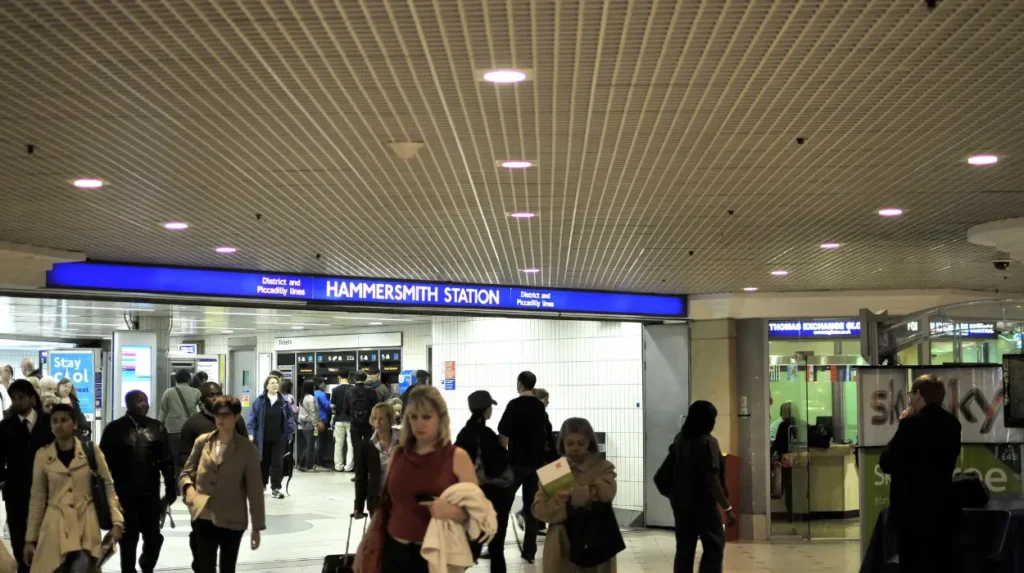
Hammersmith is particularly important because separate District and Piccadilly platforms sit alongside connections to Circle and Hammersmith & City services. This creates a major interchange for passengers travelling between West London and central London.
How important is the Elizabeth line for West London?
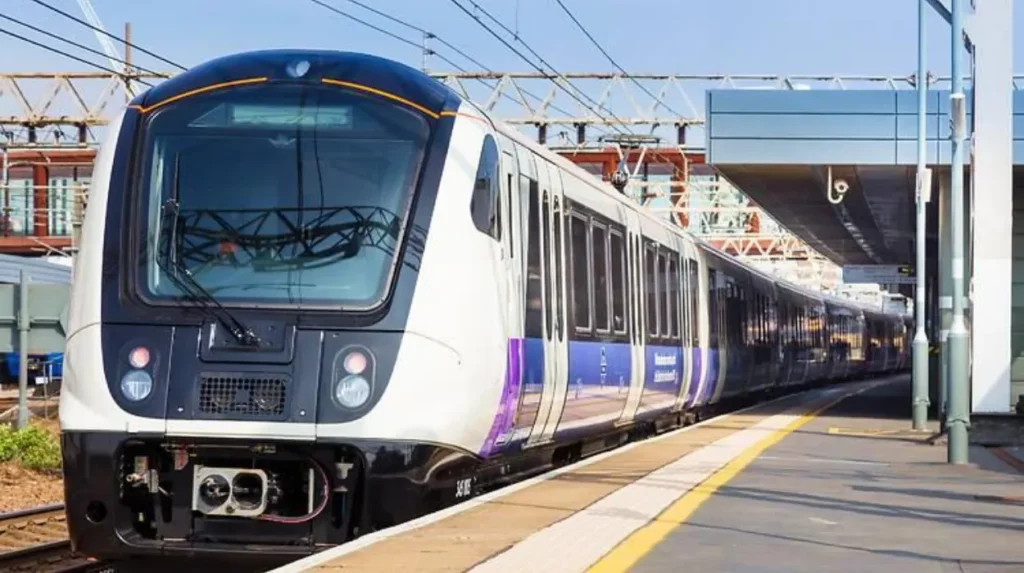
The Elizabeth line is a major West London transport link because it connects Heathrow and Reading with central London through stations including Ealing Broadway, West Ealing, Hanwell, Southall and Hayes & Harlington, providing fast cross-London journeys and step-free station access.
The Elizabeth line has significantly changed the transport geography of West London. It provides a modern railway corridor linking Heathrow and western suburbs directly with central London.
Key West London stations include Ealing Broadway, West Ealing, Hanwell, Southall, Hayes & Harlington, West Drayton and Heathrow Airport. The route continues through Paddington and central London before reaching eastern London.
TfL states that the Elizabeth line serves 41 stations over 118 kilometres. It connects Reading and Heathrow in the west with Shenfield and Abbey Wood in the east.
The Heathrow connection is particularly important. TfL states that Elizabeth line trains take approximately 28 minutes between Paddington and Heathrow, with six trains per hour to Heathrow in the published service information.
The line also improves accessibility. TfL states that all 41 Elizabeth line stations have step-free access from street to platform, while Heathrow stations provide step-free access from train to street.
Ealing Broadway has become one of West London’s most important multimodal transport hubs because passengers can change between Underground, Elizabeth line and National Rail services.
Which West London stations are the main transport hubs?
West London’s main transport hubs include Ealing Broadway, Hammersmith, Paddington, Shepherd’s Bush, Heathrow, Richmond and Acton. Each hub combines different transport modes and provides interchange between local services, rapid transit, regional rail, airport services or major bus routes.
Ealing Broadway is a major western interchange. The station combines the Central line, District line, Elizabeth line and National Rail. This makes it particularly useful for journeys between western suburbs and central London.
Hammersmith is a major Underground interchange. The District and Piccadilly lines serve the Hammersmith area, while nearby Hammersmith & City and Circle line services provide additional connections.
Paddington is the principal central London gateway for many West London rail journeys. It connects with the Elizabeth line, London Underground and National Rail services operated by Great Western Railway.
Shepherd’s Bush provides an important connection between the Central line and Mildmay line. The area also has extensive bus services and links to the Westfield London shopping district.
Heathrow Airport has three railway stations: Heathrow Terminals 2 & 3, Heathrow Terminal 4 and Heathrow Terminal 5. National Rail confirms that these stations provide rail access to the airport.
Richmond is another important interchange because it combines District line and National Rail services. It also provides access to the wider South West London transport network.
What National Rail connections are available in West London?
National Rail connects West London with destinations including Reading, Oxford, Bristol, South Wales and other parts of southern England. Important stations include Paddington, Ealing Broadway, Acton Main Line, West Ealing, Hanwell, Southall, Hayes & Harlington and Heathrow.
National Rail services complement the Underground and Elizabeth line by providing regional and longer-distance journeys.
Great Western Railway operates major services from London Paddington towards western England. Routes include destinations such as Reading, Oxford, Bristol, South Wales, the West of England and Cornwall. National Rail engineering information identifies these routes as part of the Paddington network.
Within West London, stations such as Acton Main Line, West Ealing, Hanwell, Ealing Broadway, Southall and Hayes & Harlington provide access to the wider railway network.
National Rail infrastructure also supports connections between London and Heathrow. Heathrow has three railway stations, covering Terminals 2 and 3, Terminal 4 and Terminal 5.
This creates an important distinction between urban and regional travel. The Underground is generally designed for metropolitan journeys, while National Rail provides longer-distance connections beyond Greater London.
How does Heathrow Airport connect with West London?
Heathrow Airport has direct transport connections through the Elizabeth line, Piccadilly line, Heathrow Express, National Rail and London buses. These services connect the airport with Hounslow, Ealing, central London, Paddington and western destinations, giving passengers several public transport options.
Heathrow is the largest transport gateway in West London and one of the most important aviation hubs in the United Kingdom.
The Piccadilly line provides Underground access from central London through Hammersmith, Acton, Hounslow and Hatton Cross before reaching Heathrow.
The Elizabeth line provides a newer rail connection. It links Heathrow with Paddington, Bond Street, Tottenham Court Road, Farringdon, Liverpool Street and Canary Wharf. TfL states that six Elizabeth line trains per hour serve Heathrow in its published information.
The Heathrow Express provides a dedicated rail service between Paddington and Heathrow. National Rail describes it as a non-stop service operating every 15 minutes, serving Terminals 2 and 3 and Terminal 5.
Heathrow’s three railway stations are also step-free. National Rail categorises the Terminal 2 & 3 and Terminal 5 stations as Category A step-free stations.
For passengers staying in Hounslow, Hammersmith, Ealing or nearby districts, the Piccadilly line and Elizabeth line provide particularly important airport connections.
How do buses connect West London neighbourhoods?
London buses provide local connections between West London neighbourhoods, Underground stations, railway stations, shopping centres, hospitals, residential areas and Heathrow. They are particularly important for areas where rail stations are separated by longer walking distances or indirect railway routes.
The bus network fills the gaps between fixed rail corridors. Routes operate along major roads including the A4, Uxbridge Road, Great West Road and Chiswick High Road.
Buses connect local communities with major interchange points such as Hammersmith, Ealing Broadway, Shepherd’s Bush, Acton, Hounslow and Heathrow.
They also provide cross-borough journeys that do not require passengers to travel into central London first.
Bus services are especially useful for short journeys. A passenger travelling between two neighbouring West London districts often has a more direct bus option than a rail journey requiring an interchange.
TfL also uses replacement buses during planned railway closures. This is an important part of the transport system because engineering works affect Underground, Elizabeth line and Overground services at different times.
Which London Overground services serve West London?
The Mildmay line provides a key orbital railway connection across West London, linking Clapham Junction, Imperial Wharf, Shepherd’s Bush and brent/willesden/">Willesden Junction. It connects West London with South West London and provides an alternative to central London routes.
London Overground services are important because they provide orbital connections rather than concentrating every journey through central London.
The Mildmay line includes the West London corridor between Willesden Junction and Clapham Junction. TfL service information identifies stations and the route between these two major interchanges.
Important West London locations along the corridor include Willesden Junction, Shepherd’s Bush and Imperial Wharf.
Shepherd’s Bush provides a particularly useful interchange because passengers can connect between the Mildmay line and Central line services. Willesden Junction provides further connections to the wider Overground network.
The orbital structure is important for employment and education journeys. It allows passengers to travel between western and southern parts of London without making a central London interchange.
Which roads are important for West London transport?
Major West London road corridors include the M4, A4, A40, A406, Great West Road and local arterial routes. These roads support commuting, freight, airport travel, buses and commercial activity, while connecting West London with central London, Heathrow and the wider motorway network.
The M4 is one of the most strategically important roads in West London. It provides a direct motorway connection towards Heathrow, Berkshire and South Wales.
The A4 is an older east-west corridor. It passes through Hammersmith, Chiswick, Brentford and Hounslow before continuing towards Heathrow and western England.
The A40 serves West and North West London. It provides connections from central London through Shepherd’s Bush and North Acton towards Ealing, Northolt and the western suburbs.
The North Circular Road, designated A406, provides a major orbital connection. It links West London with North London and routes towards the M1, A1 and eastern parts of the capital.
The road network is particularly important for Heathrow-related journeys, commercial deliveries and bus operations. Road congestion therefore has implications for both private vehicles and public transport.
How accessible is public transport in West London?
Accessibility has improved substantially through step-free stations, lifts, ramps, accessible trains and passenger assistance. The Elizabeth line provides particularly extensive step-free infrastructure, while accessibility varies between individual Underground and National Rail stations.
Accessibility refers to the ability of passengers with mobility, sensory or other access requirements to use transport safely and independently.
The Elizabeth line has a strong accessibility profile. TfL states that all 41 Elizabeth line stations have step-free access from street to platform. Heathrow stations also provide step-free access between trains and the street.
National Rail also provides station accessibility information. Heathrow Terminals 2 & 3, Terminal 4 and Terminal 5 are identified as step-free Category A stations.
Underground accessibility varies by station and line. Some stations have lifts, while others require stairs or escalators. TfL provides individual station accessibility information and journey-planning guidance.
Passengers who require assistance should check the specific station before travelling because the availability of lifts and step-free routes can change during maintenance or operational incidents.
How do fares and ticketing work across West London transport?
West London public transport uses an integrated fare system across many TfL services, with Oyster and contactless payment widely accepted. National Rail and Heathrow services have additional fare structures, so passengers should check the route, zones, operator and airport fare rules before travelling.
TfL operates a zonal fare system for many London journeys. Oyster and contactless payment provide convenient methods for travelling across Underground, bus, Elizabeth line and many National Rail journeys within London.
The Elizabeth line is integrated into the TfL fare structure. TfL confirmed that TfL fares and concessions apply to Elizabeth line services.
Heathrow requires particular attention because airport rail services have specific fare arrangements. National Rail identifies both Elizabeth line and Heathrow Express services as direct rail options from Paddington.
Passengers should therefore distinguish between a normal TfL journey and a dedicated airport rail journey. The cheapest route is not always the fastest route, while the fastest service does not always use the standard London fare structure.
How should visitors choose transport in West London?
Visitors should choose transport according to distance, destination, luggage, accessibility and interchange requirements. The Elizabeth line suits fast east-west journeys, the Underground suits central London access, buses suit local travel, and National Rail suits longer regional journeys.
For Heathrow to central London, the Elizabeth line provides a direct rail connection with several central stops. The Piccadilly line provides a lower-level Underground alternative through Hammersmith and central London.
For Ealing, Ealing Broadway is the key interchange. The Central line, District line, Elizabeth line and National Rail services all serve the area.
For Hammersmith, the Underground network is the principal transport option. District, Piccadilly, Circle and Hammersmith & City services provide access to different parts of London.
For Shepherd’s Bush, the Central line and Mildmay line provide important connections. The location also has extensive bus services and access to Westfield London.
For Richmond, the District line and National Rail provide direct connections towards central and western London.
For long-distance journeys, Paddington remains a major gateway. Great Western Railway provides services towards Reading and destinations across western and south-western England.
How does West London transport support commuters and businesses?
West London’s transport network supports commuting, airport employment, retail, tourism, education and commercial activity by connecting residential districts with major employment centres. Rail interchanges such as Ealing Broadway, Hammersmith, Paddington and Heathrow concentrate passenger flows across multiple transport modes.
West London contains major employment areas around Heathrow, Hammersmith, Chiswick, White City, Ealing and Park Royal.
Transport connectivity directly supports access to these employment centres. Reliable rail and bus services allow workers to travel from surrounding boroughs and towns.
Heathrow creates a particularly large transport demand because airport passengers, aviation employees, logistics businesses and associated services all depend on reliable connections.
The Elizabeth line has strengthened access between western residential areas and major employment districts in central and eastern London. TfL identifies improved connectivity to jobs, opportunities and leisure as a major benefit of the line.
The transport network also supports tourism. Visitors can reach Heathrow, central London attractions and West London destinations without relying exclusively on private cars.
Explore More Area Guide
After-School Activities in West London: Complete Guide 2026
Children’s Attractions in West London: Family Guide
What future changes are relevant to West London transport?
Future transport relevance in West London centres on maintaining existing rail capacity, improving accessibility, managing road congestion, expanding active travel and coordinating engineering works. The Elizabeth line, Underground, Overground, National Rail and bus networks will remain central to regional connectivity.
The Elizabeth line is now an established component of the London transport network. Its full east-west operation has increased the importance of western stations such as Ealing Broadway, Southall and Hayes & Harlington.
Capacity and reliability remain important because West London contains several heavily used corridors. TfL publishes live service information and planned disruption details for Underground, Overground and Elizabeth line services.
Rail engineering works also remain a permanent feature of the network. National Rail publishes advance information covering Paddington, Heathrow, Reading and West London stations. Recent engineering notices demonstrate that services at stations such as Acton Main Line, West Ealing, Hanwell and Ealing Broadway can be altered during planned works.
For travellers, this makes journey planning an important part of using West London transport. TfL’s live journey-planning tools and National Rail’s Journey Planner provide current service information before departure.
Why are West London transport links important for the wider London network?
West London transport links connect local communities with central London, Heathrow Airport and destinations across southern England. The combination of Underground, Elizabeth line, Overground, National Rail, buses and major roads makes West London a critical interchange zone.
West London is not served by a single transport corridor. Its strength comes from the interaction of several networks.
The Underground provides dense urban coverage. The Elizabeth line provides rapid east-west connections. London Overground provides orbital movement. National Rail connects London with regional destinations. Buses provide neighbourhood-level access. Major roads support freight, private travel and airport logistics.
The result is a transport system that serves residents, commuters, businesses, tourists and international passengers simultaneously.
For everyday travel, the most useful approach is to identify the nearest interchange and then select the appropriate mode. Ealing Broadway, Hammersmith, Shepherd’s Bush, Paddington, Richmond and Heathrow each provide different combinations of transport services.
West London’s transport links therefore form an essential part of London’s wider economic and mobility system. The continued integration of rail, Underground, buses, roads and active travel will remain important for the area’s accessibility and connectivity.
What are the main transport links in West London?
West London is served by the London Underground, Elizabeth line, London Overground, National Rail, London buses, major roads and Heathrow Airport services. Key transport hubs include Ealing Broadway, Hammersmith, Shepherd’s Bush, Richmond, Paddington and Heathrow.